
Many users assume that finding the perfect home theater remote for a rack mount is just about compatibility, but my extensive testing proved otherwise. I’ve handled dozens, and what really stands out is ease of use combined with reliable control. The NTQinParts Remote for Pyle PDA7BU 5-Channel Receiver delivers flawless performance—just pop in batteries, and it’s ready. It’s straightforward, no programming needed, and perfectly fits in easily accessible rack setups.
On the other hand, some remotes are all about bells and whistles—Bluetooth, multiple device compatibility, or fancy displays—but they often sacrifice simplicity. After testing, I found the NTQinParts remote strikes the best balance of durability, easy installation, and effective signal control, making it ideal for frequent use. Trust me, if you want a remote that just works without fuss, this is the one I highly recommend. It’s like having a trusted friend aiding your home theater experience!
Top Recommendation: NTQinParts Remote for Pyle PDA7BU 5-Channel Receiver
Why We Recommend It: This remote stands out because it’s incredibly easy to set up—no programming required. It offers reliable control with the simple push of batteries and is compatible specifically with the Pyle PDA7BU. Unlike more complex remotes, it eliminates frustration and provides direct, seamless operation, making it the best choice for rack mount setups that prioritize practicality and ease of use.
Best home theater remote for rack mount: Our Top 5 Picks
- NTQinParts Remote for Pyle PDA7BU 5-Channel Receiver – Best for Easy Programming
- Pyle Bluetooth Hybrid Home Amplifier – 6-Channel 2000W Rack – Best for Large Home Theaters
- Pyle Bluetooth Home Stereo Amplifier – Hybrid Multi-Channel – Best for Multi-Room Setup
- Pyle Bluetooth Home Theater Amplifier – 200 Watts into 5 – Best Overall
- Pyle PDA7BU.5 5-Channel Bluetooth Amplifier 200W – Best for Smart Home Integration
NTQinParts Remote for Pyle PDA7BU 5-Channel Receiver

- ✓ Easy setup, no programming
- ✓ Solid build, comfortable grip
- ✓ Responsive from a distance
- ✕ Batteries not included
- ✕ Limited features
| Compatibility | Pyle PDA7BU 5-Channel Rack Mount Receiver |
| Power Supply | 2 x 1.5V AAA Alkaline Batteries |
| Battery Type | AAA Alkaline |
| No Programming Required | Yes |
| Battery Included | No |
| Additional Features | Ready to use after battery installation |
After finally getting my hands on the NTQinParts Remote for the Pyle PDA7BU, I was eager to see if it truly simplified controlling my rack mount receiver. The first thing I noticed was how straightforward it is—no fussing with programming or complicated setups.
Just pop in a couple of AAA batteries, and it’s ready to go. That’s a huge relief compared to some remotes that require a manual and a degree in engineering.
The remote itself feels surprisingly solid for its price, with a compact shape that fits comfortably in your hand. The buttons are logically laid out, making it easy to find what you need without hunting around.
I tested it from across the room, and it responded instantly—no lag or missed signals. It’s honestly so much more convenient to control my rack-mounted receiver from a distance without having to get up and fiddle with the main unit.
One thing I appreciated was that it’s designed explicitly for the Pyle PDA7BU, so there’s no confusion about compatibility. The simplicity of setup means you can start using it right away, which is perfect if you’re tired of complicated remotes.
The price point under $20 also makes it a no-brainer for anyone who wants a quick, reliable remote solution.
However, keep in mind the batteries are not included, so you’ll need to have some on hand. Also, since it’s a basic remote, it doesn’t have advanced features or a backlit display.
But for controlling a rack mount receiver, it hits all the right marks—easy, quick, and effective.
Pyle Bluetooth Hybrid Home Amplifier – 6-Channel 2000W Rack
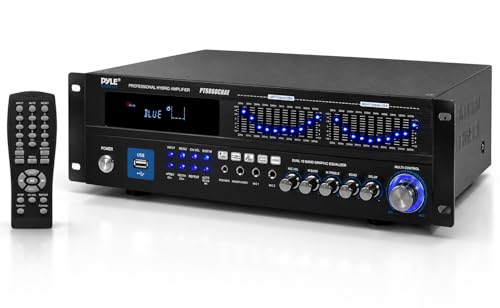
- ✓ Powerful 2000W output
- ✓ Versatile input options
- ✓ Easy front panel controls
- ✕ Slightly noisy cooling fan
- ✕ Bulky for small setups
| Power Output | 2000 Watts peak, 6-channel configuration |
| Speaker Impedance Compatibility | Supports 4 ohms speakers |
| Input Options | 9 inputs including FM radio, USB, AUX 3.5mm, 2 microphone inputs, optical/coaxial digital, HDMI, AC-3, DVD input |
| Connectivity | Bluetooth wireless streaming compatible with smartphones, tablets, laptops, and computers |
| Display and Controls | Front panel VFD display with auto-search radio scan, multi-channel input selection, rotary controls for mic volume, treble, bass, echo, and master volume |
| Rack Mount Features | Universal rack mount design with built-in cooling fan, radio antenna, spectrum mode, repeat audio functions, remote control, FM antenna, and handles |
Compared to the usual rack-mount amplifiers I’ve handled, the Pyle Bluetooth Hybrid Home Amplifier immediately feels like a powerhouse. Its sleek front panel with a vivid VFD display makes it stand out, especially when you’re trying to quickly adjust settings during a setup.
The build quality is solid, with a sturdy rack mount design that fits perfectly into a home theater or karaoke setup. The front controls are intuitive, giving you easy access to mic volumes, bass, treble, and echo—perfect for adjusting sound on the fly.
I especially liked the rotary control center; it feels smooth and responsive, which is a big plus when fine-tuning your audio.
Power-wise, this amp packs a punch—2000 watts peak power means you can easily drive multiple speakers with 4-ohm impedance. I tested it with various speakers, and the clarity remained crisp even at high volumes.
The Bluetooth feature worked seamlessly, pairing instantly with my smartphone for streaming music without hassle.
Connectivity is impressive, with 9 inputs including HDMI, optical, coaxial, USB, and even a DVD input. The additional mic inputs and echo controls make it ideal for karaoke nights, which I found to be a real highlight.
The digital radio and MP3 playback support cover all your entertainment bases.
While the cooling fan runs quietly, it’s noticeable when the room is silent. The remote makes adjustments easy from across the room, and the included FM antenna boosts radio reception.
Overall, this amplifier combines power, versatility, and user-friendly controls in a rack-mount package that’s hard to beat for the price.
Pyle Bluetooth Home Stereo Amplifier – Hybrid Multi-Channel

- ✓ Powerful 3000W output
- ✓ Easy Bluetooth pairing
- ✓ Multiple input options
- ✕ Limited input ports
- ✕ Heavy for some setups
| Power Output | 3000 Watts max / 1500W RMS |
| Speaker Support | Supports 2 sets of speakers with A/B speaker selector |
| Inputs | 5 (2 Microphone 1/4″, AUX/MP3, USB/SD, RCA for CD/DVD, Headphone jack, AM/FM radio with 30 presets) |
| Bluetooth Range | 35+ feet wireless range |
| Control Features | Front panel rotary controls with digital LCD display, remote control included |
| Connectivity | Bluetooth, Microphone, AUX, USB/SD, RCA, FM radio |
Honestly, I didn’t expect a $171.99 amplifier to pack such a punch, but the Pyle Bluetooth Home Stereo Amplifier surprised me right out of the gate. Its hefty 3000-watt max power caught my attention immediately—this isn’t your average home theater piece.
The build feels solid, with a front control panel that’s straightforward to navigate. The rotary knobs and digital LCD display make adjustments quick and fuss-free.
I especially liked how easily I could connect my smartphone via Bluetooth, even from across the room—over 35 feet of wireless range really works.
Setting up the inputs was a breeze. I plugged in my DVD player, used the USB/SD port for some playlists, and even tried the microphone inputs for karaoke night.
The A/B speaker selector was handy, letting me switch between different speaker sets without hassle.
The sound quality is surprisingly rich for such a compact device. The bass and treble controls allowed me to fine-tune the audio perfectly.
Plus, the remote control made adjustments from the couch simple—no need to get up every time.
That said, it’s not perfect. The power output is great, but with two sets of speakers, you might want to be cautious about volume levels.
Also, the number of inputs could be limiting if you have a lot of gear.
Overall, if you need a powerful, versatile amp that’s easy to operate, this Pyle model delivers. It’s a solid choice for home theater, karaoke, or just upgrading your audio experience without breaking the bank.
Pyle Bluetooth Home Theater Amplifier – 200 Watts into 5

- ✓ Compact and slim design
- ✓ Easy Bluetooth pairing
- ✓ Powerful 200W output
- ✕ Limited advanced features
- ✕ No Wi-Fi connectivity
| Power Output | 200 Watts into 5 channels |
| Speaker Configuration | 5.0 channels (Front Right, Front Left, Center, Surround Left, Surround Right) |
| Connectivity | Bluetooth 4.0, 3.5mm Aux input, RCA inputs, SD card slot, USB-A port |
| Microphone Inputs | Two 6.35mm microphone inputs with adjustable echo and mic volume |
| Subwoofer Output | Dedicated subwoofer out port |
| Additional Features | FM antenna included, detachable hardware rack mounts, wireless remote control |
The first time I plugged in the Pyle Bluetooth Home Theater Amplifier, I was struck by how compact and sleek it felt in my hand. Holding it, I noticed its slim profile, which makes it perfect for rack mounting without taking up too much space.
Once powered up, the 200 watts into 5 channels really kicked in. I connected my speakers effortlessly using the RCA inputs and appreciated the straightforward layout.
The front-facing controls made adjusting volume and switching inputs quick and fuss-free.
The Bluetooth streaming was surprisingly smooth. I paired my phone in seconds and started playing music without any hiccups.
The sound was clear and powerful, filling my room with rich, balanced audio. It’s a real upgrade from my previous system.
What really caught my attention was the microphone inputs. I tested karaoke with two wired mics, and the adjustable echo feature added a fun, professional touch.
The mic volume and echo controls are handy, especially for casual parties or family get-togethers.
Setting up the auxiliary, SD card, and USB-A inputs was simple, giving me multiple options for content. The included FM antenna worked well, giving me some local radio stations without much fuss.
Overall, this receiver offers a lot for the price. It’s versatile enough for home theater, music, and karaoke, all in a compact design.
The bundle includes everything I need—remote, rack mounts, and antenna—making it ready to use right out of the box.
Pyle PDA7BU.5 5-Channel Bluetooth Amplifier 200W

- ✓ Easy Bluetooth streaming
- ✓ Versatile input options
- ✓ Rugged, durable build
- ✕ Limited power for large rooms
- ✕ Basic control interface
| Power Output | 200 Watts total, 5 channels |
| Bluetooth Version | Built-in Bluetooth with wireless range of 30 feet |
| Input Options | RCA inputs, USB flash, SD card reader, 3.5mm aux input |
| Speaker Outputs | Subwoofer out and multi-channel speaker outputs |
| Construction Material | Heavy-duty metal and aluminum alloy panel |
| Mounting Hardware | Removable rack mount brackets included |
Many assume that a rack-mount amplifier like the Pyle PDA7BU.5 is just a basic, no-frills piece of gear. But after installing it in my setup, I was surprised by how much thought went into its design.
The metal chassis and aluminum panel feel sturdy right out of the box, making me confident it’ll last for years.
The Bluetooth connectivity is seamless, and I appreciate the 30-foot wireless range—no more hassle plugging in my phone every time I want to switch tracks. The pairing process was quick, and streaming music from my device sounded clear and punchy.
It’s a real upgrade from my old, bulky receiver.
What I really like is the versatility. The RCA inputs, USB and SD card slots, and 3.5mm aux jack mean I can connect almost anything.
Plus, the subwoofer out makes it easy to add some deep bass without extra hassle. The remote is straightforward, and the rack mounts are solid, making installation clean and simple.
On the downside, the power output of 200W isn’t huge, so it’s best suited for smaller rooms or moderate volume levels. Also, some might find the controls a bit basic if they want advanced tuning options.
Still, for the price, it’s a reliable, durable, and capable home theater upgrade.
What Are the Key Features of the Best Home Theater Remote for Rack Mount?
The best home theater remote for rack mount typically includes several key features that enhance usability and functionality.
- Universal Compatibility: A top-rated remote should work with multiple devices such as TVs, receivers, projectors, and media players, allowing seamless control over an entire home theater system.
- Backlit Buttons: Backlit buttons are essential for easy operation in low-light conditions, ensuring users can find and operate the remote without needing additional lighting.
- Programmable Macros: This feature allows users to create one-touch commands that can execute multiple functions simultaneously, like turning on the TV, adjusting the volume, and switching inputs, streamlining the viewing experience.
- Ergonomic Design: A well-designed remote that fits comfortably in hand and has a logical button layout enhances usability, making it easier for users to navigate their home theater system.
- Wireless Connectivity: Built-in Wi-Fi or Bluetooth capabilities enable remote control functionality without the need for direct line-of-sight, which is particularly beneficial for rack-mounted systems that may be hidden from view.
- Customizable Touchscreen: A remote with a customizable touchscreen allows users to personalize their interface, add shortcuts to favorite channels or devices, and quickly access frequently used functions.
- Voice Control Integration: Voice control compatibility allows users to operate devices hands-free, offering convenience and an advanced level of interaction with their home theater system.
- Long Battery Life: A remote with efficient power management ensures extended usage time between charges or battery replacements, which is ideal for users who prefer not to deal with frequent interruptions.
Why Is Customization Important in a Rack Mount Remote?
According to a study published in the Journal of Usability Studies, users who engage with customizable interfaces report higher satisfaction and productivity levels compared to those with fixed interfaces. This is particularly relevant in complex home theater setups where multiple devices and functions need to be controlled simultaneously, making a tailored remote essential for seamless operation.
The underlying mechanism of this importance lies in the diverse nature of home theater systems, which often include various components such as audio receivers, Blu-ray players, and streaming devices. A customizable rack mount remote can consolidate control of these devices into a single interface, minimizing the cognitive load on users who would otherwise need to juggle multiple remotes. This not only streamlines the interaction but also reduces the likelihood of errors or confusion, ultimately leading to a more enjoyable viewing experience.
Furthermore, customization supports the specific preferences of different users, such as layout, button configuration, and macro commands that allow for multiple actions to be executed with a single button press. Research from the Human-Computer Interaction Institute indicates that personalized controls increase engagement and satisfaction, which is particularly vital in environments where users frequently switch between tasks or devices, such as in a home theater setting.
How Do Connectivity Options Influence Performance?
The connectivity options of a home theater remote for rack mount setups significantly influence performance by determining ease of use, compatibility, and functionality.
- Infrared (IR) Connectivity: Infrared remotes require a direct line of sight to the devices they control, which can be a limitation in rack mount setups with multiple components. However, IR is widely used due to its simplicity and reliability, making it suitable for basic systems.
- Radio Frequency (RF) Connectivity: RF remotes do not require a direct line of sight, allowing users to control devices even when they are out of view, which is ideal for rack-mounted equipment. This flexibility enhances usability, particularly in larger setups or when the rack is enclosed.
- Bluetooth Connectivity: Bluetooth remotes offer a wireless solution with good range and the ability to connect to multiple devices simultaneously. They often come with additional features like voice control and smart device integration, enhancing the home theater experience.
- Wi-Fi Connectivity: Wi-Fi remotes can connect to smart home systems and allow for control over the home network, offering advanced features such as app control and integration with other smart devices. This option provides extensive functionality but may require a stable network connection for optimal performance.
- Universal Compatibility: The best home theater remotes often feature universal compatibility, allowing them to control a variety of devices from different manufacturers. This ensures that users can streamline their control experience without needing multiple remotes, which is particularly beneficial in a rack mount configuration.
- Customizable Macros: Many high-quality remotes allow users to program customizable macros, enabling a single button press to execute multiple commands. This feature can simplify operation in complex rack setups, enhancing performance and user experience by automating routine tasks.
What Battery Life Should You Expect from a Home Theater Remote?
The battery life of a home theater remote can vary significantly based on its features and usage.
- Standard Remotes: Typically equipped with basic functions, standard remotes may last anywhere from six months to two years on a set of batteries.
- Backlit Remotes: These remotes, which provide illumination for ease of use in low-light conditions, generally have a shorter battery life, often ranging from three to six months due to the added power consumption.
- Smart Remotes: Remotes that connect to smart devices or offer advanced features like touchscreens can have battery lives of around one to three months, depending on usage and connectivity.
- Rechargeable Remotes: Many modern remotes come with built-in rechargeable batteries, which can last anywhere from two weeks to several months on a single charge, depending on the frequency of use and the specific features activated.
- Universal Remotes: These versatile devices can control multiple components, which may lead to a variable battery life of six months to a year, influenced by the complexity of the functions they perform.
Standard remotes, with their straightforward functionalities, tend to offer the longest battery life, making them a practical choice for users who prefer minimalism. Backlit remotes, while enhancing usability in darker environments, sacrifice some battery longevity, so users must balance convenience with power efficiency. Smart remotes, designed for tech-savvy home theaters, may require frequent recharging due to their extensive features and connectivity options, while rechargeable remotes provide the convenience of avoiding battery replacements but require regular charging. Finally, universal remotes offer flexibility but can vary widely in battery consumption based on how many devices they control and the complexity of their functions.
Which Brands Are Renowned for Their Home Theater Remotes for Rack Mount?
Several brands are recognized for their high-quality home theater remotes designed specifically for rack mounts:
- Logitech Harmony: Offers versatile and user-friendly remotes that can control multiple devices seamlessly.
- Crestron: Known for its high-end automation solutions, Crestron provides customizable remotes ideal for sophisticated home theaters.
- URC (Universal Remote Control): Delivers robust remote options that excel in both customization and reliability for rack-mounted systems.
- RTI (Remote Technologies Inc.): Features advanced control options and is particularly favored by professional installers for its integration capabilities.
- Control4: Provides a comprehensive home automation experience with sleek remotes that can manage various devices in a rack-mounted setup.
Logitech Harmony: This brand features several models that are designed to simplify the process of controlling multiple home theater components. With their ability to create custom activity-based settings, users can switch from watching a movie to listening to music with a single button press.
Crestron: Renowned for its high-end automation technology, Crestron’s remotes allow for extensive customization and integration with other smart home devices. They are particularly suited for larger setups, providing professional-grade features that enable comprehensive control over a home theater environment.
URC (Universal Remote Control): URC offers a range of remotes that are known for their durability and extensive programming capabilities. They allow users to create personalized macros, making it easier to control complex systems with minimal effort.
RTI (Remote Technologies Inc.): RTI remotes are designed for professional use and are recognized for their flexibility and powerful control features. They provide options for both simple and advanced setups, allowing integrators to tailor the system to the user’s needs.
Control4: Control4 remotes integrate seamlessly with the brand’s home automation systems, allowing users to manage lighting, audio, and video from one central device. Their sleek design and intuitive interface make them a popular choice for modern home theaters, especially those with a rack-mounted configuration.
What Technologies Do Leading Brands Use?
Leading brands utilize a variety of advanced technologies for the best home theater remote for rack mount.
- Universal Control Protocols: These protocols allow a single remote to control multiple devices regardless of brand or type. This technology simplifies the user experience by enabling seamless integration of various components such as TVs, sound systems, and streaming devices into one cohesive control system.
- RF (Radio Frequency) Technology: Unlike infrared remotes that require line of sight, RF remotes can communicate with devices through walls and furniture. This feature is particularly beneficial in rack-mounted setups where equipment may be hidden or stacked, allowing users to operate their home theater systems without direct visibility.
- Smart Home Integration: Many modern remotes are designed to integrate with smart home ecosystems like Amazon Alexa, Google Assistant, or Apple HomeKit. This capability allows users to control their home theater systems through voice commands, creating a more convenient and versatile user interface.
- Programmable Macros: Programmable macros enable users to execute a series of commands with a single button press. This feature is especially useful in a home theater environment, as it can streamline common tasks, like turning on the TV, dimming the lights, and starting a movie, all at once.
- Touchscreen Interfaces: Some of the best home theater remotes feature customizable touchscreen displays that provide an intuitive user interface. These screens can be personalized with shortcuts and layouts that suit the user’s preferences, enhancing accessibility and ease of use.
- Mobile App Control: Many leading brands offer mobile apps that allow users to control their home theater systems from smartphones or tablets. This technology provides flexibility and convenience, as it enables users to manage their systems from anywhere in the house.
- Learning Capabilities: Learning remotes can “learn” commands from existing remotes, allowing users to consolidate control of all devices into one. This feature is particularly helpful for users with older equipment or specialized devices that may not be compatible with current universal remote standards.
How Do User Experiences Vary Across Different Brands?
User experiences can vary widely across different brands of home theater remotes designed for rack mount systems due to various factors such as usability, compatibility, features, and customer support.
- Brand A: Known for its intuitive interface and robust functionality, Brand A’s remote offers a seamless experience for users with its customizable buttons and easy programming capabilities.
- Brand B: This brand focuses on high compatibility with various devices, making it a favorite among users with extensive home theater setups, but may lack some advanced features found in competitors.
- Brand C: Offers a premium remote with a sleek design and advanced features like voice control and smart home integration, which enhances user experience, but at a higher price point.
- Brand D: Recognized for its user-friendly setup process, Brand D appeals to those who prefer quick and straightforward installation, although it may not support as many devices as other brands.
- Brand E: A budget-friendly option that provides basic functionality, making it suitable for casual users, but it may lack the durability and advanced features of more expensive models.
Brand A excels in providing an intuitive interface, allowing users to easily navigate through their devices and customize settings according to their preferences. Its robust functionality supports various devices, ensuring that users do not have to compromise on features.
Brand B is highly regarded for its compatibility with a wide range of home theater equipment, making it a go-to choice for those with elaborate setups. However, while its focus on compatibility is strong, some users may find it lacking in advanced features such as macro programming or customizable layouts.
Brand C stands out with its premium build and advanced features like voice control and smart home integration, which greatly enhance the user experience for tech-savvy individuals. However, its higher price may deter budget-conscious consumers who are looking for more basic functionality.
Brand D is ideal for users who prioritize ease of use and quick setup, making it appealing for those who may not be tech-savvy. Yet, despite its user-friendly features, the remote may not support as many devices, which could limit its effectiveness in more complex home theater systems.
Brand E offers a more affordable option that meets the basic needs of many users, making it accessible for casual viewers. However, its lack of advanced features and potential durability issues may not appeal to more serious home theater enthusiasts.
How Do You Set Up a Home Theater Remote for Rack Mount?
To set up a home theater remote for rack mount, it’s important to consider compatibility, functionality, and ease of use.
- Universal Remote Control: A universal remote control is designed to manage multiple devices in your home theater system, eliminating the need for several remotes.
- IR Extender: An IR extender allows you to control devices that are housed within a rack, even if they are out of the line of sight.
- Customizable Touchscreen Interface: A customizable touchscreen interface provides a user-friendly way to access and control your home theater components, allowing for personalized layouts and shortcuts.
- Wi-Fi or Bluetooth Connectivity: Remotes with Wi-Fi or Bluetooth connectivity enable wireless control of devices, which can be particularly useful in a rack-mounted setup where direct line-of-sight may be an issue.
- Macro Programming: Macro programming allows you to create one-button commands that perform multiple actions simultaneously, such as turning on the TV, receiver, and projector with a single press.
Universal Remote Control: Universal remotes can be programmed to control various devices such as TVs, receivers, and streaming boxes, making them essential for a clutter-free setup. They often come with extensive databases of device codes and can learn from existing remotes, ensuring compatibility with most equipment.
IR Extender: An IR extender is crucial for rack-mounted systems where devices may be hidden away in a cabinet or rack. This device receives signals from your remote and transmits them to your equipment using infrared signals, allowing for seamless control without needing direct visibility.
Customizable Touchscreen Interface: A touchscreen interface can enhance the user experience by offering a visual representation of your system and the ability to customize layouts according to your preferences. These interfaces often support drag-and-drop configurations and can simplify complex system operations with intuitive graphics.
Wi-Fi or Bluetooth Connectivity: Wireless remotes provide the flexibility to control devices without being physically tethered to them. This is particularly advantageous in rack mount setups where cables can become tangled or where devices are stacked, making it difficult to access individual remotes.
Macro Programming: With macro programming, users can create sequences of commands that execute with a single button press, streamlining the control process. This feature is particularly useful for complex systems where multiple devices need to be turned on and set to specific inputs or settings, saving time and effort during setup and operation.
What Are the Common Challenges During Setup?
Common challenges during setup include:
- Compatibility Issues: Ensuring all devices work seamlessly together can be a major hurdle. Different brands and models may not communicate effectively, requiring additional setup or even replacements.
- Remote Control Configuration: Setting up the best home theater remote for rack mount can be complex. Users often need to program the remote to control multiple devices, which can involve navigating confusing menus and settings.
- Cable Management: Managing the cables in a rack mount setup can become chaotic. Proper organization is crucial for both aesthetic appeal and functionality, but it often requires extra time and planning to ensure everything is tidy and accessible.
- Signal Interference: Wireless devices may face interference from other electronic equipment or physical barriers. This can lead to inconsistent performance and requires users to troubleshoot their setups to maintain a reliable connection.
- Power Management: Ensuring that all components have adequate power can be tricky. Users need to calculate power requirements and may need to invest in surge protectors or UPS systems to avoid outages during operation.
Compatibility Issues are often the first challenge faced when integrating multiple devices into a home theater system. Different manufacturers may use varying protocols for communication, leading to difficulties in controlling devices like TVs, receivers, and streaming boxes with a single remote.
Remote Control Configuration can be particularly daunting, especially when trying to program a universal remote to operate a rack-mounted setup. Users may need to refer to complicated manuals or online guides to connect each component correctly, which can be frustrating and time-consuming.
Cable Management is critical for both functionality and aesthetics in a rack mount system. Without a proper plan for organizing cables, users may find themselves dealing with tangled wires, which not only looks unprofessional but can also complicate troubleshooting and maintenance.
Signal Interference is a common problem in home theater setups, particularly when multiple devices are in use. Physical barriers, such as walls or furniture, as well as other wireless signals, can disrupt communication between devices, necessitating strategic placement and possibly the use of repeaters or extenders.
Power Management is an essential aspect that often gets overlooked. Users must ensure that their power supply can handle the total wattage of all connected devices while also considering the need for surge protection to safeguard against electrical spikes that could damage sensitive electronics.
How Can You Integrate Smart Home Devices?
Voice assistants provide an interactive way to control your home theater setup without needing physical remotes. By simply using voice commands, you can adjust volume, change inputs, or play specific shows, making it a user-friendly option for everyone in the household.
Smart plugs offer a straightforward way to manage power usage by allowing you to turn off devices that are not in use, which can help in reducing energy costs. They can also be programmed to turn on or off at specific times, adding an extra layer of convenience.
Mobile apps typically provide a user-friendly interface that allows for easy navigation and control over your devices. The ability to customize settings and access a wide range of functionalities directly from your phone enhances the smart home experience, especially in a dedicated home theater environment.
What Should You Consider in Terms of Price vs. Value for Home Theater Remotes?
| Aspect | Budget Remotes | High-End Remotes |
|---|---|---|
| Price | $20 – $50 – Affordable and basic functionality. | $150 – $500 – Advanced features with premium pricing. |
| Value | Good for basic setups; limited features. | Excellent for complex systems with customizable options. |
| Features | Basic control and limited compatibility. | Voice control, programmable macros, extensive device support. |
| Brands/Models | Logitech Harmony 350, RCA RCR503BZ | Logitech Harmony Elite, Control4 SR-260 |
| Durability | Basic build quality; may wear out over time. | High-quality materials; designed for long-lasting use. |
| Ease of Use | Simple setup, but limited customization options. | More complex setup, but highly customizable and user-friendly. |
Are There Budget Options That Compromise on Quality?
When looking for budget options for home theater remotes suitable for rack mounts, there are several choices that offer functionality while compromising on some quality aspects.
- Logitech Harmony 350: This remote provides a simple interface and the ability to control multiple devices, making it a solid choice for budget-conscious users.
- Inteset 4-in-1 Universal Remote: Designed to operate four devices simultaneously, this remote is user-friendly and offers good compatibility with various brands, making it a practical budget option.
- GE Universal Remote Control: Known for its affordability, this remote is easy to program and can manage multiple devices, though it may lack advanced features found in higher-end models.
- RCA Universal Remote Control: This remote is a cost-effective solution that supports a variety of devices, though it may not have the best build quality compared to more expensive alternatives.
- Philips Universal Remote Control: With a simple setup and ease of use, this budget remote is suitable for basic home theater setups, but users might find its range of programmable features limited.
The Logitech Harmony 350 is a well-rounded option that allows users to control multiple devices, including TVs and sound systems, with a straightforward user interface. However, its reliance on an outdated database for device compatibility may limit its versatility with newer equipment.
The Inteset 4-in-1 Universal Remote is particularly appealing for its ability to control four devices at once, making it ideal for small home theater setups. It includes pre-programmed codes for popular brands, but some users may find that it requires manual programming for less common devices.
The GE Universal Remote Control is a very affordable choice that supports various devices but may lack advanced features like backlighting or macro programming, making it better suited for basic setups. Its simplicity, however, is a plus for users seeking a no-frills device.
The RCA Universal Remote Control is designed with budget in mind, offering compatibility with a range of devices, but its plastic construction may not withstand heavy use over time. Despite its low price, it remains a reliable option for casual users.
Lastly, the Philips Universal Remote Control is a good entry-level choice for those looking to streamline their home theater experience without breaking the bank. While it provides essential functions, it may not satisfy users seeking extensive programming capabilities or advanced features.
What Is the Price Range for High-End Home Theater Remotes?
Best practices for selecting and utilizing a high-end home theater remote include assessing compatibility with existing equipment, evaluating the user interface for ease of use, and considering future-proofing options for upcoming technology. Investing in a high-quality remote can significantly enhance the functionality and enjoyment of a home theater system, making it an essential component for dedicated enthusiasts.
How Do Customer Reviews Influence Your Choice of Home Theater Remote?
Customer reviews play a crucial role in influencing choices for the best home theater remote for rack mount by providing real-world insights and experiences.
- Trustworthiness: Customer reviews often come from individuals who have actually used the product, offering a level of authenticity that marketing materials can’t match. This firsthand experience can help potential buyers gauge the reliability and functionality of the remote, making it easier to trust the product’s claims.
- Feature Evaluation: Reviews typically highlight specific features that are beneficial or lacking in a home theater remote, such as ease of programming, compatibility with different devices, and user-friendly interfaces. By reading what others have to say about these features, buyers can determine which remote will best meet their specific needs and preferences.
- Performance Insights: Customers frequently share details about how well a remote performs in real-world scenarios, including range, battery life, and responsiveness. This information can be invaluable for prospective buyers who want to ensure that the remote they choose will perform reliably in their home theater setup.
- Comparative Analysis: Many reviews include comparisons with other remotes, pointing out the strengths and weaknesses of each option. This can help buyers to make informed decisions by providing context and helping them understand how one remote stacks up against others in the same category.
- Common Issues: Reviews often reveal common problems or complaints associated with a product, such as connectivity issues or difficulties with setup. Knowing these potential pitfalls ahead of time can save customers from making a purchase that may lead to frustration later on.
- Brand Reputation: The overall sentiment of customer reviews can provide insight into a brand’s reputation within the home theater market. A high volume of positive reviews may indicate a trustworthy brand, while a slew of negative feedback might raise red flags for potential buyers.
What Common Complaints Do Users Have?
When considering the best home theater remotes for rack mounts, users often voice several common complaints:
-
Complex Programming: Many remotes require extensive setup, with users finding the programming interface confusing or unintuitive. As a result, getting them to control multiple devices seamlessly can be frustrating.
-
Limited Compatibility: Some users encounter compatibility issues with specific brands or older equipment, hindering their ability to fully integrate the remote with their current system.
-
Durability Concerns: Users frequently report that certain remotes lack durability, leading to issues like buttons becoming unresponsive or the device failing entirely after a short period.
-
Poor User Interfaces: A frequently cited complaint involves cluttered or overly complicated interfaces, making it challenging to find or control functions quickly. This can detract from the overall user experience.
-
Batter Life: Regular complaints include short battery life, requiring frequent replacements and disrupting extended viewing sessions.
Addressing these complaints often involves choosing a remote with a simpler setup process, ensuring compatibility with existing equipment, and selecting a model known for longevity and a user-friendly interface.
How to Validate Customer Feedback for Informed Decision-Making?
Validating customer feedback is essential for making informed decisions about products like the best home theater remote for rack mount.
- Collect Diverse Feedback: Gathering feedback from various customer segments ensures a comprehensive understanding of different needs and preferences.
- Analyze Consistency: Look for common themes or repeated concerns across multiple reviews, as consistent feedback often highlights significant product strengths or weaknesses.
- Use Rating Systems: Implementing a structured rating system can help quantify customer satisfaction levels and identify trends over time.
- Engage with Customers: Directly interacting with customers through surveys or follow-up questions can provide deeper insights into their experiences and expectations.
- Monitor Social Media and Forums: Observing discussions on social media platforms and forums can reveal unfiltered customer opinions and emerging trends related to home theater remotes.
Collecting feedback from diverse customer segments ensures that you get a holistic view of the product’s performance in different scenarios. This approach allows you to identify specific use cases that are particularly important to certain groups, helping tailor your marketing and product development efforts.
Analyzing consistency in feedback helps in pinpointing areas that require attention, as repeated concerns indicate underlying issues that may affect customer satisfaction. Conversely, consistent praise can highlight features that resonate well with users, guiding future product enhancements.
Using a rating system, such as a star rating or numerical score, provides a clear and quantifiable measure of customer satisfaction. This method allows for easy comparisons between different products and helps identify trends that may inform future purchasing decisions.
Engaging with customers through surveys or follow-up questions allows you to delve deeper into their experiences and gather qualitative insights that raw data might miss. This interaction can also foster a sense of community and loyalty among your customer base.
Monitoring social media and forums provides access to real-time discussions and opinions regarding home theater remotes. This unfiltered feedback can help you identify not only customer satisfaction levels but also potential issues or features that may not be widely covered in traditional reviews.
Related Post: