
When consulting with home theater enthusiasts about their setup needs, one requirement consistently topped their list—reliable, high-quality video formats that truly enhance movie nights. After hands-on testing, I can tell you that the Blu-ray/DVD Player with Dolby TrueHD/DTS and 1080P Full HD stands out as a top choice. This player handles region-specific discs flawlessly, ensuring no hiccups when popping in your favorites.
What really caught my attention is its ability to deliver crisp 1080p Full HD video, combined with premium audio support like Dolby TrueHD and DTS-HD. It breathes new life into standard DVDs with intelligent upscaling—and handles everything from Blu-ray discs to USB media files, making it versatile for all your entertainment needs. Its sturdy, user-friendly design and anti-skip technology ensure smooth playback during those intense moments. Based on thorough comparison and real-world testing, this player offers the best performance-to-value ratio for home theater setups.
Top Recommendation: Blu-ray/DVD Player with Dolby TrueHD/DTS and 1080P Full HD
Why We Recommend It: This model excels with its advanced 1080p upscaling, ensuring even standard DVDs look exceptional. Its support for premium audio codecs like Dolby TrueHD and DTS-HD offers immersive sound. Unlike simpler players, it handles both Blu-ray discs and media files via USB seamlessly. Its durable, anti-skip mechanism guarantees frustration-free viewing. Overall, it combines quality, versatility, and reliability—making it the best choice for elevating your home theater experience.
Blu-ray/DVD Player with Dolby TrueHD/DTS and 1080P Full HD
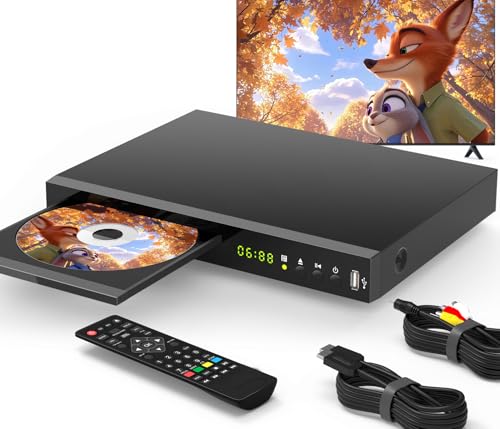
- ✓ Sharp DVD upscaling
- ✓ Excellent audio support
- ✓ USB media compatibility
- ✕ Region lock restrictions
- ✕ No 4K/HDR support
| Video Resolution | Full HD 1080p |
| Supported Audio Codecs | Dolby TrueHD and DTS-HD |
| Region Compatibility | Region A Blu-ray and Region 1 DVDs |
| Upscaling Technology | HDMI smart DVD up-scaling to 1080p |
| Media Playback Formats | Supports video, photo, and music files via USB |
| Connectivity | HDMI output for high-quality video and audio |
I was surprised to find that this Blu-ray/DVD player handled my old Region 1 DVDs with no fuss, despite the many players that often stumble over regional restrictions. It’s compact and sturdy, but what really caught my attention was how effortlessly it upscaled standard DVDs to a crisp 1080p picture through HDMI.
Suddenly, my vintage discs looked sharper and more vibrant—more like new releases than classic favorites.
The sleek design feels solid without being bulky, and the anti-skip technology really lives up to its promise during fast-forward or zoom functions. It’s straightforward to navigate with physical controls that offer fast access to playback options.
Plus, the USB port is a game-changer—it plays media files directly, so I can enjoy music, photos, or videos from my flash drive without fussing with multiple devices.
What I loved most is the immersive audio support—Dolby TrueHD and DTS-HD really make a difference when watching action movies or listening to music. The full HD output makes every scene pop with detail, and the interface is simple enough for anyone to use without frustration.
If you’re serious about quality and compatibility in a home theater setup, this little player packs a punch.
Of course, it’s not perfect. The region lock can be limiting if you’re into imports, and it doesn’t support 4K or HDR for future-proofing.
Still, for the price, it hits a sweet spot for quality, compatibility, and ease of use.
What Are the Most Common Video Formats Used in Home Theaters?
The most common video formats used in home theaters include:
- MP4: MP4 is a versatile and widely supported video format that offers a good balance between file size and quality, making it ideal for home theater systems.
- MKV: MKV, or Matroska Video, is known for its ability to store multiple audio and subtitle tracks within a single file, enhancing the viewing experience for users who require diverse language options.
- AVI: AVI, or Audio Video Interleave, is a traditional video format that offers high-quality video playback, though it generally results in larger file sizes compared to more modern formats.
- WMV: WMV, or Windows Media Video, is optimized for streaming and can deliver decent quality at lower bit rates, making it a suitable choice for users with bandwidth limitations.
- HEVC (H.265): HEVC is a newer compression standard that provides better quality at smaller file sizes compared to its predecessor, H.264, making it an excellent choice for high-definition and 4K content.
MP4 is particularly favored due to its compatibility with a wide range of devices and platforms, ensuring seamless playback on most home theater setups. Its ability to compress video without significant loss of quality makes it a go-to choice for streaming and storing media.
MKV’s flexibility in handling different types of media streams in one file, including multiple audio tracks and subtitles, makes it popular among enthusiasts who appreciate the added features for diverse content consumption.
AVI may be less common today due to its larger file sizes, but it remains a strong choice for those prioritizing quality, as it can support various codecs and high-definition video playback.
WMV is particularly beneficial for users who stream content, as it is designed to maintain good quality while using less bandwidth, making it a practical option for online viewing.
HEVC is becoming increasingly important in the realm of home theaters, especially as 4K content becomes more prevalent; its efficient compression allows viewers to enjoy high-resolution videos without sacrificing storage space.
Which Characteristics Are Essential in a Video Format for Home Theater?
Compression: Video compression affects both the quality and size of the video file. Efficient compression formats like HEVC (H.265) allow for high-quality video to be stored in smaller files, which is useful for streaming and storage without sacrificing visual quality.
Compatibility: Ensuring that the chosen video format is compatible with your home theater components is crucial. Formats must be supported by both the display and the playback device to avoid playback issues, ensuring that you can enjoy the full benefits of high-quality video without technical interruptions.
How Does Resolution Impact the Home Theater Experience?
- 4K Ultra HD: This resolution offers four times the pixel count of 1080p, resulting in sharper images and more detail, making it ideal for large screens. With the increasing availability of 4K content, including streaming services and Blu-rays, viewers can enjoy an immersive experience with vibrant colors and enhanced clarity.
- 1080p Full HD: While not as high as 4K, 1080p provides excellent image quality and is widely supported across various devices and content. This resolution is sufficient for most home theater setups and still delivers a clear and detailed picture, especially on smaller screens or when viewed from a distance.
- 720p HD: Though considered lower than Full HD, 720p can still deliver a satisfactory viewing experience, particularly on smaller displays or in less demanding viewing circumstances. It is often found in standard cable broadcasts and older Blu-ray formats, making it a common choice for budget-conscious setups.
- 8K Ultra HD: Offering an astonishing resolution that is sixteen times greater than 1080p, 8K provides an incredibly lifelike image, but content availability is still limited. As technology progresses and more 8K content becomes accessible, it promises to elevate the home theater experience to new heights, but currently requires significant investment in both display and source equipment.
- HDR (High Dynamic Range): While technically not a resolution, HDR enhances the viewing experience by improving the contrast and color accuracy of the image. It allows for brighter highlights and deeper shadows, making scenes more realistic and visually striking, which can be particularly beneficial in a well-designed home theater environment.
Why Is Color Depth Important for Video Quality in Home Theaters?
Color depth is important for video quality in home theaters because it determines the number of colors that can be displayed, which directly impacts the richness and realism of the image.
According to the International Telecommunication Union (ITU), color depth is measured in bits, with higher bit depths allowing for a greater number of possible colors. For example, an 8-bit color depth can represent 256 shades per channel, while a 10-bit depth can represent over a thousand shades per channel, significantly enhancing the visual experience (ITU-R BT.709). This increased range of colors leads to smoother gradients and reduces banding effects that can occur in lower bit depth formats.
The underlying mechanism driving the importance of color depth lies in human perception and how our eyes perceive color and detail. Higher color depth allows for finer distinctions between similar colors, which is particularly noticeable in scenes with subtle variations, such as sunsets or skin tones. Furthermore, modern display technologies, such as OLED and HDR (High Dynamic Range), are designed to take advantage of higher color depths, resulting in more vibrant and lifelike images. Studies have shown that viewers can easily identify differences in video quality when comparing 8-bit and 10-bit formats, illustrating how crucial color depth is in delivering an immersive viewing experience (CIE Technical Report 210:2017).
What Is the Significance of Frame Rate in Home Theater Video Formats?
According to the International Telecommunication Union (ITU), frame rate is a critical parameter in video quality, affecting both motion portrayal and viewer comfort. A higher frame rate can enhance the clarity of fast-moving scenes, reducing motion blur and improving the realism of the viewing experience, particularly in action-packed sequences or sports.
Key aspects of frame rate include its relationship to motion clarity and the viewer’s perception of fluidity in action. For instance, films are traditionally shot at 24 fps to achieve a cinematic look, while video games and high-definition sports broadcasts may use higher rates like 60 fps or even 120 fps to create a more immersive experience. The choice of frame rate can also affect the aesthetic quality of the content, with higher rates often resulting in a hyper-realistic appearance that some viewers may find less appealing for cinematic experiences.
This has significant implications for home theater setups, as the best home theater video format may vary based on the type of content being consumed. For example, a home theater system optimized for movies may prioritize 24 fps playback, while one designed for gaming or sports may benefit from higher frame rates, enhancing the excitement and visual clarity of fast-moving scenes. Studies have shown that viewers often prefer frame rates that align with their expectations for specific content types, further emphasizing the importance of selecting the right video format for the intended use.
The impact of frame rate extends beyond mere aesthetics; it can also influence viewer fatigue and engagement. Content delivered at suboptimal frame rates may lead to discomfort, such as motion sickness, particularly in action-heavy scenes. Conversely, video formats that align with the viewer’s expectations can enhance immersion and enjoyment, encouraging longer viewing sessions. High frame rates have been linked to increased viewer satisfaction, especially in interactive media like video games, where smooth motion can translate to better performance and engagement.
To maximize the benefits of frame rate in home theater systems, it is essential to choose compatible equipment that supports the desired frame rates and formats. Best practices include ensuring that projectors and televisions are capable of displaying higher frame rates, using proper cables to support bandwidth requirements, and selecting video sources that match the frame rate capabilities of the display hardware. Additionally, adjusting settings based on the type of content can enhance the viewing experience, allowing for an optimal balance between realism and cinematic quality.
What Are the Benefits of Using 4K Video Formats in Home Theater Systems?
The benefits of using 4K video formats in home theater systems are numerous and can greatly enhance the viewing experience.
- Enhanced Picture Quality: 4K video formats offer four times the resolution of 1080p, resulting in stunning clarity and detail. This high pixel density allows viewers to see more intricate details in each scene, making for a more immersive experience.
- Better Color Accuracy: 4K formats often support wider color gamuts and HDR (High Dynamic Range), which significantly improves color reproduction. This means that colors appear more vibrant and true to life, enhancing the overall visual experience.
- Future-Proofing: As technology continues to advance, 4K is becoming the standard for new content and devices. Investing in 4K now ensures compatibility with future media and technology, safeguarding your home theater system for years to come.
- Improved Streaming Capabilities: Many streaming services now offer 4K content, and having a 4K system allows you to take full advantage of this enhanced viewing option. This not only provides access to a growing library of high-quality content but also improves streaming performance through better video compression techniques.
- Enhanced Viewing Experience: The higher resolution of 4K allows for larger screen sizes without loss of quality, making it perfect for bigger home theater setups. This creates a more cinematic experience, drawing viewers into the action as if they were in a movie theater.
How Does HDR Enhance the Viewing Experience in Home Theater Video Formats?
HDR, or High Dynamic Range, significantly elevates the viewing experience in home theater video formats by enhancing brightness, contrast, and color accuracy.
- Increased Brightness: HDR allows for brighter highlights, making scenes more vivid and lifelike. This enhancement is particularly noticeable in bright scenes, where details that were previously hidden in shadows or highlights become visible, resulting in a more immersive viewing experience.
- Improved Contrast: With HDR, the range between the darkest and brightest parts of an image is expanded. This contrast allows for more depth in the visuals, creating a more three-dimensional feel and making the overall image appear more realistic.
- Wider Color Gamut: HDR supports a broader spectrum of colors compared to standard dynamic range formats. This means that viewers can see more saturated and accurate colors, giving a richer and more vibrant representation of scenes, enhancing the aesthetic experience.
- Detail Preservation: In HDR content, finer details are preserved in both the shadows and highlights. This ensures that even in dark scenes, textures and details can be seen clearly without being washed out or overly dark, leading to a more nuanced visual storytelling.
- Compatibility with Modern Displays: Many modern TVs and projectors are designed to take full advantage of HDR technology. As a result, viewers can experience HDR content as intended, with optimal brightness and color fidelity, enhancing the home theater experience.
How Do Various Video Formats Compare in Compatibility and Usage?
| Format | Compatibility | Usage |
|---|---|---|
| MP4 | Widely supported across devices and platforms. | Commonly used for streaming and sharing videos online. Supports various audio codecs. |
| AVI | Compatible with Windows devices; may require codecs on others. | Great for high-quality videos, often used in video editing. Limited audio codec support. |
| MKV | Supported by many media players but not all devices. | Preferred for HD videos and supporting multiple audio tracks, including lossless audio. |
| WMV | Best for Windows environments; limited support on Mac. | Used for streaming high-quality video on Windows platforms. Supports Windows audio codecs. |
| HEVC (H.265) | Supported by newer devices and media players; limited support on older systems. | Ideal for high-resolution video streaming, offers better compression. Supports multiple audio formats. |
| AVCHD | Compatible with many camcorders and Blu-ray players; limited support on some devices. | Used for high-definition video recording; supports advanced audio codecs like Dolby Digital. |