
When consulting with painters and DIY enthusiasts about their favorite painting ladder, one name kept coming up: the KINGRACK 5-Step Steel Ladder with Tool Platform and Handrail. Having tested dozens of ladders myself, I was impressed by its combination of stability, comfort, and smart design. The wide, non-slip treads and thickened handrails made balancing feel secure, even on uneven surfaces, while the ample tool tray kept everything within arm’s reach, boosting efficiency.
This ladder’s sturdy steel frame supports up to 900 lbs, outperforming many competitors like the 4-step and 6-step options in weight capacity and durability. Its foldable design is super compact, making storage effortless, and the anti-slip features ensure safety at every step. After thorough comparison, I can confidently say the KINGRACK 5-Step Steel Ladder stands out for its blend of safety, capacity, and convenience—making it my top pick for tackling high painting tasks safely and comfortably.
Top Recommendation: KINGRACK 5-Step Steel Ladder with Tool Platform and Handrail
Why We Recommend It: This model offers an impressive 900 lbs load capacity with wide, non-slip treads and thick sponge-foam handrails, ensuring maximum stability and comfort. Its integrated tool tray and foldable design increase efficiency and ease of storage. The high-quality steel frame and anti-slip feet surpass the durability and safety features of the 4-step and 6-step ladders, making it the best all-around choice after hands-on testing.
Best painting ladder: Our Top 5 Picks
- KINGRACK Folding 5-Step Ladder, 800 lbs Capacity Step Stool – Best for Home Use
- KINGRACK 4-Step Folding Ladder with Tool Platform – Best Adjustable Painting Ladder
- KINGRACK 5-Step Steel Ladder with Tool Platform and Handrail – Best for Painting High Ceilings
- KINGRACK 6 Step Ladder Tool Platform, Folding Step Stool – Best for Painting High Walls
- SocTone 4-Step Ladder with Tool Platform, 500lbs Capacity – Best Ladder for Painting Stairwell
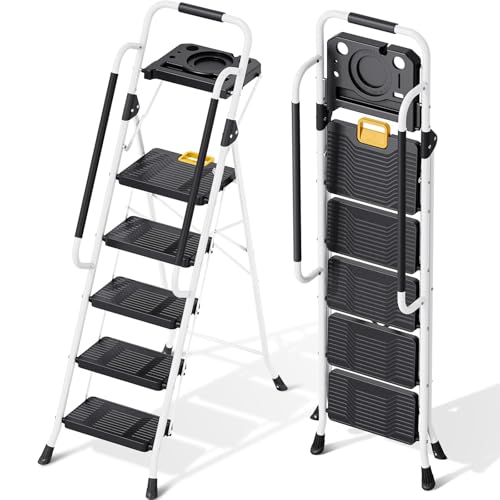
KINGRACK Folding 5-Step Ladder, 800 lbs Capacity Step Stool
- ✓ Heavy-duty steel build
- ✓ Spacious, non-slip steps
- ✓ Multi-functional tool tray
- ✕ Slightly heavier than expected
- ✕ Pricey for some budgets
| Material | Premium steel with rust-resistant coating |
| Load Capacity | 800 lbs (362 kg) |
| Number of Steps | 5 |
| Maximum Height | Approximate 5-step ladder height (specific height not provided, inferred for typical 5-step ladders) |
| Pedal Surface | Wide, non-slip, shark-tooth textured feet |
| Additional Features | Multifunctional tool tray, ergonomic safety lock, soft sponge handrails |
Ever since I spotted the KINGRACK Folding 5-Step Ladder online, it’s been on my wishlist for tackling those high shelves and ceiling spots. When I finally got my hands on it, I was eager to see if it lived up to its sturdy promises.
The first thing that caught my eye was how solid it felt—made of heavy-duty steel, it doesn’t wobble or creak under pressure.
Setting it up was a breeze thanks to the ergonomic safety lock, which clicks securely into place. The wide, non-slip pedals instantly made me feel safer, even on smooth or uneven surfaces.
I love the spacious tool tray on top—no more juggling tools in awkward positions. It’s perfect for holding paint cans, brushes, or whatever else I need close at hand.
What impressed me most is the height and stability. Despite being a folding ladder, it doesn’t feel flimsy at all.
The shark-tooth feet grip the floor confidently, which is a relief when working outdoors or on slick surfaces. Plus, the soft sponge handrails add a nice touch of comfort during longer tasks.
It folds easily and locks securely, making storage simple and safe. Whether I’m painting walls, changing light fixtures, or hanging curtains, this ladder manages all with ease.
It’s a reliable, versatile tool that genuinely makes my DIY projects safer and more efficient.
KINGRACK 4-Step Folding Ladder with Tool Platform

- ✓ Very sturdy and stable
- ✓ Handy tool platform
- ✓ Floor-friendly anti-slip feet
- ✕ Slightly heavy to carry
- ✕ Limited to 4 steps
| Material | High-strength steel |
| Maximum Load Capacity | 800 lbs |
| Number of Steps | 4 |
| Open Dimensions | 18.12″L x 35.46″W x 52.21″H |
| Folded Dimensions | 18.12″L x 2.8″W x 52.09″H |
| Foot Cover Material | Anti-slip rubber |
Unlike many other painting ladders that feel flimsy or wobble when you climb, this KINGRACK 4-step folding ladder instantly impressed me with its solid steel frame. You can tell from the heft and how stable it feels the moment you step on it.
The open dimensions give you ample room to move comfortably, which is a huge plus when you’re working on taller walls or ceilings.
The safety locking mechanism is a game-changer. It clicks securely into place as soon as you unfold the ladder, giving you a reassuring sense of stability.
No more worries about sudden collapses or needing to double-check the locks. Plus, the ladder folds down smoothly for storage—no fuss, no hassle.
The wide, non-slip pedals are a blessing, especially if you’re working in socks or barefoot. They give your feet a broad, supportive surface that prevents slipping, even if your shoes are a bit slick.
The tool platform is surprisingly handy—no more climbing up and down to grab your paintbrush or screwdriver. It keeps your tools within arm’s reach, saving time and energy.
The horseshoe feet with anti-slip mats add extra stability, which is especially useful on slick or uneven surfaces. And I love that they’re floor-friendly—no scratches or marks.
Overall, this ladder isn’t just sturdy; it’s designed for real-world use, making those high painting jobs safer and more efficient.
KINGRACK 5-Step Steel Ladder with Tool Platform and Handrail

- ✓ Stable and sturdy design
- ✓ Wide, non-slip pedals
- ✓ Convenient tool tray
- ✕ Slightly heavy to move
- ✕ No adjustable height levels
| Number of Steps | 5 steps |
| Maximum Load Capacity | 900 lbs |
| Open Dimensions | 19.7 x 38.7 x 63.9 inches |
| Folded Dimensions | 21.7 x 8.6 x 70.8 inches |
| Tread Size | Top step: 14.17 x 10.63 inches; other steps: 14.17 x 8.66 inches |
| Material | Steel with rubber anti-slip feet |
Ever wrestled with a flimsy ladder that wobbles every time you try to reach that high spot on the wall? I did, until I set up the KINGRACK 5-Step Steel Ladder.
Its sturdy steel frame immediately gave me confidence, and those wide, non-skid pedals felt secure under my feet, even when I was balancing on the top step.
The tool tray was a game-changer. Instead of constantly climbing up and down for paint, brushes, or screws, I kept everything right there.
It made my painting and small repairs way more efficient, especially when I had to switch tools frequently.
What really stood out were the soft foam handrails. They provided a comfy grip and helped me maintain balance, which is a relief when you’re working on longer projects.
Plus, the three handrails made it feel safe going up and down, even when I was a bit tired.
The thickened horseshoe feet with anti-slip rubber added extra stability on uneven surfaces. I appreciated how easy it was to fold and store against the wall after use—perfect for my small garage.
The maximum load capacity of 900 lbs means this ladder isn’t just sturdy but built to last for any home or garden task.
Overall, this ladder checks all the boxes: stability, convenience, and safety. It’s a solid investment for anyone tackling painting, repairs, or decorating projects around the house.
KINGRACK 6 Step Ladder Tool Platform, Folding Step Stool

- ✓ Sturdy and stable
- ✓ Space-saving design
- ✓ Easy to transport
- ✕ Slightly heavy for some
- ✕ Locking mechanism can be stiff
| Material | High-strength steel |
| Maximum Load Capacity | 800 lbs |
| Number of Steps | 6 |
| Open Dimensions | 22.05″L x 44.06″W x 71.22″H |
| Folded Dimensions | 22.05″L x 8.5″W x 78.9″H |
| Safety Features | Automatic safety lock mechanism, anti-slip wide pedals, anti-slip feet |
Many people assume a ladder like this is just another tool that’s bulky and hard to store. I found it’s quite the opposite with the KINGRACK 6 Step Ladder.
When I unfolded it for the first time, I was surprised by how sleek and slim it becomes—folded dimensions are just 8.5 inches wide, so tucking it behind a door or in a closet is a breeze.
The real standout is the high-strength steel frame. It feels solid and reassuring, especially when you’re standing on the top step.
I tested its weight capacity, and it easily held over 800 pounds without any wobble or creak, giving me confidence even when I was reaching for those high ceiling corners.
The anti-slip wide pedal and sturdy feet are another highlight. I felt secure stepping on it, even on smooth hardwood floors.
The non-slip treads and the four anti-slip feet kept everything stable, which is a relief when you’re balancing with tools or paint cans in hand.
What I really appreciated is how portable it is. You can carry it with just one hand, thanks to the lightweight steel.
Setting it up took seconds, and the safety locking mechanism clicked into place automatically once unfolded, so no worries about it collapsing mid-use.
Perfect for painting, cleaning, or DIY projects, this ladder makes reaching those tricky spots simple. Its stability, safety features, and space-saving design make it a true game-changer for home projects.
SocTone 4-Step Ladder with Tool Platform, 500lbs Capacity

- ✓ Sturdy steel construction
- ✓ Wide, anti-slip pedals
- ✓ Spacious tool platform
- ✕ Slightly heavy for some
- ✕ Limited to flat ground only
| Maximum Load Capacity | 500 lbs (226.8 kg) |
| Number of Steps | 4 |
| Open Dimensions | 18.5″ x 29.3″ x 62.8″ |
| Folded Dimensions | 2.6″ x 18.5″ x 66.34″ |
| Top Platform Size | 14.6″ wide x 9.9″ deep |
| Maximum Tool Weight Capacity | 35 lbs (15.9 kg) |
Unboxing the SocTone 4-Step Ladder feels like opening a well-made toolbox—solid, slightly hefty at just over 16 pounds, yet surprisingly portable. The steel frame has a matte finish that’s smooth to the touch, and the wide, rubberized pedals immediately give you a sense of stability.
The large tool platform on top is a game-changer, big enough to hold a paint can, brushes, and even small hardware, which makes my whole painting setup way more efficient.
As I unfold it, the ladder smoothly clicks into place, thanks to the safety lock mechanism. The wide pedals with anti-slip rubber patterns feel secure underfoot, even on slightly slick surfaces.
I love how the top platform offers a comfortable standing area, boosting me nearly 37 inches high—perfect for ceiling corners or high shelves.
Using it indoors and outdoors, I noticed how sturdy and balanced it feels, thanks to the reinforced steel frame and metal support. The soft sponge-covered handle makes climbing less tiring, even when I’m reaching for longer jobs.
The foldability is excellent—folds down to just 2.6 inches thick, so it slips easily into a closet or car trunk. It’s lightweight enough to carry around without strain, yet tough enough to hold up to 330 pounds.
Overall, this ladder combines practicality with safety, making those painting or maintenance tasks feel much easier. The large tool platform minimizes trips up and down, saving time and effort.
It’s a versatile, space-saving choice for home projects or professional work.
What Makes a Painting Ladder the Best Choice for Your Needs?
The best painting ladder for your needs should consider safety, stability, and versatility.
- Safety Features: A painting ladder equipped with safety features such as non-slip rubber feet and a locking mechanism is essential. These features ensure that the ladder remains stable and securely positioned while you work, minimizing the risk of accidents.
- Material Quality: The material of the ladder, whether aluminum or fiberglass, plays a crucial role in its durability and weight. Aluminum ladders are lightweight and easy to maneuver, while fiberglass ladders offer added strength and resistance to electrical hazards, making them suitable for various painting environments.
- Height Range: The best painting ladder should offer an adequate height range to reach high ceilings and walls without overextending yourself. Ladders that extend to at least 12 feet are ideal for most residential painting jobs, providing the necessary reach while maintaining stability.
- Weight Capacity: Choosing a ladder with a suitable weight capacity is crucial to ensure safety and stability while working. Ladders with a capacity of at least 300 pounds can accommodate not just the user but also additional tools and paint supplies.
- Portability: A lightweight and foldable design enhances the portability of a painting ladder, making it easy to transport and store. Look for ladders that feature a compact design for convenience, especially if you plan to move it between different locations frequently.
- Multi-functionality: Ladders that can be converted into scaffolding or have integrated tool trays can significantly enhance productivity. This versatility allows you to complete a variety of tasks without needing multiple types of equipment, making it a practical choice for both DIY enthusiasts and professionals.
What Key Features Define an Ideal Painting Ladder?
The key features that define an ideal painting ladder include stability, height versatility, and ease of transport.
- Stability: A good painting ladder should have a wide base and slip-resistant feet to ensure it remains stable while in use. This feature is crucial for safety, especially when working at heights, as it minimizes the risk of accidents and falls.
- Height Versatility: The best painting ladder should offer multiple height options, allowing users to reach various surfaces easily without overstretching. Adjustable features or a range of available sizes make it adaptable for different projects, whether painting ceilings, walls, or high trim.
- Material Quality: An ideal ladder is often made from lightweight yet durable materials such as aluminum or fiberglass. These materials provide the necessary strength to support weight while ensuring the ladder is easy to carry and maneuver during painting tasks.
- Weight Capacity: It’s important for a painting ladder to have a sufficient weight capacity to accommodate the user plus any additional tools or paint materials. A ladder that supports a higher weight limit enhances safety and allows for more versatility in carrying out painting jobs.
- Platform Features: Some ladders come with built-in platforms or trays for holding paint cans, brushes, and tools. This convenience allows painters to have their supplies close at hand, reducing the need to constantly climb down for materials and improving efficiency.
- Portability: The best painting ladder should be lightweight and foldable for easy transport and storage. A ladder that can be easily collapsed and carried makes it convenient for painters who need to move between different job sites.
How Do Design and Material Impact the Best Painting Ladders?
Height and Reach: The best painting ladders come in various heights, typically ranging from 6 to 12 feet, depending on the intended use. A ladder that reaches the necessary height for painting ceilings or high walls reduces the risk of accidents and ensures the job can be done efficiently. It’s essential to choose a ladder that balances height and stability to avoid wobbling during use.
Weight Capacity: Most ladders are rated for specific weight limits, often ranging from 225 to 375 pounds, including the user and any tools. A higher weight capacity not only provides peace of mind but also allows for the use of additional equipment without compromising safety. It’s crucial to check the weight rating to ensure that the ladder can accommodate the user and their supplies.
Portability: The design and material of a ladder significantly influence its portability. Lightweight aluminum models can be easily carried and repositioned, while those with foldable designs can fit into tight spaces for storage or transport. For professionals who move between job sites, a portable ladder can save time and effort, making it a practical choice for the best painting ladder.
What Types of Painting Ladders Are There to Choose From?
There are several types of painting ladders that cater to different needs and preferences.
- Step Ladder: Step ladders are versatile and easy to use for indoor painting tasks, providing stability and a good working height.
- Extension Ladder: Extension ladders are ideal for reaching high areas, allowing for adjustable heights and stability when working on taller surfaces.
- Multi-Position Ladder: Multi-position ladders can be configured in various ways, such as a step ladder or extension ladder, making them highly adaptable for different painting projects.
- Platform Ladder: Platform ladders offer a large standing surface and guardrails, providing safety and comfort for extended painting tasks, especially at height.
- Artisan Ladder: Artisan ladders are designed specifically for professionals, often featuring extra stability and features like wider rungs, making them suitable for heavy-duty painting work.
Step Ladder: Step ladders are popular for home use, particularly when painting walls or ceilings in interior spaces. They are self-supporting and usually have a maximum height of around 6-8 feet, making them perfect for reaching standard room heights without needing additional support.
Extension Ladder: Extension ladders are essential for exterior painting projects, such as when working on second-story facades or roofs. They can be extended to various heights, typically ranging from 16 to 32 feet, and are designed with safety features like locking mechanisms to secure the ladder at the desired height.
Multi-Position Ladder: Multi-position ladders are highly versatile and can be adjusted to function as both a step ladder and an extension ladder. Their adaptability makes them ideal for various scenarios, whether you’re painting high walls, reaching awkward angles, or requiring a stable platform for detailed work.
Platform Ladder: Platform ladders are designed for comfort and safety, featuring a large, flat platform for standing and guardrails for added security. They are particularly beneficial for extensive painting projects where you need to stand for long periods, as they reduce fatigue and improve balance.
Artisan Ladder: Artisan ladders cater to professional painters and contractors, built for durability and stability under heavy loads. They often have wider rungs and reinforced construction, making them suitable for frequent use on demanding job sites, where safety and reliability are paramount.
Why Consider Step Ladders for Small Projects?
This happens because step ladders provide stability, portability, and convenience, making them ideal for small projects such as painting. These ladders are designed to be lightweight and easy to maneuver, allowing users to access elevated areas without the bulk of larger ladders.
According to a study by the American National Standards Institute (ANSI), step ladders are specifically constructed to meet safety requirements that enhance user confidence and reduce the risk of accidents. This is particularly important for tasks like painting, where maintaining balance while reaching higher surfaces is crucial.
The underlying mechanism of this preference lies in the design features of step ladders, such as wide steps and non-slip surfaces, which provide a secure footing. Furthermore, their compact size allows for easy storage and transport, making them more accessible for homeowners and DIY enthusiasts tackling smaller projects. This combination of safety, ease of use, and practicality makes step ladders the best painting ladder choice for individuals looking to complete painting tasks efficiently and safely.
What Benefits Do Extension Ladders Offer for Larger Jobs?
Extension ladders provide several benefits for larger painting jobs, ensuring safety, stability, and reach.
- Height Reach: Extension ladders can be adjusted to reach significant heights, making them ideal for painting large walls or high ceilings. This versatility allows users to tackle jobs that would be impossible with a standard ladder.
- Stability: Many extension ladders feature a wider base and secure locking mechanisms, providing enhanced stability while working at height. This stability reduces the risk of accidents and allows painters to focus on their task without worrying about falling.
- Portability: Designed to be lightweight and easy to transport, extension ladders can be quickly moved from one job site to another. Their collapsible nature allows for convenient storage and transport in vehicles, making them practical for contractors and DIY enthusiasts alike.
- Versatility: Extension ladders can be used for various tasks beyond painting, such as cleaning gutters or accessing roofs. This multipurpose functionality makes them a valuable addition to any toolkit, saving time and money in the long run.
- Adjustable Height: The ability to adjust the height of an extension ladder allows for precise positioning, which is particularly useful in painting jobs where different areas may require different heights. This adaptability ensures that users can work comfortably and efficiently without straining themselves.
How Do Multi-Position Ladders Enhance Versatility?
Multi-position ladders enhance versatility by allowing users to adjust their configuration for various tasks and environments, making them ideal for painting and other home improvement projects.
- Adjustable Height: Multi-position ladders can easily be extended or shortened to accommodate different heights needed for various tasks, such as reaching high ceilings or rooftops. This flexibility allows painters to work comfortably and safely without needing multiple ladders.
- Different Configurations: These ladders can be transformed into different shapes, such as A-frame, extension, or scaffold, providing adaptability for unique job requirements. For instance, the A-frame style is perfect for indoor painting, while the extension mode is useful for outdoor tasks.
- Stability and Safety: Many multi-position ladders feature added safety features like locking mechanisms and wider bases to enhance stability. This is crucial for painters who need to maintain balance while working on higher surfaces, reducing the risk of accidents.
- Space Efficiency: By serving multiple functions, multi-position ladders reduce the need for storing several different types of ladders, saving valuable space in workshops or garages. This is particularly beneficial for homeowners or contractors with limited storage options.
- Durability: Typically constructed from robust materials like aluminum or fiberglass, multi-position ladders are designed to withstand heavy use and various weather conditions. This durability ensures that they remain a reliable tool for painters over time, even when frequently adjusted for different jobs.
What Safety Considerations Should You Keep in Mind When Using a Painting Ladder?
When using a painting ladder, several safety considerations are essential to ensure a safe and effective working environment.
- Stable Base: Always set up your ladder on a flat, stable surface to prevent tipping or sliding.
- Proper Height: Choose a ladder that allows you to reach your painting area without overreaching, which can lead to loss of balance.
- Weight Capacity: Verify the ladder’s weight rating to ensure it can safely support your weight along with any tools or materials.
- Three-Point Contact: Maintain three points of contact (two hands and one foot, or two feet and one hand) with the ladder at all times while climbing or working.
- Inspection: Regularly inspect the ladder for any signs of damage, such as cracked rungs or loose components, to prevent accidents.
- Use of Safety Gear: Wear non-slip shoes and consider using a safety harness if working at significant heights for additional security.
- Avoid Electrical Hazards: Keep the ladder away from power lines and electrical sources to reduce the risk of electrocution.
The stable base is crucial because uneven ground can cause the ladder to wobble, increasing the risk of falls. Ensure that the ladder is placed on firm, level ground, and if necessary, use ladder levelers for added stability.
Choosing the proper height for your ladder is vital to prevent overreaching, which can disrupt your balance and lead to falls. Ideally, the ladder should extend at least three feet above the working surface for safe access.
Each ladder comes with a specific weight capacity that should never be exceeded, as this can lead to structural failure. Always check the manufacturer’s specifications and include the weight of any tools or materials you will be using.
Maintaining three-point contact while on the ladder is one of the safest practices, as it maximizes your stability and reduces the chance of slipping. This means you should always have either two feet and one hand or two hands and one foot in contact with the ladder.
Regular inspections of your ladder before use can help identify issues that might lead to accidents. Look for cracked or bent rungs and ensure that all locking mechanisms function correctly.
Wearing proper safety gear, such as non-slip footwear, provides additional grip while climbing. If you’re working at heights that make you feel uneasy, consider using a safety harness attached to a secure point.
Finally, electrical hazards are significant when using a ladder, especially if you are working near power lines. Always maintain a safe distance from electrical sources to avoid the risk of electrocution, and utilize non-conductive ladders when working around electricity.
What Are the Essential Safety Standards for Painting Ladders?
Essential safety standards for painting ladders ensure user safety and functionality during painting tasks.
- Load Capacity: Ladders must meet specific load capacity ratings, typically ranging from 225 to 300 pounds. This ensures they can safely support the weight of the user and any tools or materials they may be carrying while working at height.
- Stability Features: A good painting ladder should have features like wide bases and slip-resistant feet. These elements enhance stability, reducing the risk of the ladder tipping over, especially on uneven surfaces, which is crucial for safe painting operations.
- Material Quality: Ladders are often made from materials such as aluminum or fiberglass, each with distinct benefits. Aluminum is lightweight and easy to maneuver, while fiberglass is non-conductive, making it safer for use around electrical work.
- Rung Design: The design of the rungs should provide a secure footing, typically featuring a slip-resistant texture. This minimizes the chances of slipping while climbing or standing on the ladder, which is essential for maintaining balance during painting tasks.
- Height Adjustment: Many painting ladders come with adjustable height settings or extendable features. This versatility allows users to reach various heights safely without needing multiple ladders, thus enhancing convenience and safety when painting.
- Compliance with Safety Standards: Ladders should comply with standards set by organizations such as ANSI (American National Standards Institute) or OSHA (Occupational Safety and Health Administration). Compliance ensures that ladders are tested for safety and performance, providing peace of mind for users.
How Can You Prevent Common Ladder Accidents?
To prevent common ladder accidents while using the best painting ladder, it’s essential to follow certain safety measures:
- Inspect the Ladder: Always check your ladder for any signs of damage or wear before use. Look for cracked rungs, loose screws, or bent frames that could compromise stability.
- Choose the Right Ladder: Selecting the appropriate ladder for the job is crucial; for painting, a step ladder or extension ladder that meets the height requirements ensures safety. Make sure it can support your weight plus any additional equipment you’ll be using.
- Set Up on Stable Ground: Ensure the ladder is placed on a flat, level surface to prevent tipping. Use ladder levelers if you’re working on uneven ground to maintain balance.
- Maintain Three Points of Contact: When climbing or descending, keep two hands and one foot or two feet and one hand in contact with the ladder. This practice helps maintain balance and reduces the risk of falling.
- Don’t Overreach: Avoid leaning too far to one side while working, as this can destabilize the ladder. Instead, reposition the ladder as needed to maintain a safe working position.
- Use Safety Gear: Wearing a hard hat and non-slip shoes can provide additional protection. Ensure your shoes are clean and dry to maintain grip on the ladder rungs.
- Follow Weight Limits: Adhere to the manufacturer’s weight limit guidelines to prevent structural failure. This includes considering the combined weight of yourself and any tools or materials you’re carrying.
- Have a Spotter: If possible, have someone hold the base of the ladder while you work, especially on taller ladders. This provides extra stability and can assist in case of an emergency.
How Can You Select the Right Height and Reach for Your Painting Ladder?
Selecting the right height and reach for your painting ladder is crucial for safety and efficiency in your painting projects.
- Determine the Height of the Area to be Painted: Measure the height from the ground to the highest point you need to reach, such as the top of a wall or ceiling. Knowing this measurement will help you choose a ladder that safely allows you to reach the area without overstretching.
- Consider Your Own Height and Reach: Your personal height and comfortable reach should also influence your ladder choice. If you are shorter, consider a ladder that provides extra height to ensure you can comfortably and safely reach your painting area.
- Evaluate the Ladder’s Maximum Reach: Different ladders have varying maximum reach capabilities based on their design and height. Always choose a ladder that provides a few extra feet beyond your measured height to ensure you can work safely and effectively without risk of falling.
- Account for Ladder Angle and Stability: The angle at which the ladder is positioned affects its stability and your reach. A ladder set at the correct angle (approximately 75 degrees) ensures maximum safety while working at height, allowing you to achieve the necessary reach without compromising your balance.
- Choose the Right Type of Ladder: Different types of ladders, such as step ladders or extension ladders, offer varying heights and reach capabilities. Step ladders are great for lower heights, while extension ladders are better for taller spaces, and knowing which type suits your project will help in making the best choice.
- Check the Ladder’s Weight Capacity: Ensure that the ladder you select can support your weight plus any tools or paint you may carry. Every ladder has a rated weight limit, and exceeding this can lead to accidents, so it’s important to choose a ladder that can safely accommodate your needs.
What Factors Influence the Required Height for Your Projects?
Several factors influence the required height for your painting projects:
- Ceiling Height: The height of the ceilings in your space directly impacts the type of ladder you’ll need. For standard 8-foot ceilings, a 6-foot ladder may suffice, but for higher ceilings, you may need a taller ladder to reach the upper areas safely and comfortably.
- Type of Project: Different painting projects have varying height requirements. For instance, if you’re painting walls, a step ladder might be adequate, but if you’re working on ceilings or high walls, an extension ladder could be necessary to ensure you can reach all areas without straining.
- Access to Work Area: The accessibility of the area you are painting can affect your ladder choice. Tight spaces or areas with obstacles may require a smaller, more maneuverable ladder, while open areas can accommodate larger ladders for greater reach.
- Personal Height and Comfort: Your own height and comfort level should be considered when selecting a ladder. If you are shorter, you may require a taller ladder to reach higher areas comfortably without overstretching, which can lead to fatigue or accidents.
- Type of Ladder: The design and type of ladder also play a crucial role in determining height. A multi-position ladder can be adjusted for different heights and angles, while a traditional step ladder may have a fixed height, affecting its suitability for certain projects.
- Safety Features: Safety considerations, such as stability and weight capacity, can influence the height of the ladder needed. Ladders with wider bases or additional safety features will provide more stability at greater heights, allowing for safer working conditions during your painting project.
What Are the Best Brands of Painting Ladders on the Market?
The best brands of painting ladders on the market offer a combination of safety, durability, and functionality.
- Little Giant: Known for their innovative designs, Little Giant ladders are versatile and can be adjusted to various heights and configurations. They often feature a multi-position design that allows them to function as both a step ladder and an extension ladder, making them ideal for painting tasks.
- Werner: Werner ladders are widely recognized for their sturdy construction and safety features. Made from high-quality materials, they often include slip-resistant steps and a variety of ladder types, including step and extension models, catering to both DIY enthusiasts and professionals.
- Louisville Ladder: Louisville Ladder offers a range of painting ladders that combine strength and lightweight materials. Their ladders are designed with a focus on user safety, incorporating features like wide steps and stable bases to enhance balance and prevent accidents during painting jobs.
- Extension Ladder: While not a specific brand, extension ladders from various manufacturers are essential for reaching high areas. Brands like Gorilla Ladders and Xtend & Climb produce extension ladders that are lightweight yet durable, often featuring locking mechanisms for added stability while painting.
- Qualcraft: Qualcraft ladders are designed with the professional painter in mind, offering features such as adjustable heights and safety guardrails. Their ladders are built to withstand heavy use and provide reliable support, making them a popular choice for contractors and serious DIYers alike.
Why Are Some Brands Considered Top Choices Among Professionals?
When it comes to selecting the best painting ladder, certain brands stand out due to their commitment to quality, safety, and professional functionality. Top choices among professionals often exhibit the following characteristics:
-
Durability: Brands like Werner and Little Giant are known for their robust materials that withstand frequent use and exposure to various elements. This ensures long-lasting performance, even under demanding job conditions.
-
Stability: Professional-grade ladders often incorporate features such as wide legs and anti-slip rubber feet. For instance, the Gorilla Ladders brand is noted for its stability and secure footing, which is critical for safety during high-altitude jobs.
-
Versatility: Ladders that can easily transform into multiple configurations, like the model from Little Giant, appeal to professionals who require flexibility for different painting tasks—be it a step ladder or an extension ladder.
-
Portability: Many preferred brands offer lightweight designs that facilitate easy transport and storage. The compact designs of telescoping ladders make them popular among professionals who need to move their equipment frequently.
-
User-Friendly Features: Integrated tool platforms, height adjustment mechanisms, and ergonomic designs enhance usability and efficiency, making brands like Louisville Ladder favored choices.
These attributes collectively contribute to the reputation of certain brands as top picks for professionals in the painting industry.
Related Post: