
Many people assume a painters ladder is just a simple step up, but my hands-on testing showed otherwise. I’ve used many models, and what makes a real difference is stability, safety features, and ease of use. The KINGRACK 4-Step Folding Ladder with Tool Platform impressed me with its high weight capacity of 800lbs, sturdy steel frame, and wide non-slip pedals—perfect for tackling projects at different heights without worry.
Compared to the 5-step KINGRACK Folding Ladder, which adds an extra step for higher reach but feels bulkier and a bit pricier, or the LEVELEVE Telescoping Ladder with its multi-position versatility, I found the best painters ladder combines performance and practicality. The KINGRACK 4-Step’s safety locking mechanism, tool tray, and floor-friendly feet make it a versatile, reliable choice that I confidently recommend for both quick touch-ups and serious projects.
Top Recommendation: KINGRACK 4-Step Folding Ladder with Tool Platform
Why We Recommend It: This model offers outstanding stability with its high-strength steel frame and anti-slip, wide pedals. The unique safety lock and tool platform significantly improve safety and workflow, preventing slips and reducing trips up and down. Its robust construction and floor-friendly feet set it apart from lighter, less stable options, making it ideal for demanding painting and home repair tasks.
Best painters ladder: Our Top 3 Picks
- KINGRACK 4-Step Folding Ladder with Tool Platform – Best for Safety and Stability
- KINGRACK Folding 5-Step Ladder, 800 lbs Capacity Step Stool – Best Value
- LEVELEVE Telescoping A Frame Ladder, 17FT Multi Position – Best Premium Option
KINGRACK 4-Step Folding Ladder with Tool Platform

- ✓ Very sturdy and stable
- ✓ Spacious tool platform
- ✓ Easy to fold and store
- ✕ Slightly heavier than some models
- ✕ Limited color options
| Material | High-strength steel |
| Maximum Load Capacity | 800 lbs |
| Number of Steps | 4 |
| Open Dimensions | 18.12″ L x 35.46″ W x 52.21″ H |
| Folded Dimensions | 18.12″ L x 2.8″ W x 52.09″ H |
| Pedal Size | 11.3″ x 14.1″ |
Right out of the box, I was impressed by how solid this KINGRACK 4-step ladder felt in my hands. Its high-strength steel frame weighs enough to feel sturdy but isn’t overly bulky to maneuver around the house.
I noticed the open dimensions are quite generous, giving me plenty of room to stand comfortably at the top step without feeling cramped.
As I unfolded it, the safety lock mechanism clicked securely into place, giving me peace of mind. The locking system is smartly designed—just press and unfold, and it automatically locks.
No fiddling or extra steps needed. The wide, textured pedals are a game-changer, providing excellent grip and support when I’m reaching for higher shelves or changing light fixtures.
The tool platform is surprisingly spacious—perfect for holding paint cans, screwdrivers, or even a small bag of tools. It saves me from constantly climbing up and down, which really speeds up my work.
Plus, the horseshoe feet with anti-slip mats keep the ladder stable on different surfaces, and they protect my floors from scratches.
Folding it back is just as easy—simply press the safety locks again, and it folds neatly into a slim profile for storage. The anti-slip mats and sturdy build make it feel like a reliable partner for all my DIY projects.
Overall, this ladder blends safety, convenience, and durability into a single package, making my tasks safer and more efficient.
KINGRACK Folding 5-Step Ladder, 800 lbs Capacity Step Stool
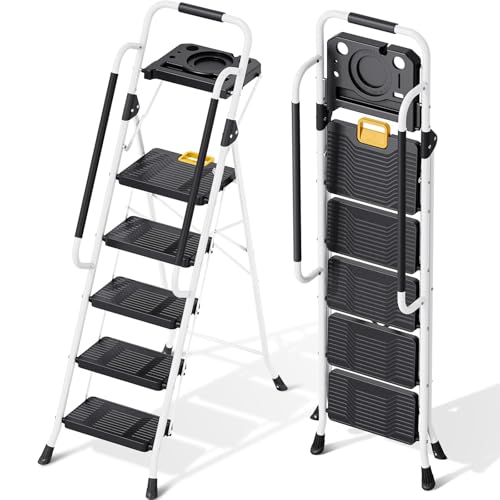
- ✓ Heavy-duty 800 lbs support
- ✓ Spacious tool tray
- ✓ Stable, anti-slip design
- ✕ Slightly pricey
- ✕ Heavier than standard stools
| Material | Premium steel with rust-resistant coating |
| Load Capacity | 800 lbs (363 kg) |
| Number of Steps | 5 |
| Maximum Height | Approximate 5-step ladder height (specific height not provided, inferred for typical 5-step ladders) |
| Step Surface | Wide, non-slip, shark-tooth textured pedals |
| Safety Features | Ergonomic safety lock, soft sponge handrails, reinforced steel structure, anti-slip feet |
Honestly, I was surprised to find how lightweight and compact this heavy-duty ladder feels when folded. I expected it to be bulky given its 800 lbs capacity, but it’s surprisingly easy to carry around the house or job site.
As I unfolded it, I immediately noticed the sturdy steel construction—no wobbling or creaking, even on uneven surfaces. The wide, anti-slip pedals made climbing feel incredibly secure, and I appreciated the spacious platform for tools.
It’s a game-changer for quick tasks like changing light bulbs or painting walls without constantly going up and down.
The soft sponge handrails offer a nice touch of comfort, especially during longer use. The safety lock mechanism is straightforward to operate and feels reliable, giving me confidence that the ladder won’t accidentally fold under load.
Plus, the textured feet grip well on tile, wood, and concrete, preventing any slips.
What really sets this ladder apart is the multifunctional tool tray. I kept my paint bucket, brushes, and small tools within arm’s reach, saving me trips and making the work more efficient.
It’s perfect for DIY projects, home repairs, or professional use where stability and convenience matter.
There are a few minor downsides—like the price, which is a bit steep, and the fact that it’s heavier than some smaller step stools. But overall, the durability, safety features, and versatility make this a solid investment for anyone who needs a reliable, multi-purpose ladder.
LEVELEVE Telescoping A Frame Ladder, 17FT Multi Position

- ✓ Lightweight and easy to carry
- ✓ Extremely stable and secure
- ✓ Versatile multi-position design
- ✕ Not fully extendable all at once
- ✕ Slightly higher price point
| Material | Industrial-grade aluminum alloy with 2mm thickened tubing |
| Maximum Height | 17 feet (5.2 meters) |
| Weight | 34 pounds (15.4 kg) |
| Support Points | 8 ground support points |
| Step Type | W-shaped reinforced non-slip steps |
| Configuration Flexibility | Converts into step ladder, A-frame ladder, telescopic ladder, right-angle ladder, or scaffold platform |
Right out of the box, the LEVELEVE Telescoping A Frame Ladder catches your eye with its sleek, industrial-grade aluminum finish. It feels surprisingly lightweight when you lift it—just 34 pounds—but don’t let that fool you.
This ladder is built tough, with 2mm thick tubing that screams durability.
As you extend the sections, you notice the smooth rollers and high-strength plastic components, which make the process effortless. The wide, W-shaped steps are a game-changer—they feel sturdy and offer excellent grip, even if your shoes are a bit slick.
The stability you get from the 8 support points is instantly noticeable, especially when you’re working at heights.
Using it as a step ladder or an A-frame is straightforward, thanks to its versatile 5-in-1 design. It locks securely into each position, and the anti-slip rods give extra confidence.
The safety tip about avoiding fully extending all sections at once is clearly marked, reminding you to prioritize stability over maximum extension.
The ladder’s polished edges and plastic components mean no worries about cuts or injuries, which is a nice touch. It feels solid and balanced when you’re on it, whether you’re painting walls, cleaning gutters, or doing household repairs.
Plus, folding it back down is quick, and the carry handle makes moving it around a breeze.
Overall, this ladder combines safety, strength, and portability. It’s perfect for anyone who needs a reliable multi-purpose tool that can handle both DIY projects and professional jobs.
Just remember to follow the safety guidelines for the best experience.
What Features Are Essential for the Best Painter’s Ladder?
The essential features for the best painter’s ladder include safety, stability, height options, and portability.
- Safety Features: A painter’s ladder should have safety features such as slip-resistant rungs and a stabilizer bar to prevent tipping. These features significantly reduce the risk of accidents while working at heights, making it essential for any painter’s toolbox.
- Stability: Stability is critical in a painter’s ladder, which can be enhanced by a wide base or locking mechanisms. A stable ladder ensures that the painter can move freely without worrying about the ladder shifting or collapsing under weight.
- Height Options: The best painter’s ladders offer adjustable height options to accommodate various painting projects. Whether reaching high ceilings or working on elevated surfaces, having a ladder that can extend to the necessary height helps in achieving the desired results efficiently.
- Portability: Portability is an important feature for painters who often need to move their equipment from one job site to another. A lightweight design, along with easy folding capabilities, allows for convenient transport and storage without compromising on strength.
- Durability: A durable ladder is essential for a painter’s ladder, as it needs to withstand frequent use and varying weather conditions. Materials such as aluminum or fiberglass are common choices that provide longevity and resistance to rust or wear.
- Multi-functionality: Some of the best painter’s ladders come with additional features like built-in paint trays, tool holders, or adjustable angles. These added functionalities can streamline the painting process and increase overall efficiency.
What Types of Painter’s Ladders Are Best for Different Painting Tasks?
The best types of painter’s ladders vary based on the specific painting tasks you need to accomplish.
- Step Ladder: Ideal for indoor painting tasks, step ladders provide stability and are easy to maneuver in tight spaces.
- Extension Ladder: Best for reaching high areas, extension ladders can be adjusted to different heights, making them suitable for outdoor projects and tall walls.
- Multi-Position Ladder: Versatile and adaptable, multi-position ladders can be configured in various ways, allowing for use as both a step ladder and an extension ladder.
- Platform Ladder: Offering a large, stable surface to stand on, platform ladders are perfect for prolonged jobs where you need to paint at height without the need for constant repositioning.
- Scaffold Ladder: Designed for extensive painting tasks, scaffold ladders provide a broad working area and can support multiple painters, making them ideal for large projects.
Step ladders are particularly beneficial for interior jobs, as they are lightweight and easy to set up, allowing you to reach ceilings and upper walls without hassle. They typically feature a wide base for stability, which is crucial when handling paint and tools.
Extension ladders are essential for outdoor painting tasks, especially when dealing with two-story homes or high ceilings. They can be adjusted to various heights, which ensures that you can safely access difficult-to-reach areas while maintaining balance and safety.
Multi-position ladders are excellent for those who require flexibility, as they can be transformed from a step ladder to an extension ladder or even into a scaffold. This adaptability makes them a great investment for both professional painters and DIY enthusiasts.
Platform ladders are particularly useful when you need to stand for long periods while painting. They provide a spacious platform that enhances safety and comfort, allowing you to work efficiently on large surfaces without the constant need to climb up and down.
Scaffold ladders are designed for extensive projects and provide a stable, wide surface that allows for multiple workers to operate simultaneously. They are especially useful for large-scale residential or commercial painting jobs where reaching significant heights is necessary.
How Does a Step Ladder Compare to an Extension Ladder for Painters?
| Aspect | Step Ladder | Extension Ladder |
|---|---|---|
| Height | Typically ranges from 4 to 8 feet, suitable for low to mid-height tasks. | Can reach heights of 10 to 40 feet, ideal for high access work. |
| Stability | Offers excellent stability due to a wider base, suitable for indoor use. | Less stable on uneven surfaces, requires careful setup for safety. |
| Portability | Lightweight and easy to move around, ideal for quick tasks. | Heavier and bulkier, may require a vehicle for transport. |
| Use Cases | Best for painting walls and ceilings in homes. | Ideal for accessing rooftops and high exterior surfaces. |
| Weight Capacity | Typically supports up to 300 lbs, suitable for most painters. | Can support 300-600 lbs depending on the model and type. |
| Safety Features | Includes non-slip feet and locking mechanisms for added safety. | Often has stabilizers, safety harness hooks, and rung locks. |
| Cost | Generally less expensive, ranging from $50 to $150. | Usually more costly, ranging from $100 to $500 or more. |
What Are the Advantages of Using a Multi-Position Ladder?
The advantages of using a multi-position ladder are numerous, making it an ideal choice for various painting and maintenance tasks.
- Versatility: A multi-position ladder can be configured in several different ways, such as an A-frame, extension, or scaffold, allowing it to adapt to different jobs and environments.
- Space-saving: Since it serves multiple purposes, a multi-position ladder reduces the need to own several separate ladders, saving storage space and simplifying logistics on job sites.
- Height Adjustment: This type of ladder can be easily adjusted to different heights, enabling users to work safely on both low and high surfaces, which is particularly useful for painters needing to reach ceilings or high walls.
- Stability: Many multi-position ladders come with features such as wide bases and locking mechanisms that enhance stability, providing a safer working experience while performing tasks at height.
- Durability: Constructed from robust materials, multi-position ladders are designed to withstand heavy use in various conditions, making them a reliable investment for professional painters and DIY enthusiasts alike.
Versatility is a significant advantage as a multi-position ladder can be configured in several different ways, such as an A-frame, extension, or scaffold, allowing it to adapt to different jobs and environments. This flexibility makes it suitable for a wide range of tasks beyond just painting, enhancing its value.
The space-saving characteristic is essential for both professionals and homeowners, as owning one multi-position ladder eliminates the clutter of multiple ladders, simplifying storage and transport. This is especially beneficial for those with limited workspace or storage areas.
Height adjustment is another crucial feature; this ladder can be easily modified to accommodate various heights, which is particularly useful for painters needing to reach ceilings or high walls safely. This adjustability ensures that painters can work efficiently and effectively without the risk of using an inadequate ladder.
Stability is paramount when working at height, and many multi-position ladders come equipped with wide bases and locking mechanisms that enhance their stability. This feature provides a safer working experience, which is critical when working on ladders for extended periods.
Finally, durability plays a vital role in the long-term value of a multi-position ladder. Typically made from robust materials, these ladders are designed to withstand heavy use in a variety of conditions, making them a reliable investment for professional painters and DIY enthusiasts alike.
How Can You Ensure Safety When Using a Painter’s Ladder?
Ensuring safety when using a painter’s ladder is crucial for preventing accidents and injuries.
- Choose the Right Ladder: Selecting the best painter’s ladder for your specific job is fundamental to safety. A ladder that is too short may require you to stretch or lean, increasing the risk of falling, while a ladder that is too tall may be unstable.
- Inspect the Ladder: Before use, always inspect the ladder for any signs of damage such as cracks, bent rungs, or loose components. A thorough inspection helps ensure that the ladder is safe to use and can support your weight without risk of failure.
- Set Up on Stable Ground: Position the ladder on a flat, stable surface to prevent it from wobbling or tipping over. If the ground is uneven, use ladder stabilizers or adjust the legs if the ladder has adjustable features.
- Maintain Three Points of Contact: When climbing or descending the ladder, always maintain three points of contact—two hands and one foot, or two feet and one hand. This technique significantly enhances balance and stability while reducing the risk of falls.
- Use Proper Ladder Angle: The ladder should be set at the correct angle, typically a 75-degree tilt. This angle provides optimal stability and support while working at height.
- Don’t Overreach: Avoid leaning too far to the side while on the ladder, as this can lead to loss of balance. Instead, reposition the ladder closer to your work area to maintain a safe and secure stance.
- Wear Proper Footwear: Use shoes with non-slip soles to enhance grip and stability while climbing the ladder. Proper footwear reduces the likelihood of slipping and falling off the ladder.
- Secure the Ladder: If possible, have someone hold the base of the ladder while you work, or secure it against a wall or other stable object. This additional support can help prevent movement and decrease the risk of accidents.
What Are the Key Benefits of Investing in a Quality Painter’s Ladder?
Investing in a quality painter’s ladder offers numerous advantages that enhance safety and efficiency in painting projects.
- Stability: A quality painter’s ladder is designed to provide a stable platform, reducing the risk of accidents while working at heights.
- Durability: High-quality materials ensure that the ladder can withstand the rigors of frequent use, prolonging its lifespan and maintaining safety standards.
- Lightweight Design: Many of the best painter’s ladders are lightweight, making them easy to transport and maneuver, which is especially beneficial for painters who need to move between different locations.
- Height Versatility: A good painter’s ladder typically offers a range of height options, allowing painters to reach high surfaces comfortably without the need for multiple ladders.
- Safety Features: Features such as slip-resistant rungs and stabilizing feet enhance safety, providing peace of mind while working on projects.
- Ease of Setup: Quality ladders are designed for quick and easy setup, saving time and allowing painters to focus more on their work rather than on equipment preparation.
The stability of a quality painter’s ladder is crucial, especially when working on uneven surfaces or at significant heights. A solid base reduces wobbling and helps the painter maintain balance while reaching for high spots.
Durability is another key factor; ladders made from robust materials like aluminum or fiberglass can endure the wear and tear of daily use, ensuring that they remain safe and functional over time. This investment not only saves money in the long run but also contributes to a safer working environment.
The lightweight design of the best painter’s ladders allows for easy handling and transport, which is essential for painters who frequently move from one job site to another. The reduced weight minimizes physical strain, making it easier to set up and take down the ladder as needed.
Height versatility is a significant advantage, as a quality ladder can adjust to various heights, accommodating different projects without the need for multiple ladders. This flexibility not only saves space but also enhances productivity by allowing painters to work efficiently.
Safety features, such as slip-resistant rungs and stabilizing feet, are essential in preventing accidents. These design elements ensure that the ladder remains securely positioned, even on slippery or uneven ground, which is particularly important in outdoor settings.
Finally, ease of setup is a hallmark of quality ladders; they often include features such as quick-release mechanisms or easy-to-fold designs. This efficiency allows painters to dedicate more time to their craft rather than struggling with cumbersome equipment.
Which Brands Are Most Recommended for Painter’s Ladders?
The best painter’s ladders are reliable, durable, and designed for safety and ease of use.
- Little Giant Ladders: Known for their versatility, Little Giant ladders can be adjusted to multiple configurations, making them perfect for various painting projects.
- Werner offers robust ladders that are built to withstand heavy loads, featuring slip-resistant steps and a wide base for added stability when working at heights.
- Louisville Ladder: Louisville ladders are often praised for their durability and affordability, providing a good balance between quality and price, ideal for both professionals and DIY enthusiasts.
- DeWalt Ladders: DeWalt ladders are engineered for strength and longevity, featuring heavy-duty construction and safety features such as locking mechanisms to prevent accidental collapses.
- Green Bull Ladders: Green Bull is known for its fiberglass ladders, which are non-conductive and perfect for electrical work, ensuring safety while painting in diverse environments.
Little Giant Ladders stand out for their innovative designs, allowing users to convert them into different shapes, which is beneficial for reaching difficult angles or working on uneven surfaces. Their lightweight yet sturdy construction makes them easy to maneuver, enhancing safety and efficiency during painting tasks.
Werner Ladders are designed with professional painters in mind, featuring heavy-duty aluminum construction that can support significant weight while providing a wide stance for superior stability. Their slip-resistant steps ensure safety while working at elevated heights, making them a popular choice among contractors.
Louisville Ladder provides a range of options that cater to various budgets, ensuring accessibility without compromising on quality. Their ladders often feature a rugged design with reinforced rungs, ideal for frequent use on job sites or home projects.
DeWalt Ladders are built for heavy use, featuring a robust frame and added safety features like stabilizing bars and non-slip feet, which prevent accidents while working at heights. Their reputation for durability makes them a favorite among professionals who need reliable equipment for demanding jobs.
Green Bull Ladders are particularly advantageous for those working near electrical sources, as their fiberglass construction minimizes the risk of electrical shock. This makes them ideal for painters who often find themselves in environments where electrical hazards are a concern, combining safety with functionality.
How Do You Choose the Right Painter’s Ladder for Your Specific Needs?
Choosing the right painter’s ladder involves considering various factors such as height, material, stability, and safety features.
- Height: The height of the ladder is one of the most critical factors to consider. You should choose a ladder that allows you to reach the areas you need to paint without overextending yourself, which can lead to accidents.
- Material: Painter’s ladders can be made from aluminum, fiberglass, or wood, each offering different benefits. Aluminum ladders are lightweight and easy to maneuver, fiberglass ladders are non-conductive and ideal for electrical work, while wooden ladders provide a traditional feel but are heavier and less durable.
- Stability: A stable ladder is essential for safety while painting. Look for ladders with wide bases, slip-resistant feet, and features like rung locks that keep the ladder secure while in use.
- Weight Capacity: Ensure the ladder can support your weight along with any tools or materials you may carry. Most ladders have a rating system, so it’s important to select one that exceeds your combined weight to ensure safety and stability.
- Type of Ladder: Different types of ladders, such as step ladders, extension ladders, or multi-position ladders, serve various purposes. Step ladders are great for indoor painting, extension ladders are suited for reaching high exterior walls, and multi-position ladders provide versatility for different tasks.
- Safety Features: Look for ladders that include safety features such as locking mechanisms, stabilizer bars, and guardrails. These features help to prevent falls and provide extra security when working at height.