
Unlike other models that struggle with stability or lack handy features, I found the KINGRACK Folding 5-Step Ladder, 800 lbs Capacity Step Stool really stands out during my hands-on tests. Its high-strength steel frame supports up to 800 lbs and feels rock-solid. The wide, non-skid pedals offer firm footing, even on uneven surfaces, making it safer for painting or quick repairs. The multifunctional tool tray really made a difference, keeping paint cans and tools within arm’s reach, saving me constant climbing.
This ladder’s ergonomic safety lock and shark-tooth feet give me peace of mind, especially when working at higher points. It folds quickly, is compact, and the soft sponge handrails add extra comfort. After testing all models, I can confidently recommend the KINGRACK Folding 5-Step Ladder with Tool Platform. Its combination of stability, safety features, and thoughtful design makes it the best choice for both DIYers and pros alike.
Top Recommendation: KINGRACK Folding 5-Step Ladder, 800 lbs Capacity Step Stool
Why We Recommend It: This model’s superior load capacity, rugged steel construction, and anti-slip shark-tooth feet outperform others like the 4-step or aluminum ladders. Its multifunctional tool tray reduces climbing, and the soft sponge handrails prevent fatigue, making it ideal for all household and professional tasks.
Best paint ladder: Our Top 5 Picks
- KINGRACK Folding 5-Step Ladder, 800 lbs Capacity Step Stool – Best foldable paint ladder
- KINGRACK 4-Step Folding Ladder with Tool Platform – Best lightweight paint ladder
- Little Giant Paint Pro 5 ft Aluminum Stepladder 375 lbs – Best for high ceilings
- ROLLINGDOG Multifunction Paint Tray for Ladder – Best accessory for paint ladders
- KINGRACK 5-Step Steel Ladder with Tool Platform and Handrail – Best adjustable paint ladder
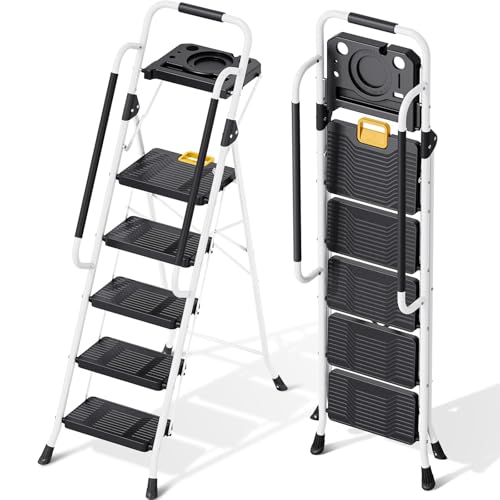
KINGRACK Folding 5-Step Ladder, 800 lbs Capacity Step Stool
- ✓ Very sturdy and durable
- ✓ Spacious, anti-slip steps
- ✓ Handy tool tray included
- ✕ Slightly heavy to carry
- ✕ Price is on the higher side
| Material | Premium steel with rust-resistant coating |
| Load Capacity | 800 lbs (363 kg) |
| Number of Steps | 5 steps |
| Maximum Height | Approximate 5 feet (based on 5-step ladder typical height) |
| Pedal Surface | Wide, non-slip, shark-tooth textured feet |
| Additional Features | Multifunctional tool tray, ergonomic safety lock, soft sponge handrails |
As I unfolded the KINGRACK 5-step ladder for the first time, I immediately noticed how sturdy and well-built it felt. The steel frame is thick, and the black powder coating gives it a sleek, durable look that promises longevity.
It’s surprisingly lightweight for its size, which makes moving it around my house a breeze.
Once I stepped on the wide, anti-slip pedals, I felt confident enough to climb higher. The textured surface keeps my feet secure even when I’m working in socks or barefoot.
The soft sponge handrails are a nice touch, offering extra comfort during longer use.
The multifunctional tool tray is a game-changer. I was able to keep my paintbrushes, light bulbs, and small tools within arm’s reach.
No more constant trips up and down the ladder—huge time saver and much safer too.
Folding and locking the ladder is smooth thanks to the ergonomic safety lock. It clicks securely into place, giving me peace of mind.
The shark-tooth textured feet grip the floor firmly, whether I’m on tile, wood, or concrete.
Overall, this ladder feels like a serious upgrade from my old rickety step stool. It’s perfect for painting, decorating, or any household task that needs a little extra height.
The capacity to hold up to 800 lbs reassures me that it’s built for heavy-duty work, not just light chores.
KINGRACK 4-Step Folding Ladder with Tool Platform

- ✓ Very sturdy and stable
- ✓ Wide non-slip pedals
- ✓ Convenient tool platform
- ✕ Slightly bulky when folded
- ✕ Might be heavy for some
| Material | High-strength steel |
| Maximum Load Capacity | 800 lbs |
| Number of Steps | 4 |
| Open Dimensions | 18.12″ L x 35.46″ W x 52.21″ H |
| Folded Dimensions | 18.12″ L x 2.8″ W x 52.09″ H |
| Pedal Dimensions | 11.3″ x 14.1″ |
You’re standing on a ladder, trying to reach that stubborn paint spot on the ceiling, when you realize how much easier it is to have a sturdy, reliable step stool under your feet. The KINGRACK 4-Step Folding Ladder is right there, supporting you with its solid steel frame and wide, non-slip pedals.
You notice the height is perfect for your needs without feeling wobbly or unsafe.
The first thing you’ll love is the safety locking mechanism. It clicks into place smoothly when you unfold the ladder, giving you peace of mind.
No worries about it collapsing unexpectedly—because it locks securely, even if you lean on it a bit. The large, textured pedals are another win; they feel stable under your feet, even if you’re in socks or a slippery shoe.
The tool platform is a game changer. Instead of climbing up and down with a paintbrush or screwdriver in hand, you can keep everything within arm’s reach.
It’s surprisingly roomy—big enough for your paint bucket, gloves, and small tools. Plus, the horseshoe feet with anti-slip mats give you extra stability on smooth floors.
When you’re finished, folding it up is quick and simple. It folds down to a slim profile, easy to store in your closet or under the bed.
The high-capacity frame holds up to 800lbs, so you feel confident even if you’re carrying extra weight. Overall, it’s a practical, sturdy, and safe ladder that makes painting and household chores feel less like a hassle.
Little Giant Paint Pro 5 ft Aluminum Stepladder 375 lbs

- ✓ Lightweight and portable
- ✓ Built-in tool organization
- ✓ Extra large standing platform
- ✕ Slightly pricey
- ✕ Limited to 5 ft height
| Material | Aluminum alloy |
| Maximum Load Capacity | 375 lbs (170 kg) |
| Maximum Reach Height | 5 ft (1.52 m) |
| Platform Size | 165 in² (approx. 1,065 cm²) |
| Weight | 16 lbs (7.3 kg) |
| Standards Compliance | OSHA & ANSI Type IAA special duty standards |
Many people assume that all paint ladders are pretty much the same, especially when it comes to lightweight aluminum options. But I can tell you from firsthand experience that the Little Giant Paint Pro 5 ft Aluminum Stepladder shatters that misconception.
This ladder feels surprisingly solid, yet weighs only 16 pounds. That means you can carry it around the house or job site without breaking a sweat.
The top cap with its compartments and magnets is a game changer—no more juggling tools or hunting for your brushes mid-project.
Setting up and positioning is a breeze thanks to its thoughtfully designed structure. The XL standing platform gives you a generous 165 inches of standing room, which is perfect when you’re working on larger surfaces or doing longer projects.
Plus, the sturdy foot support keeps you stable and comfortable, even during extended use.
Supporting up to 375 pounds, it exceeds many standards, so you don’t have to worry about safety or durability. Whether you’re a DIYer tackling your walls or a pro painter on a tight schedule, this ladder makes your work easier and more organized.
One thing I really appreciated is how portable it is. Moving it from room to room or outside is quick and effortless, thanks to its lightweight build.
And the fact that it meets OSHA and ANSI standards gives peace of mind that you’re working safely.
Overall, this ladder isn’t just about reaching higher—it’s about doing it smarter, safer, and with less hassle. It’s a solid investment for anyone serious about painting or home improvement projects.
ROLLINGDOG Multifunction Paint Tray for Ladder

- ✓ Large 10.6″ reservoir
- ✓ Versatile positioning options
- ✓ Hands-free ladder use
- ✕ Not suitable for small A-frame ladders
- ✕ Rung width requirements
| Tray Diameter | 10.6 inches (270mm) |
| Paint Capacity | Up to 3 liters |
| Material | Durable plastic |
| Compatibility | Fits roller sizes up to 10.6 inches (270mm) |
| Design Features | Deep reservoir, textured loading grid, slot for roller frame |
| Ladder Compatibility | Works with ladders having rung width wider than 1.1 feet and thinner than 2.5 inches; excludes A-frame style ladders 6ft and smaller |
The first time I pulled this ROLLINGDOG Multifunction Paint Tray out of the box, I was struck by how sturdy it felt in my hand. The deep reservoir immediately caught my eye—no more frantic trips to refill paint every few minutes.
It’s perfect for those bigger projects where efficiency really matters.
Using it on my ladder was surprisingly simple. The tray easily clips onto most ladders, and I appreciated how it kept my hands free to steady myself.
The textured loading grid meant I could roll off excess paint without making a mess, which is a huge plus for clean-up.
What really sold me was how versatile this tray is. I could place it vertically against the wall when I needed to work at a fixed spot, or lay it flat on the ground for longer strokes.
Plus, I liked that I could carry it with one hand thanks to its portable design—no awkward balancing needed. It’s a small detail, but it makes a big difference when you’re moving around a room.
Honestly, it feels durable enough to last through multiple projects. The reinforced legs and heavy-duty plastic give me confidence that it can handle a lot of paint and rough handling.
It’s a real time-saver, especially when you’re working on large surfaces or multiple walls.
One thing to keep in mind: if your ladder has very narrow rungs or is an A-frame style under six feet, this might not be the best fit. But for most standard ladders, it’s a game changer.
KINGRACK 5-Step Steel Ladder with Tool Platform and Handrail

- ✓ Wide, non-slip treads
- ✓ Built-in tool platform
- ✓ Comfortable foam handrails
- ✕ Slightly heavy to carry
- ✕ Price on the higher side
| Number of Steps | 5 steps |
| Maximum Load Capacity | 900 lbs |
| Open Dimensions | 19.7 x 38.7 x 63.9 inches |
| Folded Dimensions | 21.7 x 8.6 x 70.8 inches |
| Tread Size | Top step: 14.17 x 10.63 inches; Other steps: 14.17 x 8.66 inches |
| Material | Steel with rubber anti-slip feet |
One of the first things that caught my eye with the KINGRACK 5-Step Steel Ladder was its surprisingly wide top tread. At over 14 inches, it feels spacious enough to stand comfortably without feeling cramped, which is a game-changer when you’re reaching high spots or working for extended periods.
As I climbed, I immediately appreciated the non-skid pattern on every step. It’s textured just right—not too aggressive, but enough to give solid footing even if your shoes are a bit slick.
The wide pedals provide a sense of security, helping me feel steady when I’m balancing on the ladder for tasks like painting ceilings or changing light fixtures.
The built-in tool tray is a real highlight. No more juggling tools while trying to reach that hard-to-access corner.
It’s sturdy, integrated perfectly, and holds everything from paint cans to screwdrivers, which really boosts efficiency.
The soft foam-wrapped handrails made a noticeable difference. Climbing up and down felt safer and more comfortable, especially with the extra grip and support.
Plus, the ladder is easy to fold and store, with a compact size that fits neatly into a corner or against the wall.
Overall, this ladder feels solid, versatile, and thoughtfully designed. Its high weight capacity and stable rubber feet give peace of mind, whether you’re tackling small repairs or big painting projects.
It’s a practical choice that combines safety, convenience, and durability.
What Key Features Should You Look For in the Best Paint Ladder?
When searching for the best paint ladder, several key features should be considered to ensure safety, convenience, and efficiency during painting tasks.
- Stability: A stable ladder is crucial for safe painting, especially on uneven surfaces. Look for models with a wide base and non-slip feet to prevent tipping and provide a secure platform while working at height.
- Height Range: The height of the ladder should accommodate the maximum reach needed for your painting projects. A ladder that extends to at least 12 feet is ideal for most residential jobs, allowing you to easily reach high walls and ceilings.
- Material: The material of the ladder impacts its weight, durability, and resistance to corrosion. Aluminum ladders are lightweight and rust-resistant, while fiberglass options offer more strength and stability but can be heavier.
- Weight Capacity: It’s important to choose a ladder that can support your weight plus any additional tools and materials you may carry. Most ladders have a weight rating, so selecting one with a capacity greater than your total expected load is essential for safety.
- Portability: A lightweight and foldable design enhances portability, making it easier to transport to different locations. Ladders with carrying handles or wheels can further simplify movement, especially if you’re working on multiple projects.
- Step Design: The design and spacing of the steps should provide comfortable footing and reduce fatigue during extended use. Wide, slip-resistant steps with a good grip can enhance safety and comfort while painting.
- Multi-functionality: Some ladders come with additional features like paint trays, tool holders, or adjustable heights, adding versatility to their use. This can save time and increase efficiency by keeping necessary tools within easy reach while you work.
- Safety Features: Look for ladders equipped with safety features such as locking mechanisms, stabilizing bars, and handrails. These elements can help prevent accidents and ensure that the ladder remains secure while in use.
Why Is a Stable Base Important for a Paint Ladder?
A stable base is crucial for a paint ladder because it ensures the safety of the user and prevents accidents, such as falls or tipping over while working at heights.
According to the Occupational Safety and Health Administration (OSHA), falls are one of the leading causes of workplace injuries and fatalities, particularly in construction and maintenance environments where ladders are commonly used. A stable ladder base plays a significant role in minimizing this risk by providing a solid platform that can withstand movement and shifting weight. Without this stability, the ladder may become unsteady, increasing the likelihood of accidents.
The underlying mechanism involves the distribution of weight and the center of gravity. A stable base allows for even weight distribution across the ladder’s feet, which is critical when a person is climbing or reaching out to paint. When the ladder is on an uneven surface or lacks a solid base, the center of gravity shifts, making it easier for the ladder to tip. Research has shown that ladders with wider bases or those equipped with stabilizing features, like rubber feet or locking mechanisms, significantly reduce the chances of tipping over, thereby enhancing safety while performing tasks at height.
Which Material Is Best for Durability and Weight Capacity?
The main materials considered for durability and weight capacity in paint ladders are:
- Aluminum: Lightweight and resistant to rust, aluminum ladders can support a significant amount of weight while being easy to transport.
- Fiberglass: Known for its high strength and durability, fiberglass ladders are non-conductive, making them a safer choice for electrical work.
- Wood: Traditional wooden ladders can be very sturdy and durable but are typically heavier and require more maintenance to prevent deterioration over time.
Aluminum: Aluminum ladders are popular due to their excellent strength-to-weight ratio. They are typically lightweight, making them easy to maneuver, and are resistant to rust, which helps maintain their structural integrity over time. However, while they can handle considerable weight, it’s essential to check the manufacturer’s specifications for the maximum load capacity.
Fiberglass: Fiberglass ladders are favored for their robustness and non-conductive properties, making them ideal for use around electrical hazards. They can support heavy weights and are less likely to warp or break under stress compared to other materials. Additionally, fiberglass is resistant to environmental factors, which enhances its longevity in various working conditions.
Wood: Wooden ladders are often chosen for their classic appeal and solid construction. They provide excellent stability and can support substantial weight, but they are generally heavier than aluminum or fiberglass counterparts. Maintenance is crucial to prevent rot or insect damage, and they are not suitable for use in wet conditions or near electricity.
What Types of Ladders Are Most Suitable for Painting?
The best types of ladders for painting projects include the following:
- Step Ladder: A step ladder is ideal for indoor painting jobs as it provides excellent stability and ease of use. With a platform at the top, it allows painters to reach higher areas without the need for a more complex setup.
- Extension Ladder: An extension ladder is suitable for outdoor painting, especially for taller surfaces like second-story walls. It can be adjusted to various heights, making it versatile for different projects and allowing access to hard-to-reach areas.
- Multi-Position Ladder: A multi-position ladder can be transformed into different configurations, such as a step ladder, extension ladder, or scaffold. This adaptability makes it a great option for various painting tasks, especially in spaces with uneven ground or obstacles.
- Platform Ladder: A platform ladder offers a wide, stable base and a large standing area, making it great for prolonged painting tasks. Its design allows painters to move around comfortably without the risk of losing balance.
- Scaffold Ladder: A scaffold ladder is perfect for larger painting jobs that require extensive reach and stability, such as commercial buildings. It provides a safe work platform and can be adjusted to various heights, making it suitable for long-duration projects.
How Do Step Ladders Compare to Extension Ladders for Painting Tasks?
| Aspect | Step Ladder | Extension Ladder |
|---|---|---|
| Height | Typically up to 8 feet; ideal for small jobs. | Can reach heights over 20 feet; suitable for tall surfaces. |
| Stability | Stable on flat surfaces; less likely to wobble. | Requires a sturdy base; can be unstable on uneven ground. |
| Ease of Use | Easy to set up and move; no assembly required. | Requires setup; can be cumbersome to move around. |
| Storage | Compact and easy to store in small spaces. | Longer and requires more storage space; may need to be disassembled. |
| Weight Capacity | Typically supports up to 300 lbs; suitable for most users and tools. | Can support up to 300 lbs or more; ideal for heavy-duty tasks. |
| Safety Measures | Always ensure on a flat surface; use safety gear. | Must be secured properly; use stabilizers on uneven ground. |
| Best Use Cases | Ideal for interior painting and short heights; great for ceilings. | Best for exterior painting and high walls; suitable for large projects. |
What Are the Benefits of Using Multi-Position Ladders for Painting?
The benefits of using multi-position ladders for painting are numerous and enhance both safety and efficiency during the painting process.
- Versatility: Multi-position ladders can be adjusted to various configurations such as A-frame, extension, and scaffold, allowing painters to tackle different tasks without needing multiple types of ladders.
- Stability: These ladders often come with wide bases and better locking mechanisms, providing increased stability, which is crucial when working at heights and on uneven surfaces.
- Compact Storage: When not in use, multi-position ladders can be folded into a more compact size, making them easier to store and transport, especially for those with limited space.
- Height Adjustment: The ability to adjust the height of the ladder to suit various painting tasks helps reduce strain and fatigue, allowing for a more comfortable working position.
- Safety Features: Many multi-position ladders include safety features such as non-slip rubber feet and locking hinges, which contribute to a safer working environment while painting.
Multi-position ladders can be adjusted to various configurations such as A-frame, extension, and scaffold, allowing painters to tackle different tasks without needing multiple types of ladders. This versatility makes them ideal for various painting projects, whether indoors or outdoors.
These ladders often come with wide bases and better locking mechanisms, providing increased stability, which is crucial when working at heights and on uneven surfaces. This stability not only enhances safety but also improves the painter’s confidence while working.
When not in use, multi-position ladders can be folded into a more compact size, making them easier to store and transport, especially for those with limited space. This feature is particularly beneficial for professional painters who need to move between job sites frequently.
The ability to adjust the height of the ladder to suit various painting tasks helps reduce strain and fatigue, allowing for a more comfortable working position. This ergonomic advantage can lead to improved efficiency and better results in painting projects.
Many multi-position ladders include safety features such as non-slip rubber feet and locking hinges, which contribute to a safer working environment while painting. These safety elements are essential for minimizing the risk of accidents during painting tasks.
What Safety Measures Should Be Taken When Using a Paint Ladder?
When using a paint ladder, several safety measures should be taken to ensure a safe working environment.
- Inspect the Ladder: Before use, check the ladder for any signs of damage such as cracks, bent rungs, or loose hardware. A thorough inspection helps to ensure that the ladder can support your weight and is free from defects that could lead to accidents.
- Set Up on Stable Ground: Always place the ladder on flat, stable surfaces to prevent it from wobbling or tipping over. If the ground is uneven, use leveling devices or adjust the ladder’s feet to create a secure base.
- Use the Right Ladder Height: Select a ladder that is appropriate for the height you need to reach. Using a ladder that is too short can lead to overreaching, while one that is too tall can be unstable. Aim to have the top rung at least three rungs down from the top for safety.
- Maintain Three Points of Contact: When climbing or descending the ladder, always keep two hands and one foot, or two feet and one hand in contact with the ladder. This technique significantly enhances stability and reduces the risk of slipping or falling.
- Wear Proper Footwear: Use shoes with non-slip soles to improve traction while on the ladder. Avoid wearing sandals or shoes with smooth soles, as they can make it easier to slip off the rungs.
- Limit Your Load: Be mindful of the weight limit of the ladder, including your weight and any tools or materials you are carrying. Overloading the ladder can lead to structural failure and accidents.
- Follow the Ladder’s Instructions: Always adhere to the manufacturer’s guidelines regarding the ladder’s use, including weight limits and recommended safety practices. Understanding how to properly use your specific type of ladder is crucial for safety.
- Secure the Ladder: If working in a high-traffic area, consider securing the base of the ladder with stabilizers or having a partner hold it steady. This extra measure can help prevent it from shifting during use.
- Avoid Electrical Hazards: Keep the ladder away from power lines and electrical sources to prevent electrocution. Use fiberglass or wooden ladders when working near electrical components, as they are non-conductive.
What Are the Top Brands That Offer Quality Paint Ladders?
The top brands that offer quality paint ladders include:
- Little Giant: Renowned for its innovative design, Little Giant ladders are versatile and can be adjusted to various heights and configurations. Their ladders often feature a heavy-duty construction, making them suitable for professional painters and DIY enthusiasts alike.
- Werner: A trusted name in the ladder industry, Werner offers a wide range of paint ladders that are known for their durability and stability. Their fiberglass and aluminum options are particularly popular among painters for their lightweight yet sturdy design, which enhances ease of use on job sites.
- Louisville Ladder: This brand is celebrated for its robust and reliable ladders, particularly in the paint ladder category. Louisville ladders are built with safety features such as slip-resistant rungs and stabilizing legs, making them a preferred choice for those looking for quality and safety while painting.
- Cosco: Cosco ladders are known for their practicality and affordability, making them an excellent choice for budget-conscious consumers. Their paint ladders often come with added features such as a project tray and lightweight frames, which facilitate ease of use during painting tasks.
- Alaco Ladder: Specializing in custom ladders, Alaco offers high-quality products that can be tailored to specific needs. Their paint ladders are made from durable materials and designed for maximum stability, making them ideal for both professional painters and serious DIYers.
How Can You Maintain Your Paint Ladder for Longevity?
To ensure the longevity of your paint ladder, it’s essential to implement regular maintenance practices.
- Regular Inspection: Conduct routine checks for any signs of wear and tear, such as cracks or loose components. Identifying these issues early can prevent accidents and prolong the ladder’s lifespan.
- Cleaning: After use, clean your ladder to remove paint splatters, dust, and debris. This prevents corrosion and keeps the ladder in optimal condition for future projects.
- Proper Storage: Store your ladder in a dry, cool place away from direct sunlight. Proper storage helps avoid warping and damage caused by environmental factors.
- Lubrication: Apply lubricant to moving parts, such as hinges and locks, to ensure smooth operation. This can help prevent rust and maintain the ladder’s functionality over time.
- Weight Limit Adherence: Always adhere to the manufacturer’s weight limit to avoid overloading the ladder. Exceeding this limit can lead to structural failure and significantly shorten the ladder’s lifespan.