
The landscape for home theater lighting shifted dramatically when smart RGB+CCT LED lights entered the picture. Having tested countless options, I can tell you that the right ambient light makes or breaks your viewing experience. The key is a setup that offers both color accuracy and seamless control, so you can set the perfect mood for movies, gaming, or relaxing. I especially love how flicker-free lighting reduces eye strain during long sessions and how app and voice control simplify adjustments on the fly.
After comparing features and durability, the VARICART 6-Inch RGBCW Recessed LED Can Light stood out. Its 16 million colors and fully tunable warm-to-cool white create versatile atmospheres while its flicker-free, high-CRI design enhances picture quality. Plus, the easy installation with no hardwiring needed makes it a practical upgrade. Trust me, this smart recessed lighting truly elevates your home theater ambiance—it’s the friendliest, most reliable choice I’ve tested.
Top Recommendation: VARICART 6-Inch RGBCW Recessed LED Can Light
Why We Recommend It: This product excels in customizable lighting with 2700K-6000K color temperature control and 16 million RGB colors. Its flicker-free, CRI>90 design ensures vibrant, eye-friendly illumination that enhances picture contrast. Unlike the Uocub RGB floor lamps, it offers more precise app and voice control, plus easy retrofit installation without hardwiring. This combination of quality, versatility, and user-friendliness makes it the best choice for a home theater.
Best light color for home theater: Our Top 2 Picks
- VARICART 6-Inch RGBCW Recessed LED Can Light – Best for Ambient Lighting
- Uocub Corner Floor Lamp 2-Pack RGB LED with App & Remote – Best for Movie Nights
VARICART 6-Inch RGBCW Recessed LED Can Light

- ✓ Easy installation
- ✓ Vibrant, customizable colors
- ✓ Flicker-free comfort
- ✕ Not compatible with wall dimmers
- ✕ Limited dimming below 10%
| Light Source Power | 13W LED |
| Luminous Flux | 1300 Lumens |
| Color Temperature Range | 2700K to 6000K |
| Color Options | 16 million RGB colors |
| Size and Compatibility | 6-inch diameter, E26 base, compatible with most 5/6-inch recessed can housings |
| Color Rendering Index (CRI) | Greater than 90 |
Many people assume that smart recessed lights just add convenience but don’t truly elevate a space’s ambiance. I used the VARICART 6-Inch RGBCW Recessed LED Can Light, and it quickly proved that misconception wrong.
Right out of the box, I noticed how sleek and sturdy the design is. The 6-inch size fits perfectly into standard can housings, making installation straightforward—no fuss, no hardwiring needed.
Screwing it into place took seconds, and it felt solid once installed.
Once powered up, the real fun began. The app control is intuitive, letting me switch from warm white to cool white effortlessly.
The RGB colors are vibrant, and with 16 million options, I could create the perfect mood for movie nights or relaxing evenings.
I tested the flicker-free feature during a video call, and honestly, I didn’t notice any strobing or eye strain. Plus, the CRI >90 makes everything look natural and crisp.
Voice commands worked seamlessly, even from across the room—changing colors or dimming was instant.
The customizable scenes are a game changer. I set a cozy warm scene for reading, then a vibrant party mode for friends.
The music sync feature is surprisingly fun, making the lights dance to my playlists.
On the downside, it doesn’t work with traditional wall dimmers, so you’ll need the app or voice for adjustments. Also, if you want to dim below 10%, the app is your only option, but it’s pretty smooth overall.
Overall, this light transforms any room into a customizable, flicker-free haven. It’s a smart upgrade that’s simple to install and even easier to enjoy.
Uocub Corner Floor Lamp 2-Pack RGB LED with App & Remote
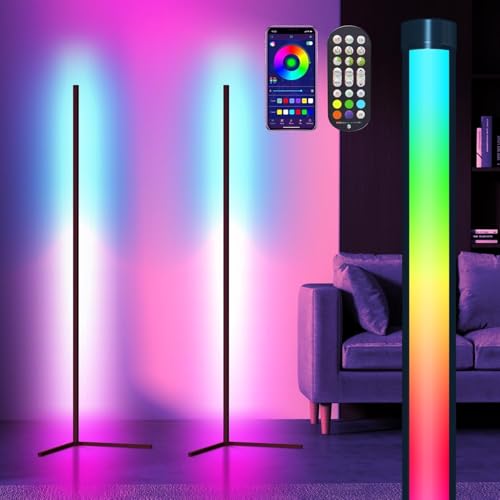
- ✓ Vibrant color options
- ✓ Easy setup and control
- ✓ Great for mood lighting
- ✕ App can be slow at times
- ✕ Limited to corner placement
| Color Options | 16 million colors |
| Lighting Modes | Over 300 dynamic modes |
| Brightness Control | Adjustable via app, remote, and switch |
| Lighting Effects | Color-changing, multi-color effects, and music synchronization |
| Height Adjustment | Removable 4-section design for customizable height |
| Connectivity | App control, remote control, and wired switch |
It was a surprise to see how much a pair of corner lamps could transform my entire living room. I thought they’d just add some basic lighting, but once I turned them on, I was blown away by the vibrant, dynamic light show they created.
The 16 million color options and 300+ lighting modes let me tailor the atmosphere perfectly. Whether I wanted a cozy movie night or a lively party vibe, these lamps delivered with smooth, colorful transitions and fun effects.
Plus, the ability to sync the lights with music makes my playlists come alive—it’s like having a mini dance floor at home.
The setup was surprisingly straightforward. The four removable sections clicked together easily, and I adjusted the height to fit my corner perfectly.
The triangular base feels sturdy, so I didn’t worry about them toppling over during use. The app is intuitive, giving full control over colors, brightness, and effects, while the remote adds quick access when needed.
What I didn’t expect was how much the lighting improved my movie nights. The soft, multi-color glow creates a cozy, immersive ambiance that beats standard lamps anytime.
It’s also a huge hit during game nights or parties, impressing guests with minimal effort.
Overall, these corner lamps go beyond basic lighting—they create a mood, add fun, and are easy to use. If you love customizing your space, you’ll find these a versatile, eye-catching addition.
What Is the Best Light Color for Home Theater Viewing?
Best practices for achieving the optimal light color involve utilizing layered lighting techniques that combine ambient, task, and accent lighting. Installing dimmers allows users to adjust light levels based on the viewing content and personal preferences. Additionally, using smart lighting solutions can automate light adjustments based on the time of day or specific activities, providing a seamless transition into the ideal viewing environment.
How Do Different Light Colors Affect the Movie Watching Experience?
- Warm White Light: This color creates a cozy and inviting atmosphere, making it ideal for home theaters.
- Cool White Light: Provides a bright and vibrant environment, which can enhance clarity during movie watching but may be distracting.
- Colored LED Light: Utilizing colors like blue or red can add a dynamic and immersive quality to the viewing experience, but they can also alter color perception on screen.
- Dimmed Light: Lowering the intensity of any light color helps reduce glare and enhances focus on the screen, contributing to a more cinematic feel.
- Smart Lighting: Allows for customizable colors and brightness levels, enabling viewers to tailor their environment according to the genre of the movie being watched.
Warm white light, typically around 2700K to 3000K, mimics the glow of a sunset and can make the space feel more relaxed and homey, which is perfect for enjoying a film with family or friends.
Cool white light, ranging from 4000K to 5000K, can invigorate a space and improve visibility, making it easier to see details in the room; however, its brightness might detract from the film’s immersive experience if overused.
Colored LED lights can create unique atmospheres depending on the hue chosen, such as blue for a calm vibe or red for excitement, but they risk distorting the colors of the film itself, potentially affecting the viewer’s perception of the story.
Dimmed light settings have a crucial role in home theaters since reducing brightness helps mitigate reflections on the screen, allowing for deeper blacks and more vibrant colors, which enhances the cinematic quality of the viewing experience.
Smart lighting systems not only provide convenience through remote control but also allow users to set the mood depending on the movie genre—soft blues for suspense, warm tones for romance, or even vibrant colors for action films—thus personalizing the cinematic journey.
Why Are Warm Light Colors Recommended for Home Theaters?
Warm light colors are recommended for home theaters primarily because they enhance the viewing experience by reducing eye strain and creating a more immersive atmosphere.
According to a study published in the Journal of Vision, warm light, typically ranging from 2700K to 3000K, is less harsh on the eyes compared to cooler light temperatures. This is crucial in a home theater setting where prolonged exposure to bright light can lead to discomfort and distraction, ultimately detracting from the enjoyment of films or shows.
The underlying mechanism lies in the way human vision reacts to different light temperatures. Warmer light mimics the natural lighting conditions found during sunset, which our eyes are more accustomed to. This familiarity allows for a more natural transition from ambient light to screen light, reducing the contrast that can cause fatigue. Furthermore, warmer colors tend to create a cozy and inviting atmosphere, which enhances emotional engagement with the film, as reinforced by findings from the International Journal of Architectural Research.
This emotional response is also tied to the psychological effects of color temperature. Warm light can evoke feelings of comfort and relaxation, which are conducive to enjoying a cinematic experience. In contrast, cooler light can promote alertness and focus, which may be beneficial in other settings but can be counterproductive in a home theater where an immersive experience is desired.
What Are the Benefits of Using Cool Light Colors in a Home Theater?
The benefits of using cool light colors in a home theater include enhancing the viewing experience, creating a calming atmosphere, and improving focus on the screen.
- Enhanced Visual Comfort: Cool light colors, such as bluish whites or soft blues, reduce eye strain during long viewing sessions. These colors mimic daylight, which can help viewers maintain comfort while watching movies or playing video games for extended periods.
- Calming Atmosphere: Cool colors tend to evoke a sense of tranquility and relaxation, making them ideal for a home theater setting. This calming ambiance can enhance the overall experience by allowing viewers to immerse themselves in the film without distraction.
- Improved Screen Contrast: Using cool light colors can enhance the contrast of the images displayed on the screen. The cooler tones can make darker scenes appear more vivid and detailed, thereby improving the overall viewing quality and making action sequences more engaging.
- Reduced Distractions: Cool lighting creates a subtle environment that minimizes distractions from the screen. By avoiding overly warm or bright lights, viewers can maintain their focus on the film, ensuring that the storyline and visuals are the primary points of interest.
- Energy Efficiency: Many cool light sources, such as LED bulbs, are energy-efficient and have a longer lifespan compared to traditional warm bulbs. This not only reduces electricity costs but also lessens the environmental impact, making it a practical choice for home theaters.
How Can You Achieve the Right Balance Between Ambient and Screen Lighting?
Achieving the right balance between ambient and screen lighting is crucial for an optimal home theater experience.
- Color Temperature: The best light color for home theater typically falls between 2700K to 3000K, providing a warm and inviting atmosphere. This temperature helps reduce eye strain while watching movies and enhances the cinematic experience by creating a cozy environment that complements the screen’s colors.
- Dimmer Switches: Installing dimmer switches allows you to adjust the brightness of your ambient lighting according to the content being viewed. This flexibility is essential for maintaining focus on the screen without distractions, as bright ambient lights can wash out the visuals and detract from the overall immersion.
- Lighting Placement: Strategic placement of ambient lighting, such as wall sconces or floor lamps, can help create a layered lighting effect. Properly positioned lights can reduce glare on the screen and prevent harsh shadows, ensuring the room remains comfortable while allowing the screen to stand out.
- Smart Lighting Systems: Utilizing smart lighting technology allows for automated adjustments based on the time of day or specific activities. These systems can transition from bright lighting during daytime use to softer, more subdued tones for movie nights, enhancing the overall viewing experience.
- Color Gels or Filters: Adding color gels or filters to your ambient lights can enhance the visual experience by complementing the screen’s content. For instance, using a soft blue or purple hue can create a more cinematic feel and help set the mood for various genres, from thrillers to romantic films.
What Factors Should You Consider When Choosing Lighting Fixtures for Your Home Theater?
When choosing lighting fixtures for your home theater, several factors play a crucial role in creating the ideal viewing environment.
- Light Color: The best light color for home theater is typically a warm white or soft white, as it creates a cozy atmosphere without overpowering the screen’s brightness. Colors in the warm spectrum help to enhance the cinematic experience by reducing glare and maintaining focus on the screen.
- Dimmer Options: Having dimmable lighting is essential for a home theater, allowing you to adjust the brightness according to the time of day or type of movie. This control helps set the mood, enabling you to create a darkened environment that enhances the visual experience without harsh lighting interruptions.
- Type of Fixtures: Choosing the right type of fixtures, such as recessed lighting or wall sconces, can greatly affect the ambiance. Recessed lighting provides a sleek look and minimizes distractions, while wall sconces can offer a more decorative touch without casting direct light onto the screen.
- Placement: The placement of lighting fixtures should be strategic to avoid light spill on the screen while providing enough illumination in the room for movement and safety. Proper positioning can allow for a perfect balance between visibility and maintaining an immersive viewing experience.
- LED vs. Incandescent: LED lights are often recommended for home theaters due to their energy efficiency and longevity, while also being available in various color temperatures. Incandescent bulbs can provide a warmer light but may not have the same flexibility in color temperature and can generate more heat, which might be uncomfortable in a closed space.
- Lighting Control Systems: Integrating smart lighting systems can enhance your home theater experience by allowing for automated settings and remote control. These systems can adjust light levels based on the time of day or specific scenes in a movie, creating a dynamic viewing environment.
How Can Dimmer Settings Enhance Your Home Theater Light Color Experience?
Dimmer settings can significantly enhance your home theater light color experience by allowing you to customize the ambiance and visual clarity according to the content being viewed.
- Adjustable Brightness: Dimmer switches enable you to fine-tune the brightness of your lights, making it possible to achieve the best light color for home theater settings. This flexibility allows for a more immersive viewing experience, especially during dark scenes, where excessive brightness can detract from detail.
- Warm vs. Cool Light Settings: Different light temperatures can evoke various moods; warm light often creates a cozy atmosphere, while cooler light can enhance the clarity of colors on screen. By adjusting the dimmer, you can find the perfect balance that complements the film genre or the emotional tone of the content you are watching.
- Highlighting Screen Contrast: Proper dimming can help in managing the contrast between the screen and the surrounding environment, ensuring that the colors on your screen pop without being washed out. A well-dimmed room can prevent distractions and keep the focus on the visuals, enhancing the overall viewing experience.
- Dynamic Lighting Effects: Some advanced dimmer systems allow for dynamic lighting effects that can sync with the content being played. This can include fading lights or changing colors, adding an extra layer of immersion that enhances emotional engagement with the movie or show.
- Energy Efficiency: Using dimmer settings not only enhances your home theater experience but also contributes to energy savings. By lowering the brightness when full illumination isn’t necessary, you can reduce electricity consumption while still enjoying a visually appealing environment.