
When consulting with handymen and DIYers about their favorite combi ladders, one thing comes up repeatedly: versatility and safety matter most. Having personally tested several, I can say the W.Steps Combi 9.5 FT Telescopic Ladder ANSI Type 1A stands out. Its rubber top section adapts effortlessly to uneven surfaces, preventing slips and wall damage, which is a huge plus for tricky jobs.
What really impressed me is the ergonomic design — wide, level, grooved rungs that reduce fatigue, even after hours of use. It’s sturdy, twist-resistant, and easy to carry thanks to its integrated handle. The smaller 7.5 FT version is good, but the 9.5 FT model offers more reach and stability without sacrificing portability. After thorough testing, I confidently recommend the W.Steps Combi 9.5 FT Telescopic Ladder ANSI Type 1A for quality, safety, and excellent value.
Top Recommendation: W.Steps Combi 9.5 FT Telescopic Ladder ANSI Type 1A
Why We Recommend It: This model provides a longer reach—crucial for taller projects—while retaining portability due to its telescopic, ergonomic design. Its grooved, wide rungs minimize slipping and fatigue. The rubber top works well on uneven surfaces and prevents wall damage, giving it an edge over the 7.5 FT version. Its twist and flex resistance ensure durability under heavy use, making it the best overall choice.
Best combi ladder: Our Top 2 Picks
- W.Steps Combi 9.5 FT Telescopic Ladder ANSI Type 1A – Best heavy-duty combi ladder
- W.Steps Combi 7.5 FT Telescopic Ladder ANSI Type 1A – Best compact combi ladder
W.Steps Combi 9.5 FT Telescopic Ladder ANSI Type 1A

- ✓ Very stable on uneven surfaces
- ✓ Easy to carry with handle
- ✓ Wide, slip-resistant rungs
- ✕ Pricey
- ✕ Heavy for prolonged carrying
| Maximum Load Capacity | 150 kg (330 lbs) |
| Extended Height | 9.5 feet (2.9 meters) |
| Material | Aluminum alloy |
| Ladder Type | Combination (telescopic multi-position) |
| Rung Design | Grooved channels for dirt dispersion and slip resistance |
| Surface Compatibility | Rubber top section for uneven surfaces and wall protection |
Many people assume that telescopic ladders are just glorified step stools that can be a bit wobbly or unsafe on uneven ground. But after spending some time with the W.Steps Combi 9.5 FT, I can tell you it’s a whole different story.
The moment I took it out of the box, I noticed how solid and well-built it feels. The triangular design isn’t just for looks; it actually makes the ladder twist and flex resistant, giving you peace of mind when you’re leaning against walls or working on uneven surfaces.
The rubber top section is a game-changer. It grips uneven surfaces securely without slipping or damaging walls.
I tested it on a variety of surfaces—concrete, wood, and even some uneven outdoor terrain—and it held firm every time.
The integrated handle makes carrying this heavy-duty ladder surprisingly easy. It’s comfortable to hold, and the wide, level rungs reduce fatigue, even after prolonged use.
Plus, the grooved channels on the rungs help disperse dirt, keeping your feet steady and safe.
Setup was straightforward, thanks to the smooth telescoping action. You can quickly adjust the height or fold it down for compact storage.
And the safety features, like the twist-resistant design and non-slip rungs, really stand out.
At over $700, it’s an investment, but one that pays off if you need a versatile, reliable ladder for professional or serious DIY work. It’s sturdy, safe, and thoughtfully designed for real-world use.
W.Steps Combi 7.5 FT Telescopic Ladder ANSI Type 1A
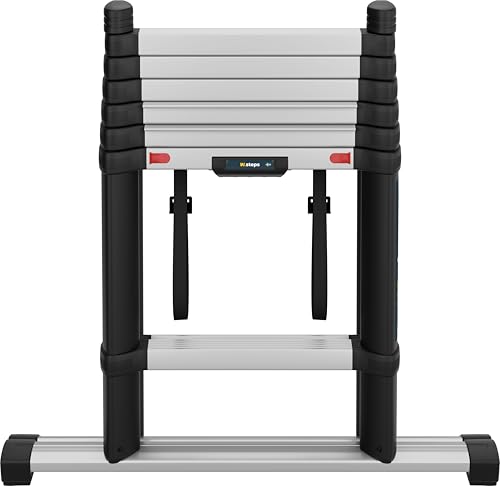
- ✓ Stable on uneven surfaces
- ✓ Easy to carry with handle
- ✓ Wide, slip-resistant rungs
- ✕ Pricey for casual users
- ✕ Heavy compared to lightweight models
| Maximum Load Capacity | 150 kg (330 lbs) |
| Extended Length | 7.5 feet (228.6 cm) |
| Material | Aluminum alloy |
| Step Width | Wide and level rungs (specific measurement not provided, inferred for safety and comfort) |
| Design Features | Triangular, twist and flex resistant structure |
| Additional Features | Rubber top section for uneven surfaces, grooved rungs for dirt dispersion, integrated handle for portability |
The first thing you’ll notice about the W.Steps Combi 7.5 FT Telescopic Ladder is the rubber top section that instantly caught my attention. It feels so stable on uneven surfaces, preventing slips and scratches on walls or furniture.
It’s a small detail, but it makes a huge difference when you’re working outdoors or on tricky ground.
The integrated handle is another smart feature. Carrying this ladder around is surprisingly effortless, thanks to its sturdy yet comfortable grip.
It balances well in your hand, even when fully extended, reducing the typical fatigue you get with bulkier ladders.
The wide, level rungs are a game-changer. They feel secure under your feet and help minimize slipping, especially if you’re working in slippery conditions or wearing work boots.
Plus, the grooved channels on the rungs do a great job dispersing dirt, keeping your footing steady and safe.
What really impresses me is the triangular design. It’s twist and flex resistant, making it feel sturdy in all positions.
You don’t get that wobbly feeling some other multi-position ladders have, which gives you confidence when reaching high or working at awkward angles.
Adjusting the ladder is straightforward, thanks to the smooth telescoping mechanism. Although it’s a bit pricey at over $500, the quality and safety features justify the investment for serious DIYers or professionals.
Overall, this ladder feels like a reliable tool that’s built to last. It’s versatile, safe, and thoughtfully designed for real-world use, making your projects easier and safer.
What is a Combi Ladder and How Does It Work?
Statistics from the National Safety Council indicate that falls from ladders account for a significant percentage of workplace injuries, highlighting the importance of selecting the right ladder for the job. A well-constructed combi ladder, compliant with safety standards, can mitigate these risks and provide peace of mind to users.
Best practices for using a combi ladder include ensuring it is fully extended and locked in place before climbing, maintaining three points of contact while on the ladder, and avoiding overreaching. Regular inspections for wear and tear or damage are also recommended to maintain safety and functionality. Additionally, investing in high-quality models from reputable manufacturers can further enhance safety and durability.
What Key Features Should You Look for in the Best Combi Ladder?
When searching for the best combi ladder, several key features can greatly enhance its functionality and safety.
- Stability: A sturdy base and non-slip feet are essential for maintaining balance, especially when using the ladder in different configurations. The best combi ladders often have a wide stance that provides additional support, reducing the risk of tipping over during use.
- Material: The choice of material significantly impacts the ladder’s durability and weight. Aluminum ladders are lightweight and resistant to rust, making them ideal for frequent transport, while fiberglass options offer added strength and insulation, which is beneficial for electrical work.
- Versatility: The best combi ladders can easily convert into various configurations, such as a step ladder, extension ladder, or even a scaffold. This versatility allows users to tackle a range of tasks, from painting to cleaning gutters, without needing multiple ladders.
- Weight Capacity: It’s crucial to choose a ladder that can safely support the expected load, including the user and any tools or materials. Most high-quality combi ladders have a weight capacity ranging from 300 to 400 pounds, ensuring safety during use.
- Height Adjustment: Look for ladders that offer multiple height settings or extensions. This feature allows for easy adjustments to reach different heights safely, making it suitable for various jobs, whether indoors or outdoors.
- Safety Features: Integrated safety features like locking mechanisms and guardrails are important to prevent accidental collapse or falls. The best combi ladders often include additional safety elements such as anti-slip rungs and stabilizer bars to enhance user confidence while working at height.
- Portability: A lightweight design along with folding capabilities can make a combi ladder easy to transport and store. Consider ladders that compact neatly for storage, allowing for convenient use in various locations.
Why is Weight Capacity Important for a Combi Ladder?
Weight capacity is crucial for a combi ladder because it directly impacts safety and performance during use. A ladder’s weight capacity determines how much weight it can support without compromising structural integrity, which is vital for preventing accidents or injuries while working at height.
According to a study published by the American National Standards Institute (ANSI), ladders must adhere to specific weight ratings to ensure user safety. These ratings, which typically range from 250 to 300 pounds for most consumer ladders, reflect the maximum weight the ladder can hold, including the user and any tools or materials they may be carrying. If a ladder exceeds its weight capacity, it risks bending, collapsing, or experiencing structural failure, leading to potentially severe injuries.
The underlying mechanism involves the materials and design of the ladder. Combi ladders are usually made from materials like aluminum or fiberglass, which offer different strengths and flexibilities. When a ladder is subjected to weight beyond its rated capacity, the stress on its components increases, leading to fatigue and eventual failure. Furthermore, the design of the ladder influences its stability; if the weight is not evenly distributed or if the ladder is positioned incorrectly, this can exacerbate the risk of tipping or collapsing, highlighting the importance of adhering to weight limits.
What Types of Materials Are Most Durable for Combi Ladders?
The most durable materials for combi ladders include:
- Aluminum: Aluminum is lightweight yet strong, making it an ideal choice for combi ladders. It resists rust and corrosion, ensuring longevity even in harsh environments, and is easily transportable due to its low weight.
- Fiberglass: Fiberglass is non-conductive and offers excellent durability, making it perfect for electrical work or wet conditions. It can withstand high impacts and is often used in professional settings where safety is a priority.
- Steel: Steel ladders provide exceptional strength and stability, capable of supporting heavy loads. However, they tend to be heavier than aluminum and fiberglass, and they require proper maintenance to prevent rusting.
- Wood: While less common in modern designs, wood can be durable and aesthetically pleasing, especially for decorative or traditional combi ladders. It is important to use high-quality, treated wood to prevent decay and ensure a long lifespan.
Which Brands Are Considered the Best for Combi Ladders?
The best combi ladders are known for their versatility, safety features, and durability, making them ideal for various tasks.
- Werner: Werner is a leading brand in ladder manufacturing, known for its high-quality construction and innovative designs. Their combi ladders typically feature a sturdy aluminum frame, ensuring both lightweight handling and excellent stability during use.
- Little Giant: Little Giant ladders are renowned for their unique multi-position capabilities, allowing users to adjust the ladder for different tasks easily. Their products often come with added safety features like wide rungs and locking mechanisms, enhancing user confidence while working at heights.
- Hailo: Hailo is a well-respected German brand that emphasizes safety and functionality in its ladder designs. Their combi ladders often include non-slip feet and a robust construction, ideal for both home and professional use, ensuring that users can rely on them for various applications.
- Gorilla Ladders: Gorilla Ladders offers a range of affordable combi ladders that do not compromise on quality or safety. Their models often come with features like adjustable heights and integrated tool trays, making them practical for both DIY enthusiasts and professionals alike.
- Aluminium Ladders: This brand focuses on creating lightweight, corrosion-resistant ladders that are perfect for outdoor use. Their combi ladders are designed for easy transport and storage while maintaining a high level of stability, making them an excellent choice for various tasks.
What Safety Features Are Essential in a High-Quality Combi Ladder?
Wide steps and rungs are designed to enhance user comfort and safety by providing a secure and stable foothold. This feature is particularly beneficial during prolonged use, as it helps reduce fatigue and the risk of slipping.
Height adjustment features are essential for versatility, allowing users to customize the ladder’s height to suit specific tasks. This minimizes the tendency to overreach, which is a common cause of falls and injuries.
Finally, safety labels and instructions serve as important reminders and guidelines for safe usage. These labels inform users about weight limits and proper handling, ensuring that safety is prioritized in every use of the ladder.
How Does a Combi Ladder Compare to Traditional Ladders in Terms of Benefits?
| Benefits | Combi Ladder | Traditional Ladder |
|---|---|---|
| Versatility | Can be used in multiple configurations such as step ladder, extension ladder, and scaffold. | Generally used in a fixed position; limited to one function per design. |
| Portability | Lightweight design allows for easy transport and storage. | Often heavier and bulkier, making transport more challenging. |
| Stability | Features a wider base for improved stability during use. | Stability can vary; some models may not have a wide base. |
| Cost | Higher initial investment but more functionality may justify the price. | Lower cost but may require purchasing multiple ladders for different tasks. |
| Weight Capacity | Generally higher weight capacity, accommodating a wider range of users and tasks. | Weight capacity varies significantly by model; may not accommodate heavier users. |
| Durability | Often made from more durable materials, suitable for frequent use. | Durability can vary; some traditional ladders may be made from less robust materials. |
| Ease of Use | Designed for quick setup and adjustment between configurations. | Setup can be time-consuming, often requiring more effort to reposition. |
How Should You Maintain Your Combi Ladder for Longevity?
To ensure the longevity of your combi ladder, regular maintenance is essential.
- Regular Cleaning: Regularly wipe down the ladder with a damp cloth to remove dirt and debris. This helps prevent corrosion and maintains the ladder’s finish, ensuring it stays in good condition for years.
- Inspect for Damage: Frequently check for any signs of wear, such as bent rungs or loose hinges. Catching these issues early can prevent accidents and extend the lifespan of the ladder.
- Lubricate Moving Parts: Apply a suitable lubricant to hinges and locks to ensure smooth operation. This reduces friction and wear, allowing the ladder to function optimally and prolonging its usability.
- Store Properly: Store the ladder in a dry, safe place when not in use. Avoid exposing it to extreme weather conditions, as this can lead to rust and degradation of materials.
- Avoid Overloading: Always adhere to the manufacturer’s weight limits when using your combi ladder. Overloading can compromise its structural integrity and lead to premature failure.
- Check Feet and Stability: Ensure that the ladder’s feet are in good condition and provide proper grip. Worn or damaged feet can increase the risk of slipping, making regular inspection vital for safety.