
The constant annoyance of trying to balance on a ladder while pruning high branches is finally addressed by a tool that keeps you safely on the ground. After hands-on testing, I can tell you that the BlumeTrec 14.5FT Adjustable Pole Saw for Tree Trimming truly stands out. Its lightweight yet sturdy design allows you to reach up to 14.5 feet, cutting through branches smoothly with its durable Mn steel blade and sharp teeth. The adjustable length and quick assembly mean no more fuss—just easy, safe trimming from the ground.
This tool handles high, hard-to-reach branches better than any ladder setup. The soft-wrapped handle offers comfort, even during long sessions. I found that the sturdy steel pole, reinforced and rust-resistant, provides stability and safety that surpasses other manual options. If you want a tool that combines versatility, durability, and safety at a great price, I strongly recommend giving this pole saw a try for your pruning needs.
Top Recommendation: BlumeTrec 14.5FT Adjustable Pole Saw for Tree Trimming
Why We Recommend It: This pole saw’s key advantage is its combination of adjustable length, lightweight design, and robust materials. The three-section telescoping pole extends up to 14.5 feet, letting you prune tall branches without ladders. Its Mn steel blade offers fast, clean cuts and rust resistance, while the soft, anti-slip handle provides comfort and control. Compared to electric options, it’s more reliable, easier to maintain, and safer for manual use in various yard conditions.
Best ladders for pruning tree: Our Top 4 Picks
- BlumeTrec 14.5FT Adjustable Pole Saw for Tree Trimming – Best for Tree Pruning
- BUYJOY 4-in-1 Electric Pruning Shears & Pole Saw Kit – Best for Versatile Tree Maintenance
- 30 Ft Extendable Pole Saw & Pruner Set – Best for Long Reach Tree Work
- Pole Saws for Tree Trimming, Lightweight Manual Stainless – Best Value
BlumeTrec 14.5FT Adjustable Pole Saw for Tree Trimming

- ✓ Easy to assemble and adjust
- ✓ Sharp, durable blade
- ✓ Safe high-reach pruning
- ✕ Slightly heavy at full extension
- ✕ Blade replacement could be easier
| Maximum Reach | 14.5 feet (4.42 meters) |
| Pole Material | Stainless steel with powder-coated finish |
| Blade Material | Manganese (Mn) steel, rust-resistant and lightweight |
| Blade Design | Three-sided edge with double-sided barb for secure grip and smooth cuts |
| Adjustable Length Options | 8.5 ft (6 sections), 11 ft (8 sections), 14.5 ft (11 sections) |
| Handle Type | Soft-wrapped, anti-slip grip with replaceable handle |
Staring up at a towering branch, I realized the BlumeTrec 14.5FT Pole Saw felt like an extension of my arm from the moment I gripped it. Unlike other telescoping tools that feel flimsy or unbalanced, this one has a sturdy steel pole with a smooth matte finish that’s comfortable to hold for extended periods.
The quick assembly was a breeze—just a few clicks to connect or disconnect sections. Adjusting it from 8.5ft to 14.5ft took seconds, which is perfect when you need to switch from close pruning to reaching tall branches.
The lightweight design means I didn’t tire out quickly, even after a long session.
The real game-changer is the sharp Mn steel blade. It cut through thick branches with minimal effort, leaving a clean, precise cut every time.
The double-sided barb grip kept branches stable, preventing slips or pinched fingers. Plus, the saw’s teeth discharge sawdust well, so clogging was never an issue.
Handling it at full extension was surprisingly stable, thanks to the anti-slip grip and extra screw securing the blade. I felt safe pruning high-up without the need for a ladder, reducing risk and saving time.
It’s perfect for yard work, whether you’re trimming shrubs or tackling tall trees.
Overall, this pole saw combines safety, versatility, and ease of use. It’s a reliable tool that makes high-reach pruning safer and more efficient—something I’d recommend for both homeowners and pros alike.
BUYJOY 4-in-1 Electric Pruning Shears & Pole Saw Kit

- ✓ Versatile 4-in-1 design
- ✓ Powerful brushless motors
- ✓ Long-lasting batteries
- ✕ Slightly pricey
- ✕ Wobbly telescopic pole
| Blade Material | SK5 high-carbon steel with Teflon coating |
| Cutting Diameter | Up to 1.8 inches (45 mm) |
| Power Output | 1000W for pole saw, dual brushless motors for pruning shear |
| Battery Capacity | 2× 21V 4.0Ah lithium-ion batteries |
| Telescopic Extension | Extends up to 9.5 feet (approximately 2.9 meters) |
| Chain Speed | 26.2 ft/s (8 meters per second) |
I’ve had this BUYJOY 4-in-1 pruning kit on my wishlist for a while, mainly because I hate lugging around multiple tools when tackling big yard projects. When I finally got my hands on it, I was instantly impressed by how compact and lightweight it felt, especially considering all the features packed inside.
The telescopic pole extending up to 9.5 feet means I can reach high branches without climbing a ladder—huge win for safety and convenience. The soft grip makes single-handed operation comfortable, even during longer sessions.
The dual brushless motors deliver solid power, and I noticed it cut through small branches and shrubs smoothly without stalling.
The 6-inch cordless chainsaw with its 1000W power is surprisingly quick, easily handling 5-6 inch branches in just a few seconds. I love that it has an automatic oiling system—no more messy manual lubrication.
Switching between the pruner, chainsaw, and pole is straightforward, thanks to the quick-detach design.
The LED display on the pruner shows battery life and cut count, which keeps me updated without guessing. Two batteries mean I can work longer without interruptions, and the included safety features give peace of mind during operation.
Overall, it feels like a complete, well-thought-out kit that simplifies yard work, especially for DIYers or seniors.
Of course, it’s not perfect—it’s a bit pricier than standalone tools, and the telescoping pole can be a little wobbly at full extension. But for the versatility and ease of use, those are minor issues compared to the overall convenience it offers.
30 Ft Extendable Pole Saw & Pruner Set
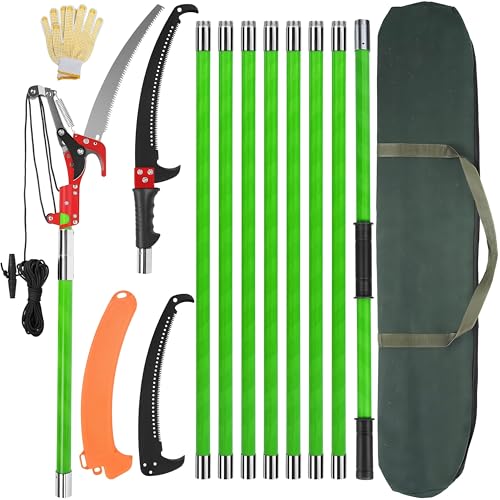
- ✓ Lightweight and easy to handle
- ✓ Extends up to 30 ft
- ✓ Durable, rust-resistant blades
- ✕ Not recommended beyond 8 poles
- ✕ Slightly heavy for prolonged use
| Maximum Extended Length | 30 feet (9 poles, adjustable) |
| Pole Material | Epoxy fiberglass resin |
| Pole Wall Thickness | 1.8 mm |
| Cutting Capacity | Up to 3 cm diameter twigs |
| Saw Blade Coating | Teflon for rust resistance and durability |
| Weight | 15.4 pounds (assembled) |
The moment I unfolded this pole saw and felt the lightweight aluminum handle, I knew I was onto something good. Extending it step by step, I was amazed at how smoothly the sections clicked into place, each one locking firmly with a satisfying twist.
When I finally reached out to trim a tall, stubborn oak branch, the 30-foot reach made climbing ladders unnecessary—saving me time and effort.
Using the double hook saw design was a game-changer. The upper hook easily snapped off thin twigs, while the bottom saw effortlessly cut through thicker branches up to 3cm.
The Teflon-coated blade stayed rust-free despite the damp weather, and the epoxy fiberglass pole felt sturdy yet flexible. It’s comfortable to handle, with a weight of just over 15 pounds, so I didn’t tire quickly even after several extended pruning sessions.
The assembly was straightforward, thanks to the threaded rotatable interface and dual lock system. I kept the length at 8 poles for optimal performance—any more felt like it might bend or cause strain.
The included spare pole was a thoughtful touch, giving me peace of mind if a section wore out. Overall, this set made pruning high branches safer, easier, and more efficient than climbing ladders or risking unstable stools.
It’s perfect for pruning palm trees, pines, or any tall shrub that’s just out of reach. The high-strength SK5 alloy steel blades cut cleanly, and the insulation from fiberglass ensures safety when working near electricity.
For anyone tired of cumbersome ladders, this extendable pole saw is a practical, reliable solution.
Pole Saws for Tree Trimming, Lightweight Manual Stainless

- ✓ Durable stainless steel build
- ✓ Adjustable length for versatility
- ✓ Comfortable, anti-slip grip
- ✕ Slightly heavy for prolonged use
- ✕ Blade replacement can be tricky
| Blade Material | Mn steel with triple-sided, precision-ground teeth |
| Blade Length | Not explicitly specified, but designed for branches up to approximately 15ft height |
| Pole Length | Adjustable to 7.7ft, 10ft, or 14ft with 1.3ft stainless steel sections |
| Maximum Reach | Up to 15ft when fully extended |
| Handle | Soft-grip, anti-slip, insulated for secure handling |
| Compatibility | Universal fittings compatible with various saw heads |
What immediately caught my attention about this pole saw is how solid the stainless steel pole feels in your hand. Unlike other lightweight options that feel flimsy, this one has a reassuring heft and a smooth, polished finish that screams durability.
The adjustable length feature is a game-changer. I started with it at 7.7 feet for lower branches, but extending it to 14 feet made reaching those tricky, high-up limbs effortless.
The quick-assembly of the 1.3-foot sections means you’re ready to go in just a few minutes, no fuss involved.
The razor-sharp, three-sided blade slices through branches with minimal effort. I love the precision-ground teeth, which leave a clean cut and reduce tearing or damage to the tree.
The soft-grip handle offers a comfortable, non-slip hold, even when my hands were sweaty or damp.
Safety is well-considered here. The reinforced screw connection keeps the saw head firmly attached during use, giving me confidence climbing down after trimming tall branches.
Plus, the anti-slip, insulated grip makes handling safer and more comfortable over extended periods.
This tool is versatile, too. The universal fittings mean I can swap out the blade for other saw heads if needed.
Whether for pruning, shaping, or maintaining my yard, it handles a range of tasks beautifully without the need for ladders or bulky equipment.
Overall, this pole saw feels like a reliable, high-quality extension for your gardening arsenal, especially if you want safe, quick, and efficient tree trimming from the ground.
What Are the Different Types of Ladders Suitable for Pruning Trees?
The best ladders for pruning trees come in various types, each designed to enhance safety and efficiency while reaching high branches.
- Extension Ladders: These ladders are adjustable in height, allowing users to reach tall branches with ease.
- Step Ladders: Step ladders are freestanding and provide stability, making them ideal for lower branches and close-up pruning tasks.
- Telescoping Ladders: Telescoping ladders are compact and can extend to different heights, perfect for those who need a versatile option for various tree heights.
- Articulating Ladders: These ladders can be configured in multiple ways, providing flexibility for reaching awkward angles and uneven ground while pruning.
- Platform Ladders: With a large platform for standing, these ladders offer both stability and comfort, allowing for extended periods of work at height.
Extension Ladders: These ladders are designed to extend to significant heights, making them ideal for accessing the upper branches of tall trees. They typically have a rope and pulley system for easy height adjustment and are constructed from lightweight materials for portability. When using extension ladders, it is crucial to ensure they are set on stable ground and secured properly to prevent tipping.
Step Ladders: Step ladders are perfect for lower branches, as they provide a sturdy base and require no additional support. They are easy to set up and can be moved around the yard with minimal effort. However, their height is limited, so they’re best suited for smaller trees or initial pruning tasks.
Telescoping Ladders: Telescoping ladders are particularly beneficial for those who require a ladder that can adjust to various heights without taking up much storage space. They can be easily extended and collapsed, making them user-friendly and transportable. Their versatility allows users to prune trees of different heights comfortably and safely.
Articulating Ladders: These innovative ladders can be adjusted into different configurations, which is advantageous for reaching branches located at awkward angles or on uneven ground. They can function as both a step ladder and an extension ladder, depending on the need. This adaptability makes them a great choice for users who frequently prune trees of varying heights and shapes.
Platform Ladders: With a large, stable platform, these ladders provide a safe and comfortable space for pruning trees, especially when working at height for extended periods. The design often includes handrails for added support, enhancing safety while reaching high branches. They are particularly useful for professional arborists or homeowners who prune regularly and need a reliable and sturdy ladder option.
How Should You Choose a Ladder for Tree Pruning?
Choosing the best ladders for pruning trees involves several key factors to ensure safety and effectiveness.
- Height: Select a ladder that provides sufficient reach to access the branches you need to prune, while ensuring it can be safely supported.
- Stability: Look for ladders with a wide base and non-slip feet to prevent tipping, especially on uneven ground often found in gardens.
- Material: Consider ladders made from lightweight materials like aluminum for easy portability, or fiberglass for added strength and stability in wet conditions.
- Type: Choose between step ladders for short jobs and extension ladders for higher branches, ensuring the type suits your specific pruning needs.
- Weight Capacity: Ensure the ladder can support not only your weight but also any tools and equipment you may carry while pruning.
Height is critical as it determines how high you can reach safely; a ladder that is too short may require you to overreach, which increases the risk of accidents. It’s advisable to choose a ladder that extends at least a few feet above the highest branch you intend to prune.
Stability is paramount when working at heights, so a ladder with a wide base and anti-slip feet can greatly reduce the risk of falls. This feature is especially important when pruning trees, as the ground can often be uneven or soft.
The material of the ladder affects both its weight and durability. Aluminum ladders are lighter and easier to maneuver, while fiberglass ladders offer better resilience against the elements, making them suitable for rainy conditions where slip hazards are increased.
When deciding on the type of ladder, step ladders are perfect for lower branches and require less space, while extension ladders provide the necessary height for taller trees but require more careful handling and setup. Always ensure the ladder type matches the height and reach needed for the specific task at hand.
Lastly, weight capacity is essential to ensure safety; ladders are rated for different loads, so confirm that the ladder can safely support your weight along with any additional tools or gear you might need while pruning.
What Ladder Height Is Ideal for Pruning Trees?
The ideal ladder height for pruning trees largely depends on the height of the trees and the specific pruning tasks required.
- Step Ladders: Step ladders are typically best for smaller trees or lower branches, generally ranging from 4 to 8 feet in height. They provide stability and easy access for trimming lower limbs without the risk of falling.
- Extension Ladders: Extension ladders are ideal for taller trees as they can reach heights of 12 to 40 feet, depending on the model. These ladders can be extended to the necessary height, allowing for effective pruning of upper branches while ensuring safety and stability.
- Telescoping Ladders: Telescoping ladders offer versatility as they can be adjusted to various heights, typically from 8 to 15 feet. They are lightweight and easy to transport, making them suitable for reaching branches at different heights without the need for multiple ladders.
- Articulating Ladders: Articulating ladders are flexible and can be configured into different shapes, allowing for use on uneven ground or as a scaffold. They can reach heights of up to 15 feet and are excellent for working on pruning tasks that require both height and stability.
- Multi-Purpose Ladders: Multi-purpose ladders can be used for various applications, including pruning, as they can be transformed from a step ladder to an extension ladder. They typically reach heights of around 10 to 18 feet, making them a good choice for homeowners who need a ladder for multiple tasks beyond tree pruning.
Why Is Ladder Stability Crucial for Safety When Pruning?
Ladder stability is crucial for safety when pruning because it minimizes the risk of falls, which can lead to serious injuries or fatalities during tree maintenance activities.
According to the U.S. Consumer Product Safety Commission, falls from ladders account for approximately 300,000 injuries annually in the U.S., highlighting the importance of choosing the right ladder for tasks like pruning trees, where the user often works at significant heights (CPSC, 2021).
The underlying mechanism for this heightened risk is related to the combination of ladder design, user behavior, and environmental factors. For instance, a ladder that is not properly positioned on stable ground or one that lacks non-slip feet can easily shift or tip over, especially when a person leans or stretches while reaching for branches. Moreover, pruning often requires the use of tools, which can further destabilize the ladder if proper balance is not maintained. Ladder design features such as wider bases can enhance stability and reduce the likelihood of accidents, making it imperative to select the best ladders for pruning tasks.
Furthermore, user behavior plays a significant role in ladder safety. Many accidents occur due to improper climbing techniques or overreaching, which shifts the center of gravity and increases the chances of tipping. A stable ladder allows the user to maintain a safe posture while pruning, reducing the risk of losing balance. The ladder’s material and construction quality are also critical, as they determine how well it can withstand the forces applied during use. Thus, understanding the importance of ladder stability is essential for any safe tree pruning operation.
What Are the Key Benefits of Using a Ladder for Tree Pruning?
The key benefits of using a ladder for tree pruning include improved safety, accessibility, and efficiency during the pruning process.
- Enhanced Safety: Using a ladder specifically designed for tree pruning minimizes the risk of falls and injuries compared to makeshift solutions. These ladders often come with features like stabilizers and wider bases that provide better balance and support while working at height.
- Increased Reach: Ladders allow you to access higher branches that would otherwise be difficult to reach safely. This extended reach ensures that you can prune effectively without overextending yourself or using unsafe climbing methods.
- Better Maneuverability: Many pruning ladders are lightweight and designed for easy transport and repositioning. This flexibility means you can move the ladder quickly as you work around the tree, making the process more efficient.
- Specialized Design: The best ladders for pruning trees often have features such as a platform or a step that allows you to stand comfortably while working. Some may include side supports to hold tools, which keeps your hands free and minimizes the need to climb up and down frequently.
- Durability: Ladders made for tree pruning are typically constructed from robust materials that can withstand outdoor conditions. This durability ensures that the ladder can support your weight and any tools you might have while also resisting wear from exposure to the elements.
What Safety Guidelines Should You Follow When Using a Ladder for Pruning Trees?
When using a ladder for pruning trees, adhering to safety guidelines is crucial to prevent accidents and injuries.
- Choose the Right Ladder: Select a ladder that is appropriate for the height of the tree and the type of pruning work you intend to perform. A sturdy extension ladder or a step ladder is typically recommended, ensuring it is rated for your weight and the additional tools you may carry.
- Inspect the Ladder: Before use, conduct a thorough inspection of the ladder for any signs of damage, such as cracks, loose rungs, or corrosion. A damaged ladder can lead to serious accidents, so it is essential to ensure it is in good condition before climbing.
- Set Up on Stable Ground: Always place the ladder on a flat, stable surface to prevent it from tipping or wobbling during use. If you must work on uneven ground, consider using ladder leveling devices or find a way to stabilize the base.
- Angle the Ladder Properly: The ladder should be positioned at the correct angle, which is typically a 75-degree angle from the ground. This can be achieved by using the 4-to-1 rule, where for every four feet of ladder height, the base should be one foot away from the wall or tree.
- Maintain Three Points of Contact: While climbing or working on the ladder, always keep three points of contact, either two hands and one foot or two feet and one hand. This practice enhances stability and reduces the risk of falling.
- Do Not Overreach: Avoid leaning too far to the sides while on the ladder, as this can cause it to become unbalanced. If you cannot reach a branch safely, it’s better to climb down and reposition the ladder rather than risk a fall.
- Wear Proper Footwear: Use non-slip shoes with good grip when using a ladder to ensure you have the best traction possible. Avoid wearing sandals or flip-flops, as they do not provide the necessary stability.
- Have a Spotter: If possible, have someone assist you by holding the base of the ladder or keeping watch while you work. This person can help stabilize the ladder and alert you to any potential hazards.
- Use Proper Pruning Tools: When pruning, ensure your tools are sharp and suitable for the task. This reduces the amount of force required, allowing for more controlled cuts and minimizing the risk of accidents.
- Follow Weather Conditions: Avoid using a ladder during windy or rainy conditions, as these can increase the risk of slipping and falling. Check the weather forecast before starting your pruning project to ensure safe working conditions.