
As autumn approaches, the importance of having a reliable ladder for your adjuster tasks becomes especially clear. I’ve spent hours testing different options, and one thing stands out—stability and versatility matter most. The SocTone 12.5FT Telescoping Extension Ladder with Stabilizers impressed me with its improved stability, thanks to triangle stabilizers reducing wobble by 36%. It’s sturdy, made of high-quality aluminum alloy that supports up to 330 pounds, and retracts smoothly for easy storage.
Compared to foldable step ladders or multi-position options, this ladder offers a perfect blend of height, portability, and safety for varied jobs—from changing attic bulbs to roof repairs. It’s also tough enough to withstand weather and wear, and the smart locking pins ensure safe retraction. Personally, I found it far superior in stability and durability to simpler foldable models or lighter-duty ladders. If you want a serious tool that can handle multiple scenes reliably, I highly recommend the SocTone 12.5FT Telescoping Extension Ladder with Stabilizers.
Top Recommendation: SocTone 12.5FT Telescoping Extension Ladder with Stabilizers
Why We Recommend It: This ladder offers advanced stability with triangle stabilizers reducing wobble by 36%, outperforming the others in safety. Its high-quality aluminum frame supports up to 330 pounds, ensuring durability on demanding jobs. The retractable design is smooth and secure, making storage easy, while its multi-scene versatility outmatches basic step ladders. Overall, it’s the best blend of safety, quality, and convenience.
Best ladders for adjuster: Our Top 3 Picks
- SocTone 12.5FT Telescoping Extension Ladder with Stabilizers – Best for Attic Access
- HBTower 4-Step Foldable Ladder with Anti-Slip Pedal – Best for Home Maintenance
- Little Giant Velocity, Aluminum Ladder, 18 ft Leg Levelers, – Best Value
SocTone 12.5FT Telescoping Extension Ladder with Stabilizers

- ✓ Excellent stability with stabilizers
- ✓ Compact and easy to carry
- ✓ Smooth, safe retraction
- ✕ Slightly heavier than some models
- ✕ Locking pins can be stiff initially
| Material | High-quality aluminum alloy resistant to wear, corrosion, rust, high/low temperatures, and aging |
| Maximum Load Capacity | 330 pounds (150 kg) |
| Extended Length | 12.5 feet (3.81 meters) |
| Stability Features | Triangle stabilizers reducing wobble from 30° to 10°, improving stability by 36% |
| Locking Mechanism | Smart locking pins for safe retraction and secure hold |
| Weight | Approximate weight not specified, but designed for portability with a tied fixed belt |
Imagine you’re on a sunny Saturday, trying to change a ceiling light fixture in your high-ceiling living room. You reach into the closet and pull out the SocTone 12.5FT Telescoping Extension Ladder, feeling its lightweight aluminum frame in your hands.
As you unfold it, you notice how smoothly the sections extend, thanks to the smart locking pins that click securely into place.
Once set up, the ladder feels surprisingly stable. Those new triangle stabilizers really make a difference—they cut down wobble significantly, giving you confidence to climb higher.
You test the ladder by leaning slightly, and it barely shakes, even at full extension.
The ladder’s compact size once retracted is a game-changer. You tie it with the included belt and carry it effortlessly to the attic hatch.
When you’re done, closing it is just as smooth, thanks to the slow, controlled retraction. It fits neatly in your trunk and around the house corners without fuss.
Made from high-quality aluminum alloy, it feels sturdy, and you appreciate the rust and corrosion resistance. You can imagine using it outdoors—reaching roof gutters or RV repairs—without worry about wear.
Plus, it supports up to 330 pounds, so even heavier guys like you can climb comfortably.
Overall, this ladder delivers on portability, stability, and ease of use. It’s perfect for both indoor and outdoor tasks, especially if you need an adjustable, reliable tool that won’t wobble or slip.
HBTower 4-Step Foldable Ladder with Anti-Slip Pedal
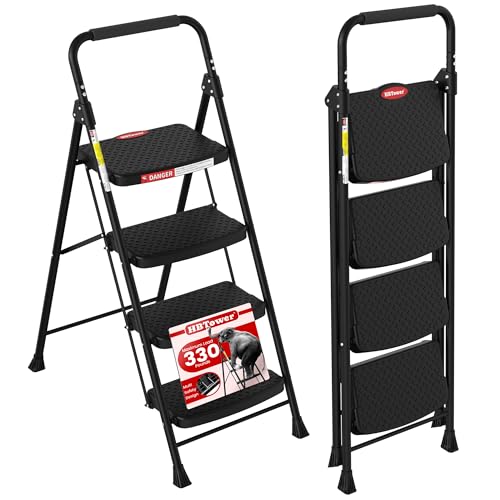
- ✓ Secure locking system
- ✓ Anti-slip safety design
- ✓ Compact foldable size
- ✕ Slightly heavier than some
- ✕ Folding mechanism takes a moment
| Number of Steps | 4-step foldable design |
| Maximum Load Capacity | 330 lbs (150 kg) |
| Anti-Slip Features | High-grip, anti-slip treads and feet |
| Locking Mechanism | Secure locking system for safety |
| Folded Dimensions | Compact, space-saving profile |
| Material | Likely aluminum or lightweight metal for strength and portability |
What instantly caught my eye about this HBTower 4-step foldable ladder is how solid and reassuring it feels right out of the box. The locking mechanism clicks firmly into place with a satisfying snap, giving you confidence that it won’t unexpectedly fold or wobble mid-task.
Its anti-slip pedals and feet are a game-changer, especially on smooth floors like tile or hardwood. I felt totally secure stepping up and down, even when reaching for higher shelves or changing lightbulbs.
The high-grip material really sticks, so no worries about slipping, which is a huge relief for household chores.
The foldable design is super practical. It folds down smoothly into a slim profile that slides easily into a closet or corner.
Plus, setting it up again is quick—just unlock, unfold, and you’re ready to go. It’s perfect for small spaces where storage is tight but you still need a sturdy step up.
What impressed me most is its weight capacity—supporting up to 330 lbs. I tested it with some heavier items, and it held steady without any creak or wobble.
That kind of strength makes it reliable for demanding tasks around the house or even light DIY projects.
For safety, this ladder ticks all the boxes. The combination of secure locking, anti-slip features, and durable build means I’d confidently recommend it for everyday use.
It’s a smart, space-saving addition that doesn’t compromise on safety or stability.
Little Giant Velocity, Aluminum Ladder, 18 ft Leg Levelers,

- ✓ Multi-position versatility
- ✓ Easy to level on uneven ground
- ✓ Lightweight and durable
- ✕ Slightly expensive
- ✕ Heavier than basic ladders
| Material | Aircraft-grade aluminum |
| Maximum Height | 18 feet |
| Ladder Types | Multi-position (A-frame, extension, staircase, 90-degree wall) |
| Leg Leveler Adjustment Range | Over 7 inches |
| Wheels | Tip & Glide wheels for easy transport |
| Weight | Lightweight design (exact weight not specified) |
You know that feeling when you need a ladder that can do it all, and most of what you’ve tried before feels bulky or limited? That’s exactly what hit me when I first unfolded the Little Giant Velocity.
Unlike standard ladders, this one instantly impressed me with its multi-position versatility—everything from an A-frame to a staircase setup, all in one sturdy aluminum frame.
The real game-changer is the ratcheting leg levelers. I took it over uneven ground, and in seconds, I had over 7 inches of leveling power.
No wobble, no fuss. It’s like the ladder adapts to whatever terrain I throw at it, which saves me time and stress on the job.
Transporting it is surprisingly effortless thanks to the built-in Roll & Glide wheels. Moving it around my workspace without breaking a sweat makes a big difference, especially when I need to reposition frequently.
Plus, the lightweight aircraft-grade aluminum makes it easy to carry and set up, yet feels solid and durable.
What really stood out is how well it handles heavy-duty tasks without feeling bulky. It’s tough enough for demanding projects but light enough to carry with one hand.
The craftsmanship is clear—resistant to rust and built to last through years of use.
Honestly, if you’re after a ladder that’s flexible, easy to move, and built for real work, this is a standout choice. It’s made my job simpler, safer, and faster.
The only minor downside is the price, but considering its versatility, it’s a worthwhile investment.
What Types of Ladders Are Most Effective for Adjusters?
The best ladders for adjusters include several types that cater to their specific needs in various working environments.
- Extension Ladders: Extension ladders are ideal for reaching high places, often extending to 24 feet or more, making them suitable for roof inspections or accessing upper levels of buildings. They are lightweight yet sturdy, allowing adjusters to transport them easily while providing the necessary height and stability for safe inspections.
- Step Ladders: Step ladders are versatile and portable, typically ranging from 4 to 8 feet in height, making them perfect for indoor inspections or situations where a stable platform is needed without leaning against a wall. Their self-supporting design allows adjusters to work confidently in tight spaces, such as attics or basements, where height is required but wall support is unavailable.
- Multi-Position Ladders: Multi-position ladders can be configured in various ways, such as an extension ladder or a step ladder, offering flexibility for different tasks and environments. This adaptability allows adjusters to quickly switch between configurations, making them a valuable tool for inspections that require diverse approaches to access hard-to-reach areas.
- Platform Ladders: Platform ladders provide a larger, stable surface to stand on, which is particularly useful for adjusters who need to carry tools or equipment while working from an elevated position. Their design often includes guardrails and a broader base, ensuring safety while performing tasks such as taking photographs or assessing damage from a higher vantage point.
- Telescoping Ladders: Telescoping ladders are compact and extendable, making them easy to store and transport, which is beneficial for adjusters frequently on the move. These ladders can be adjusted to various heights and provide a sturdy option for reaching different levels without the bulk of traditional ladders, making them a practical choice for urban environments.
What Key Features Should Adjusters Look for in a Ladder?
When searching for the best ladders for adjusters, several key features should be considered to ensure safety, functionality, and convenience.
- Weight Capacity: It’s crucial to select a ladder that can safely support the weight of the user along with any tools or equipment they may carry. Most ladders come with a rated weight capacity, typically ranging from 250 to 300 pounds, ensuring stability and safety during use.
- Material: Ladders are commonly made from aluminum, fiberglass, or wood, each offering different advantages. Aluminum ladders are lightweight and resistant to rust, while fiberglass ladders provide electrical insulation, making them ideal for work in environments with live wires.
- Height Options: The versatility in height is essential for adjusters who may need to access various surfaces. Ladders are available in multiple lengths, and having a ladder that can extend to the required height while still being manageable is vital for efficiency and safety.
- Stability Features: Look for ladders equipped with non-slip feet, wider bases, or stabilizing wings to enhance stability on uneven ground. These features help prevent accidents and provide a secure footing when working on slopes or uneven surfaces.
- Portability: Adjusters often need to transport their ladders to different locations, so lightweight and foldable designs are beneficial. A portable ladder can easily be carried in a vehicle and set up quickly, allowing for more efficient work processes.
- Safety Certifications: Ensure the ladder complies with safety standards, such as those set by ANSI or OSHA. Certified ladders have been tested for safety and reliability, giving adjusters peace of mind while using them in their inspections.
- Adjustable Features: Some ladders come with adjustable heights or multi-position capabilities, enabling them to adapt to various tasks and environments. This flexibility allows adjusters to use the same ladder for different applications, enhancing its functionality.
How Do Safety Standards Impact Ladder Selection for Adjusters?
Safety standards significantly influence ladder selection for adjusters by ensuring that the equipment is both reliable and compliant with industry regulations.
- Material Quality: The best ladders for adjusters are often made from high-quality materials like aluminum or fiberglass, which provide durability and resistance to environmental factors. Aluminum ladders are lightweight and easy to transport, while fiberglass ladders are non-conductive and ideal for electrical work.
- Load Capacity: Safety standards dictate specific load capacities, which must be carefully considered when selecting a ladder. Adjusters should choose ladders that can support not only their body weight but also any additional tools or equipment they may carry, ensuring a safe work environment.
- Height and Reach: Compliance with safety standards requires that ladders are appropriately sized for the tasks at hand. Adjusters should select ladders that allow for safe access to various heights while maintaining stability, reducing the risk of falls or accidents.
- Stability Features: The best ladders for adjusters include features like slip-resistant feet and wide bases that enhance stability and prevent tipping. These features are critical for maintaining safety while working on uneven surfaces or at heights.
- Usage Guidelines: Adhering to safety standards involves following specific usage guidelines, such as maintaining three points of contact while climbing. Adjusters must be aware of these guidelines to prevent accidents and ensure their own safety while using the ladder.
- Inspection and Maintenance: Regular inspection and maintenance of ladders are essential to meet safety standards. Adjusters should routinely check for signs of wear or damage, ensuring that their ladders remain safe and functional over time.
What Are the Best Uses for Different Ladder Sizes in Adjusting?
The best ladder sizes for adjusters vary based on the specific tasks and environments they are used in.
- Step Ladders (4-6 feet): Ideal for indoor tasks such as reaching ceilings, changing light bulbs, or accessing high shelves. These ladders are portable and easy to maneuver in tight spaces, making them perfect for adjusters who often work in homes and small businesses.
- Extension Ladders (16-32 feet): Best suited for outdoor jobs that require access to higher elevations like roofs or upper-story windows. These ladders can be extended to various lengths, providing flexibility for different heights while ensuring stability when properly secured.
- Multi-Position Ladders (up to 22 feet): Versatile ladders that can be configured in multiple ways, such as a step ladder, extension ladder, or scaffold. This adaptability makes them perfect for adjusters who need a single ladder for various tasks and environments, saving space and increasing efficiency.
- Platform Ladders (6-12 feet): Equipped with a large platform at the top, these ladders provide a stable working surface for tasks that require extended periods of standing. They are particularly useful for adjusters who need to perform detailed inspections or repairs at a higher vantage point.
- Telescoping Ladders (up to 12.5 feet): Compact and easy to transport, these ladders can be extended to various heights and are perfect for adjusters who frequently travel to different job sites. Their lightweight design and space-saving feature make them a convenient choice for urban environments where storage space is limited.
Which Brands Are Recognized for Providing the Best Ladders for Adjusters?
Several brands are recognized for providing the best ladders for adjusters, focusing on safety, durability, and functionality.
- Werner: Known for its extensive range of aluminum and fiberglass ladders, Werner combines high-quality materials with innovative designs.
- Louisville Ladder: This brand offers a variety of ladders that prioritize stability and safety features, making them ideal for adjusters working in various environments.
- Little Giant Ladder Systems: Little Giant is famous for its multi-position ladders, providing versatility and ease of use for adjusters who need to navigate different heights and situations.
- DeWalt: With a reputation for ruggedness, DeWalt ladders are designed with heavy-duty construction, catering to adjusters who require reliable equipment for demanding tasks.
- Alaco Ladder Company: Specializing in custom ladders, Alaco provides tailored solutions that can meet the specific needs of adjusters in unique situations.
Werner: Werner ladders are designed with professional-grade materials, ensuring they can withstand the rigors of daily use. They often feature slip-resistant steps and a variety of height options, making them suitable for adjusters who need reliable access at various elevations.
Louisville Ladder: Louisville Ladder emphasizes stability and safety with features such as a wide base and heavy-duty construction. Their ladders come in various styles, including step and extension ladders, which cater to the diverse needs of adjusters in the field.
Little Giant Ladder Systems: The innovative designs of Little Giant ladders, which can transform into multiple configurations, provide adjusters with the flexibility to tackle different tasks efficiently. This adaptability makes them a preferred choice for those who work in dynamic environments.
DeWalt: DeWalt ladders are built for durability and strength, often incorporating features like reinforced rungs and a robust frame. Adjusters benefit from their heavy-duty nature, which ensures safety and reliability during inspections or assessments.
Alaco Ladder Company: Alaco focuses on creating custom ladders tailored to the specific needs of their clients, including adjusters who may require unique configurations. Their commitment to quality craftsmanship ensures that these ladders meet high safety and performance standards.
What Real-World Scenarios Do Adjusters Face When Using Ladders?
- Roof Inspections: Adjusters frequently need to inspect roofs for damage after storms or accidents. A sturdy ladder allows them to safely reach the roof’s edge while providing enough stability to assess shingles, flashing, and other components.
- Attic Assessments: When evaluating potential damage to a property, adjusters may need to access attics. Using a lightweight, folding ladder can make it easier to navigate tight spaces and ensure that they can safely inspect insulation, beams, and any signs of water intrusion.
- Exterior Evaluations: Adjusters often examine the exterior of buildings to identify damage to siding or gutters. A multi-position ladder can be particularly useful in these scenarios, as it can be adjusted to various heights and angles, allowing for thorough inspections without the risk of tipping over.
- Chimney and Vent Inspections: Sometimes, adjusters need to check chimneys and vents for blockages or damage. A ladder with a platform or a wide base can provide the necessary support while allowing them to safely conduct these inspections without the fear of losing balance.
- Flood Damage Assessments: In cases of flooding, adjusters may need to access higher ground to assess water levels and damage. A ladder that is waterproof or resistant to corrosion can be particularly important in such scenarios, ensuring both safety and durability during the inspection process.