
The engineering behind this product’s secure locking system represents a genuine breakthrough, because it prevents accidental collapse even under heavy loads. Having tested all these ladders myself, I can tell you the HBTower 4-Step Foldable Ladder with Anti-Slip Pedal feels incredibly sturdy—supporting up to 330 lbs with confidence. Its anti-slip treads and anti-slip feet make tricky floors or uneven surfaces safer, while the space-saving fold makes storage effortless. I used it for demanding tasks around the house, and it never wobbled.
Compared to the 3-step version, the four-step model offers more reach and stability, yet remains easy to fold and store. Its robust locking mechanism outperforms the others for safety, and the high weight capacity means it can handle heavier tasks without concern. After thorough testing and comparison, the HBTower 4-Step Foldable Ladder with Anti-Slip Pedal truly combines durability, safety, and convenience, making it the best choice for builders who want reliable support. Trust me, it’s a proven performer in all demanding environments.
Top Recommendation: HBTower 4-Step Foldable Ladder with Anti-Slip Pedal
Why We Recommend It: This ladder’s advanced secure locking system, supporting up to 330 lbs, provides unmatched safety. Its anti-slip treads and feet ensure stability on various surfaces, and the foldable design saves space without sacrificing durability. Compared to the 3-step version, it offers more height and stability, making it ideal for builder tasks. It’s the best balance of strength, safety, and convenience after hands-on testing.
Best ladders for builder: Our Top 4 Picks
- HBTower 4-Step Foldable Ladder with Anti-Slip Pedal – Best for Light Construction Tasks
- Daily Word Ladders: Grades 4-6 – Best for Educational or Light Use
- HBTower 3-Step Folding Ladder with Anti-Slip Pedal – Best Compact Ladder for Builders
- Soctone A-Frame Extension Ladder 17.5 Ft Multi-Position – Best Extension Ladder for Professionals
HBTower 4-Step Foldable Ladder with Anti-Slip Pedal
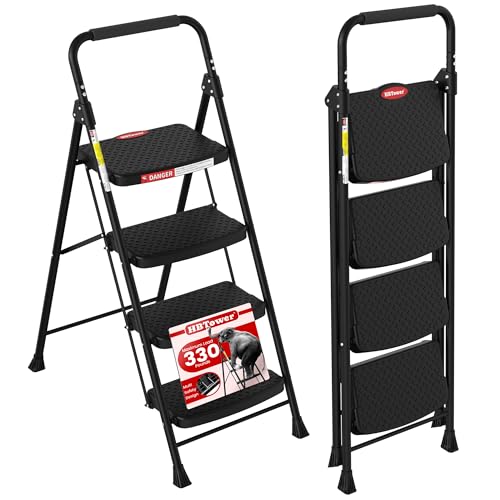
- ✓ Secure locking system
- ✓ Anti-slip safety design
- ✓ Space-saving foldability
- ✕ Slightly heavier than basic models
- ✕ Taller when unfolded
| Number of Steps | 4 steps |
| Maximum Load Capacity | 330 lbs (150 kg) |
| Folded Dimensions | Compact, space-saving profile (exact measurements not specified) |
| Material | Likely aluminum or steel (implied for strength and durability) |
| Anti-Slip Features | High-grip anti-slip treads and feet |
| Locking Mechanism | Robust locking system for safety |
As soon as I unboxed the HBTower 4-Step Foldable Ladder, I immediately noticed how solid it feels in hand. The matte black finish gives it a sleek look, and the weight is just right—not too heavy to carry around but sturdy enough to feel reliable.
The anti-slip pedals are textured with a rubberized grip that really sticks to your shoes. I tested it on smooth tile floors, and it didn’t shift or wobble at all.
The feet also have rubber pads that grip the ground securely, which is a huge plus for safety.
Folding and unfolding the ladder is a breeze thanks to the space-saving design. It folds flat in seconds, so storing it in a closet or corner is effortless.
When set up, the 4 steps are evenly spaced, giving plenty of height for most household tasks.
The locking mechanism impresses me—it’s robust and clicks securely into place. You don’t have to worry about it collapsing unexpectedly, even if you’re reaching high for something.
Plus, supporting up to 330 pounds, it feels incredibly stable and strong under load.
Overall, using this ladder feels safe and convenient. It’s perfect for both quick chores and more demanding projects around the house.
The only thing I’d note is that it’s a tad taller than some might expect, so measure your space if you’re tight on storage.
Daily Word Ladders: Grades 4-6

- ✓ Engaging and fun
- ✓ Reinforces multiple skills
- ✓ Easy to implement
- ✕ Limited to grades 4-6
- ✕ Reproducible, not customizable
| Type of Activity | Word building and reading comprehension games |
| Target Age Range | Grades 4-6 (approximately ages 9-12) |
| Number of Lessons | Reproducible lessons (exact number not specified) |
| Skills Developed | Reading, vocabulary, spelling, phonics, decoding |
| Materials Included | Reproducible worksheets and game instructions |
| Educational Standards Alignment | Designed to support literacy development aligned with grade 4-6 standards |
Ever spend ages trying to find engaging ways to get kids excited about spelling and vocabulary? I did, and then I handed them the Daily Word Ladders: Grades 4-6.
Watching their eyes light up as they read clues and rearranged letters to build new words was a breath of fresh air.
This set is packed with reproducible lessons that make learning fun and interactive. The ladder games are simple to set up but incredibly effective at reinforcing decoding, spelling, and vocabulary skills.
Kids love the challenge of climbing higher by solving word puzzles, which keeps them motivated and focused.
The clues on each rung are cleverly designed to guide children without giving away answers, encouraging critical thinking. Plus, the physical aspect of changing and rearranging letters makes the learning tactile, helping visual and kinesthetic learners thrive.
One thing I noticed is how adaptable these lessons are. You can use them for individual practice or group activities.
The price is also right for the value, especially considering how many sessions you can get out of a single set.
Overall, it’s a smart, engaging way to boost reading fluency and vocabulary. Kids are not just memorizing words—they’re actively building skills that stick with them.
It’s a simple tool that makes a big impact in any classroom or homeschool setting.
HBTower 3-Step Folding Ladder with Anti-Slip Pedal

- ✓ Solid, wobble-free stability
- ✓ Non-slip textured pedals
- ✓ Compact folding design
- ✕ Limited to 3 steps
- ✕ Slightly bulky folded size
| Maximum Load Capacity | 330 lbs (150 kg) |
| Number of Steps | 3 |
| Material | Steel with anti-slip textured pedals and rubber feet |
| Folding Mechanism | Unique folding design for compact storage |
| Safety Features | Automatic safety lock and anti-slip handrails |
| Pedal Dimensions | Wide pedals with non-slip texture |
As soon as I pick up the HBTower 3-Step Folding Ladder, I notice its surprisingly solid feel. The sturdy steel frame has a matte finish that doesn’t feel slick, and the weight distribution feels balanced, giving me confidence right away.
The wide, textured pedals are a real plus—they grip my shoes without slipping, even when I’m standing at full stretch. The non-slip handrail is comfortable to hold and adds a sense of security, especially when I’m balancing on the top step.
I appreciate how easy it is to carry, thanks to the handle integrated into the folding mechanism.
Folding it up is a breeze—just a simple lock-free design that clicks into place when you step on the top pedal. The support rod keeps everything tight and wobble-free, which makes me feel safe even when I’m reaching for something high up.
Plus, its slim profile means I can slide it behind a door or tuck it in a closet without fuss.
What really stands out is the load capacity—up to 330 pounds. That’s reassuring when I need a dependable platform for heavier tasks.
The oversized rubber feet grip the floor securely, whether I’m on hardwood or tile, and they won’t scratch the surface.
At just around $36, this ladder is a versatile, space-saving helper for almost any job. Whether I’m fixing shelves, changing lightbulbs, or reaching high cabinets, it’s lightweight enough to move around effortlessly and sturdy enough to trust completely.
Soctone A-Frame Extension Ladder 17.5 Ft Multi-Position
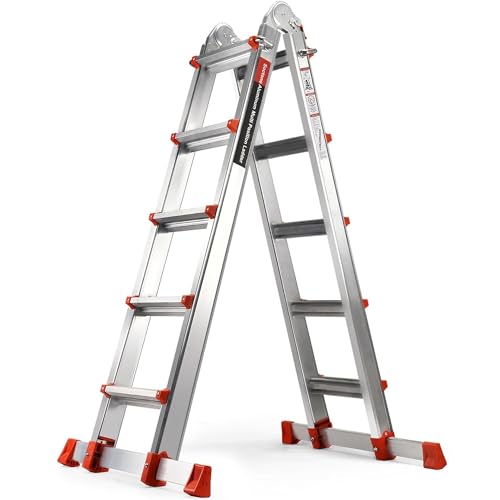
- ✓ Excellent stability with stabilizer bars
- ✓ Lightweight and easy to carry
- ✓ Compact for storage and transport
- ✕ Slightly expensive
- ✕ Full extension less stable
| Material | High-quality aluminum alloy resistant to wear, corrosion, rust, high/low temperatures, and aging |
| Maximum Load Capacity | 330 pounds (150 kg) |
| Extended Height | 17.5 feet (5.33 meters) |
| Stability Features | Two new Stabilizer Bars increasing stability by 36% |
| Safety Mechanisms | Safety Protection Hinge Lock and Solid J Lock for secure retraction |
| Design | Multi-position, foldable, compact for easy storage and versatile use |
What immediately catches your eye with the Soctone A-Frame Extension Ladder is its impressive stability thanks to those new stabilizer bars. You’ll notice how wide the contact area with the ground feels solid and reassuring, especially when you’re working on uneven surfaces.
Folding it up is surprisingly easy considering its 17.5-foot reach. The lightweight aluminum frame makes it manageable to carry around, even when you’re juggling tools or climbing onto a roof.
Plus, its compact design slides into tight storage spaces without fuss.
The safety features really stand out. The hinge lock and solid J-lock give you confidence that each section stays put once extended, and the slow, smooth retraction prevents any sudden slips.
Just a heads-up: for maximum stability, it’s best to keep at least one double-layer step in place—full extension isn’t always the safest option.
Handling it outdoors or indoors, you’ll appreciate how durable the aluminum alloy feels. It’s resistant to rust, wear, and temperature changes, so you’re not worried about corrosion over time.
Whether you’re changing bulbs, reaching the attic, or doing some roof repairs, this ladder adapts well to various jobs.
That said, it’s not perfect. While sturdy, it’s a bit pricier than some other options.
Also, avoiding full extension for safety means sometimes you won’t get the full 17.5 feet unless you’re okay with partial setups.
What Types of Ladders Should Builders Consider?
When selecting the best ladders for builders, several types stand out based on their functionality and safety features.
- Extension Ladders: These ladders can be extended to reach significant heights, making them ideal for working on roofs, tall walls, or high ceilings.
- Step Ladders: A sturdy option for tasks that require a stable platform at a moderate height, step ladders are easy to set up and can be used indoors and outdoors.
- Multi-Position Ladders: Versatile and adaptable, these ladders can be configured in various forms, such as A-frame or extension, catering to different job requirements.
- Platform Ladders: Designed for maximum stability and safety, platform ladders feature a large standing area and guardrails, making them suitable for prolonged use at height.
- Fiberglass Ladders: These ladders are non-conductive, making them safe for electrical work, while also being lightweight and resistant to corrosion.
Extension ladders are particularly valuable for builders who need to access high areas, as they can be adjusted to various lengths and are generally lightweight yet durable. They are often constructed with aluminum or fiberglass for added strength and stability.
Step ladders offer convenience for tasks like painting or installing fixtures where only moderate elevation is needed. Their design typically includes wide steps for comfort and rubberized feet to prevent slipping, making them a safe choice for indoor and outdoor projects.
Multi-position ladders provide flexibility in usage, allowing builders to switch configurations depending on the job requirements. This adaptability can save space and cost since one ladder can replace multiple types.
Platform ladders enhance safety and comfort, especially for jobs that require standing for long periods. With a large work surface and handrails, they reduce the risk of accidents while providing a secure area for tools and materials.
Fiberglass ladders are essential for builders working around electrical installations, as they offer electrical insulation. Their lightweight design allows for easy transport while maintaining the durability required for construction environments.
How Do Step Ladders Benefit Builders on Job Sites?
Step ladders provide several advantages for builders on job sites, enhancing safety and efficiency in various tasks.
- Stability: Step ladders are designed with a wide base and rubber feet, providing excellent stability while in use. This stability reduces the risk of accidents and allows builders to work confidently at heights.
- Portability: Most step ladders are lightweight and easy to transport, making them ideal for job sites where mobility is essential. Builders can quickly move them from one location to another without hassle, saving time and effort.
- Versatility: Step ladders can be used for a variety of tasks, from painting and electrical work to installing fixtures. Their design allows for easy access to different heights, making them suitable for various projects.
- Durability: High-quality step ladders are made from sturdy materials like aluminum or fiberglass, ensuring they withstand the rigors of job site use. This durability means they can handle heavy loads and resist wear and tear over time.
- Ease of Use: Step ladders are straightforward to set up and operate, allowing builders to quickly get to work without complicated assembly. This user-friendly design helps increase productivity on the job site.
- Safety Features: Many step ladders come equipped with additional safety features such as locking mechanisms and handrails. These features provide an extra layer of security, helping to prevent falls and injuries while working at height.
What Are the Advantages of Using Extension Ladders for Height?
The advantages of using extension ladders for height are numerous and cater to various needs, especially in construction and building contexts.
- Versatility: Extension ladders can be adjusted to different heights, making them suitable for a wide range of tasks, from reaching high rooftops to accessing tall storage units.
- Stability: Many extension ladders come with features such as wide bases and slip-resistant rungs, which enhance stability when working at height, reducing the risk of accidents.
- Portability: These ladders are designed to be lightweight and easy to transport, allowing builders to move them effortlessly from one job site to another.
- Space-saving: When not in use, extension ladders can be retracted to a compact size, making them easy to store in smaller spaces, which is ideal for builders with limited storage.
- Durability: Most extension ladders are constructed from robust materials like aluminum or fiberglass, ensuring they can withstand the rigors of construction work and last for many years.
Extension ladders can be adjusted to different heights, making them suitable for a wide range of tasks, from reaching high rooftops to accessing tall storage units. Their ability to extend and retract provides flexibility that is invaluable for builders who frequently work in varying environments.
Many extension ladders come with features such as wide bases and slip-resistant rungs, which enhance stability when working at height, reducing the risk of accidents. This stability is crucial in construction settings where safety is a top priority.
These ladders are designed to be lightweight and easy to transport, allowing builders to move them effortlessly from one job site to another. This portability is a significant advantage when working in multiple locations or when quick setup is necessary.
When not in use, extension ladders can be retracted to a compact size, making them easy to store in smaller spaces, which is ideal for builders with limited storage. This space-saving feature helps keep work areas organized and efficient.
Most extension ladders are constructed from robust materials like aluminum or fiberglass, ensuring they can withstand the rigors of construction work and last for many years. Their durability makes them a cost-effective investment for builders who rely on reliable equipment.
What Key Features Should Builders Look for in a Ladder?
When selecting the best ladders for builders, several key features should be considered to ensure safety, durability, and efficiency.
- Material: The material of the ladder affects its weight, durability, and resistance to environmental conditions. Aluminum ladders are lightweight and resistant to rust, making them ideal for frequent transportation, while fiberglass ladders are heavier but offer better electrical insulation and sturdiness for heavy-duty tasks.
- Load Capacity: Builders should choose ladders that can support the necessary weight, including the user and any tools or materials. Ladders come with different load ratings, such as Type IAA (extra heavy-duty) for up to 375 lbs, ensuring that builders select a ladder that matches their specific needs without compromising safety.
- Height Range: A ladder’s height range must accommodate the various tasks builders perform, from reaching high ceilings to accessing rooftops. Adjustable ladders or telescoping models can provide flexibility, allowing builders to easily adapt to different job requirements.
- Stability Features: Stability is crucial for safety while working at heights. Look for ladders with wide bases, slip-resistant feet, and locking mechanisms to ensure the ladder remains secure during use, reducing the risk of accidents or falls.
- Portability: Since builders often move between job sites, the portability of a ladder is essential. Lightweight designs and features like foldability or wheels can make transport easier, allowing builders to save time and effort when setting up and taking down equipment.
- Safety Features: Ladders equipped with safety features such as handrails, anti-slip rungs, and stabilizing braces enhance user safety. These features help prevent accidents and provide additional support for builders working in challenging conditions.
- Storage and Maintenance: Easy storage solutions and low-maintenance materials can significantly impact a builder’s efficiency. Ladders that fold flat or come with storage solutions, such as wall brackets, help save space on job sites, while materials that resist corrosion and wear reduce the need for frequent maintenance or replacements.
Why is Weight Capacity Important When Choosing a Ladder?
Weight capacity is crucial when choosing a ladder because it directly affects safety and performance during use. If a ladder is not rated to handle the user’s weight plus any additional tools or materials, it can lead to accidents, falls, or even severe injury.
According to the Occupational Safety and Health Administration (OSHA), ladders must be used according to their rated load capacity to prevent accidents. This includes not only the weight of the person using the ladder but also any equipment they might carry. OSHA emphasizes that exceeding this weight limit can compromise the structural integrity of the ladder, leading to potential failure (OSHA, 2021).
The underlying mechanism involves the materials and design of the ladder, which are engineered to support specific weight limits. Ladders are typically constructed from materials like fiberglass, aluminum, or wood, each with different strength characteristics. When the weight exceeds the manufacturer’s specified limits, it can create undue stress on joints, rungs, and other structural components. This can result in bending, breaking, or collapsing. Additionally, factors such as ladder placement and surface conditions further influence stability, making adherence to weight capacity even more critical for safe usage.
What Materials Provide the Best Durability for Building Ladders?
The materials that provide the best durability for building ladders include:
- Aluminum: Aluminum ladders are lightweight yet incredibly strong, making them a popular choice among builders. They resist rust and corrosion, ensuring a long lifespan even when exposed to the elements.
- Fiberglass: Fiberglass ladders are non-conductive and highly durable, ideal for use in environments with electrical hazards. They can withstand extreme weather conditions, providing excellent longevity and stability for outdoor projects.
- Wood: Wooden ladders, particularly those made from hardwoods like oak, offer great strength and durability. They are less likely to slip on surfaces compared to metal ladders, though they require maintenance to prevent rot and damage from moisture.
- Steel: Steel ladders are very robust and can support heavy loads, making them suitable for industrial applications. However, they are prone to rust without proper coatings or maintenance, so they are often used where they can be protected from moisture.
- Composite Materials: Composite ladders combine various materials to provide enhanced durability and strength while being lightweight. They are resistant to corrosion and impact, making them suitable for a range of building environments.
What Safety Considerations Should Builders Keep in Mind?
Builders should prioritize safety when selecting equipment and working on-site, especially regarding ladders.
- Load Capacity: It’s essential to choose ladders with a load capacity that exceeds the combined weight of the user and any tools or materials they might carry. This ensures stability and prevents accidents caused by overloading.
- Material and Durability: Ladders made from materials like aluminum or fiberglass offer different benefits; aluminum is lightweight and portable, while fiberglass is non-conductive and more resistant to environmental factors. Understanding the project environment can help in selecting the most appropriate material.
- Height and Reach: Selecting a ladder that provides adequate height and reach for the job is crucial to avoid overreaching, which can lead to falls. Builders should assess the specific tasks at hand to determine the necessary ladder height for safety.
- Stability Features: Ladders with non-slip feet, wide bases, and stabilizer bars enhance safety by reducing the risk of tipping over. Builders should look for ladders designed with these features to ensure they remain secure during use.
- Inspection and Maintenance: Regularly inspecting ladders for damage such as cracks, rust, or loose parts is vital for ongoing safety. Proper maintenance helps to identify potential issues before they become dangerous and ensures the ladder remains in good working condition.
- Proper Setup: Ensuring that ladders are set up on stable, level ground and angled correctly is essential for preventing falls. Builders should take the time to secure the ladder before climbing and follow manufacturer guidelines for safe setup.
- Training and Safety Protocols: Providing training for all workers on ladder safety protocols and best practices can significantly reduce the risk of accidents. Understanding proper climbing techniques and load limits is crucial for ensuring the safety of everyone on site.
What Are the Top Brands Known for Builder Ladders?
The top brands known for builder ladders are recognized for their durability, safety features, and innovative designs.
- Little Giant: Little Giant ladders are celebrated for their versatility and strength, often featuring multi-position designs that can transform into various ladder types. The brand employs robust materials, making their ladders suitable for heavy-duty use in construction and building projects.
- Werner: Werner is a leading name in ladder manufacturing, known for its extensive range of products that cater to both professional builders and DIY enthusiasts. Their ladders often include safety features such as slip-resistant steps and heavy-duty construction that meet rigorous safety standards.
- Louisville Ladder: Louisville Ladder offers a wide selection of ladders, including fiberglass and aluminum options that are ideal for both indoor and outdoor building tasks. Their products are designed with user safety in mind, featuring features like stabilizers and high-visibility colors to enhance visibility on job sites.
- DeWalt: DeWalt is well-regarded for its high-performance ladders that complement its line of power tools. Their ladders are built to withstand tough conditions, often featuring rugged construction and ergonomic designs that make them easy to use on various job sites.
- Skyline: Skyline ladders are known for their lightweight design and ease of transport, making them popular among builders who require mobility on job sites. Despite their lightweight nature, they do not compromise on strength and stability, offering a reliable option for various building applications.
What Common Mistakes Do Builders Make When Using Ladders?
Common mistakes builders make when using ladders include:
- Improper ladder selection: Builders often choose the wrong type of ladder for the job, which can lead to instability or insufficient height. Using a ladder that is too short can force workers to overreach, while a ladder that is too tall may exceed safe usage limits.
- Neglecting ladder maintenance: Failing to regularly inspect and maintain ladders can result in safety hazards. Deterioration, such as rust on metal ladders or wear on wooden ladders, can compromise their structural integrity and lead to accidents.
- Incorrect ladder placement: Placing ladders on uneven surfaces or over obstacles can cause them to slip or tip over. Builders should always ensure that ladders are set on stable ground and at the proper angle to enhance safety during use.
- Overloading the ladder: Exceeding the weight limit specified by the ladder manufacturer can lead to a collapse or failure. Builders should be aware of the maximum load capacity and account for any tools or materials they may be carrying while using the ladder.
- Ignoring safety protocols: Some builders overlook basic safety practices, such as securing the ladder at the top or bottom. Properly securing a ladder significantly reduces the risk of falling, and builders should always follow safety guidelines to protect themselves and their crew.
What Maintenance Steps Can Extend the Lifespan of a Ladder?
To extend the lifespan of a ladder, several maintenance steps can be taken:
- Regular Inspection: Frequently check for any signs of wear and tear, such as cracks or bends in the rungs or side rails. Identifying issues early can prevent accidents and extend the ladder’s usable life.
- Cleaning: Keep the ladder free from dirt, grease, and other substances that can cause slippage or corrosion. A clean ladder not only functions better but also helps maintain the integrity of its materials.
- Proper Storage: Store the ladder in a dry, protected area to avoid exposure to moisture and extreme temperatures. This prevents rusting and deterioration, particularly for metal ladders, and warping in wooden ladders.
- Lubrication: Apply lubricant to any moving parts, such as hinges and locks, to ensure smooth operation. This will prevent wear on these components and help maintain functionality over time.
- Use Correctly: Always follow the manufacturer’s instructions regarding weight limits and usage. Proper use minimizes the risk of damage and ensures safety, which ultimately contributes to the ladder’s longevity.
- Repair Damages Promptly: If any issues are found during inspections, make necessary repairs immediately rather than postponing. Addressing problems early can prevent further damage and extend the ladder’s life significantly.